
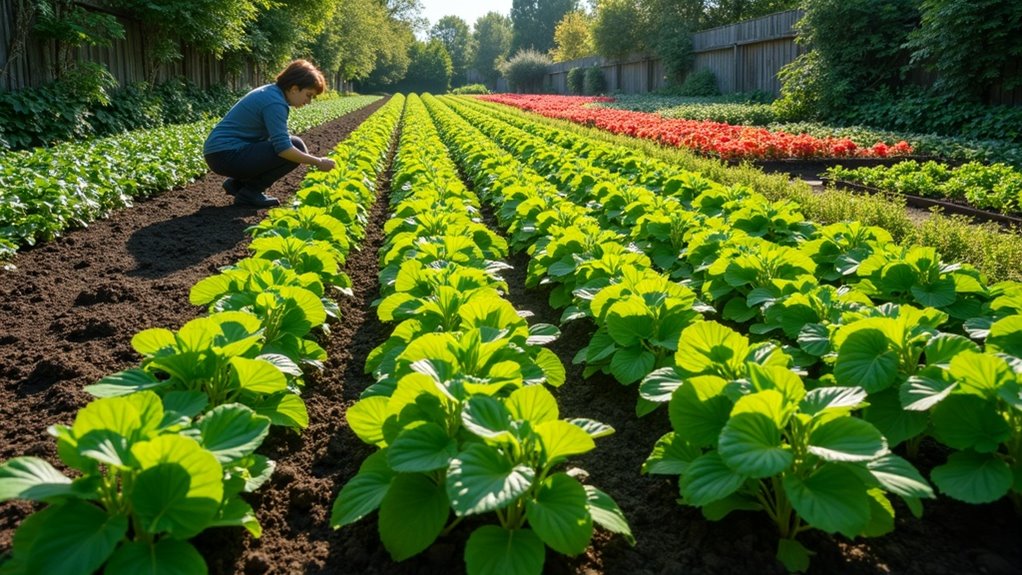
Plant rotation outdoors is essential for achieving even growth in your garden. By optimizing access to sunlight and nutrient use, it enhances light distribution and promotes uniform growth. Regularly rotating plants every few weeks not only disrupts pest lifecycles but also reduces disease risks. Maintaining adequate spacing and using a garden map helps track plant placement and guarantees balanced soil health. If you’re curious about implementing effective strategies, there’s more to explore on optimizing your garden’s productivity.
Key Takeaways
- Plant rotation optimizes sunlight access, enhancing light distribution and promoting even growth across all plants.
- Regular rotation disrupts pest lifecycles and disease proliferation, reducing risks of uneven growth.
- Adequate spacing and air circulation from rotation improve overall plant health and uniformity.
- Rotating crops based on nutrient needs balances soil health, minimizing reliance on fertilizers.
- A garden map aids in tracking plant placements, ensuring effective rotation for consistent growth.
Benefits of Plant Rotation for Growth Uniformity
When you rotate plants outdoors, you not only optimize their access to sunlight but also promote more uniform growth across all specimens.
This practice enhances light distribution, which can boost overall yield by approximately 15%. By implementing crop rotation, you prevent stagnation, reducing the risk of mold and pests that threaten plant health.
Enhancing light distribution through plant rotation can increase yields by 15% and minimize mold and pest risks.
Additionally, rotating your plants helps interrupt pest lifecycles and disease proliferation, ensuring a healthier garden environment. Different plant families have distinct nutrient needs, and rotation prevents soil nutrient depletion, leading to sustainable growing practices.
Ultimately, this strategy fosters robust plants and maximizes your gardening success.
Factors Influencing Plant Growth and Light Distribution
Understanding the factors influencing plant growth and light distribution is essential for optimizing garden health and productivity.
Key considerations include:
- Adequate spacing of 6 inches or more for improved airflow and light distribution.
- Utilizing multiple light sources to guarantee all sides of plants receive sufficient light.
- Implementing vertical lighting setups that mimic natural sunlight for even exposure.
- Measuring light accurately with PAR (Photosynthetically Active Radiation) for precise growth responses.
Strategies for Effective Plant Rotation
Effective plant rotation is essential for maintaining soil health and maximizing crop yields, as it directly addresses nutrient depletion and pest management.
To implement effective crop rotation, develop a schedule that considers the unique nutrient needs of your chosen plants, rotating them every few weeks to once a month during the growing season.
Keep a garden map to track crop placement, ensuring you disrupt the life cycles of pests and diseases.
Focus on rotating within different plant families to minimize risks.
This strategy enhances overall yield and promotes uniform growth, resulting in healthier plants with robust structures.
The Role of Crop Rotation in Soil Health
Crop rotation plays a significant role in enhancing soil health by strategically addressing nutrient dynamics and pest management.
By rotating crops, you can:
Rotating crops balances nutrients, disrupts pests, and enhances soil health for sustainable gardening success.
- Balance nutrient depletion, preventing reliance on costly fertilizers.
- Disrupt pest and disease lifecycles, reducing future infestations.
- Enhance soil structure and fertility, especially by incorporating nitrogen-fixing legumes.
- Utilize a garden map to track crop placement, ensuring effective rotation and preventing soil overuse.
Understanding these principles equips you to maintain ideal soil health, ensuring sustainable growth and productivity in your garden.
Each decision you make in crop rotation directly impacts the health of your soil.
Practical Tips for Rotating Plants Outdoors
When you rotate plants outdoors, you’re not just changing their positions; you’re optimizing their growth potential and health.
Regularly rotating your plants every few weeks guarantees all sides receive adequate sunlight, preventing them from leaning towards one side due to phototropism.
Utilize a garden map to track placements, which helps avoid nutrient depletion and pest buildup.
When rotating crops within the same family, you disrupt pest cycles, enhancing overall plant health.
Additionally, consistent rotation improves air circulation, reducing mold risk and boosting yield.
Implement these practices to foster a balanced and thriving outdoor garden.





