
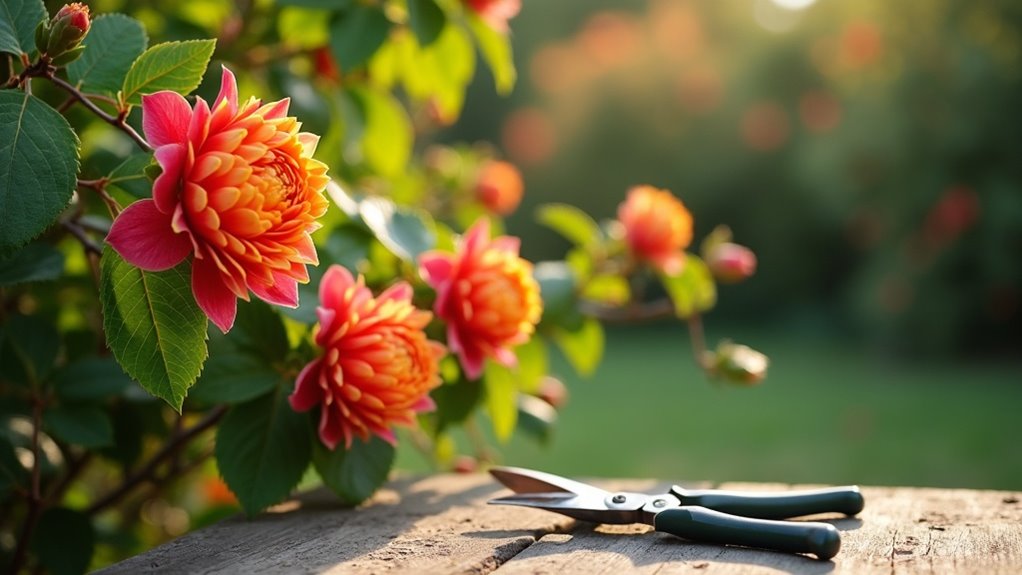
Yes, you should prune plants after their flowering cycles. This timing helps maintain their health and encourages new growth. By pruning right after flowering, you redirect energy towards developing next season’s blooms. Each plant has specific pruning needs based on its flowering habits; for example, spring bloomers require immediate post-flower pruning, while others benefit from light trimming. For ideal results, understanding these variations is essential, and there’s more to learn about effective pruning strategies.
Key Takeaways
- Pruning after flowering allows spring-blooming plants to retain developing buds for the next season.
- Timely pruning redirects energy toward new growth, enhancing overall plant health and appearance.
- Deadheading and pruning post-flowering encourage reblooming in plants like Bloomerang lilac.
- Immediate post-flower pruning for old wood bloomers prevents overgrowth and maintains desired shapes.
- Awareness of flowering cycles ensures effective pruning, maximizing bloom potential for future seasons.
Understanding Flowering Cycles
Understanding the flowering cycles of plants is crucial for effective pruning, especially since different species have distinct blooming habits.
Flowering shrubs can generally be categorized into those that bloom on old wood and those that bloom on new growth. For example, spring-blooming plants like azaleas set buds last season and should be pruned right after flowering.
Conversely, plants such as roses develop buds during the current season, so you should prune them in early spring. Additionally, reblooming plants benefit from timely pruning after their first blooms.
Knowing these cycles guarantees you maximize flowering potential and avoid cutting off future blooms.
Importance of Timing for Pruning
Timing your pruning is essential to guarantee that flowering plants thrive and produce blooms as expected. Pruning at the wrong time can remove vital buds, leading to missed flowering cycles. Here’s a quick guide to help you:
| Bloom Type | Pruning Timing |
|---|---|
| Spring-Flowering | After last flowers drop (by May) |
| Old Wood Blooms | Immediately post-flower |
| New Wood Blooms | Early spring as growth begins |
| Deadheading | As flowers fade |
| General Timing | Understand specific flowering cycles |
Benefits of Pruning After Flowering
Pruning after flowering offers several key benefits that enhance the health and appearance of your plants. By removing spent blooms, you allow your plants to redirect energy towards new growth, leading to fresher foliage and branches.
Deadheading not only improves overall health but also encourages reblooming varieties to produce a second wave of flowers.
Deadheading enhances plant vitality and stimulates reblooming, resulting in a stunning second wave of flowers.
Timely pruning maintains desired shapes and sizes, preventing overgrowth and the need for drastic cuts later.
Additionally, effective post-flowering pruning improves air circulation, reducing overcrowding and minimizing disease and pest issues, ensuring your plants thrive for the next blooming season.
Pruning Techniques for Different Plants
When you’re ready to prune your plants after flowering, it’s essential to tailor your techniques to the specific type of plant.
For early spring bloomers like Rhododendrons and Azaleas, prune immediately after flowering to save next season’s flower buds.
Flowering shrubs, such as the Purple Diamond® Semi-dwarf Loropetalum, should be pruned post-bloom to encourage new growth.
Mountain Snow™ Pieris also benefits from post-flower pruning.
For reblooming plants like Bloomerang lilac, light trimming after the first wave enhances additional flowering.
Pruning for Healthy Growth and Re-blooming
To promote healthy growth and encourage re-blooming, it is crucial to prune your plants shortly after their flowering period ends. This practice allows your plants to redirect energy towards new growth and potential reblooming. For instance, plants like the Jubilation™ Gardenia and Bloomerang lilac thrive when pruned immediately after blooming. Use deadheading to enhance flowering quality and maintain structure.
| Plant Type | Pruning Timing | Benefits |
|---|---|---|
| Jubilation™ Gardenia | After last bloom | Redirects energy |
| Bloomerang lilac | After first bloom | Encourages second cycle |
| Mountain Snow™ Pieris | After flowering ends | Promotes vigorous growth |
| Sonic Bloom weigela | After first wave of bloom | Enhances reblooming |
Common Mistakes in Pruning Timing
Many gardeners overlook the timing of pruning, leading to common mistakes that can greatly impact their plants’ blooming potential.
Pruning spring-flowering plants too early can remove developing flower buds, resulting in a lack of blooms for that season. Additionally, many mistakenly prune flowering shrubs in the fall or winter, eliminating flower buds formed on old wood and preventing blooms the following year.
To avoid these pitfalls, remember that the best time to prune is immediately after flowering. This timing is essential for maintaining a healthy bloom cycle, particularly for lilacs, azaleas, and reblooming varieties like the Bloomerang lilac.
Tips for Successful Pruning
Understanding the right timing for pruning is just the beginning; successful pruning also depends on effective techniques and practices. Use sharp pruning tools for clean cuts, promoting the health of the plant and quicker healing. For flowering plants, prune immediately after blooms fall to guarantee next season’s buds remain intact. Regularly remove dead or damaged wood to maintain plant energy. Light trimming of reblooming plants after their first flowers encourages new growth.
| Pruning Technique | Timing | Purpose |
|---|---|---|
| Clean cuts with tools | After last blooms fall | Prevents damage |
| Remove dead wood | Anytime | Promotes health |
| Light trimming | Post-first bloom | Encourages new growth |
Resources for Further Learning on Pruning
As you dive deeper into the art of pruning, various resources can enhance your knowledge and skill set.
Consider these valuable options for mastering pruning techniques and promoting healthy plant growth:
- Sunnyside Nursery Classes – Hands-on learning about spring and summer blooming shrubs.
- Sunnyside Info Hub – Articles and resources to deepen your understanding of pruning.
- Monrovia Nurseries – Consumer-oriented guides covering diverse plant types and pruning methods.
- The Pruners Bible by Steve Bradley – A thorough guide suitable for gardeners of all skill levels.
Utilizing these resources will refine your skills and improve your gardening outcomes.





