
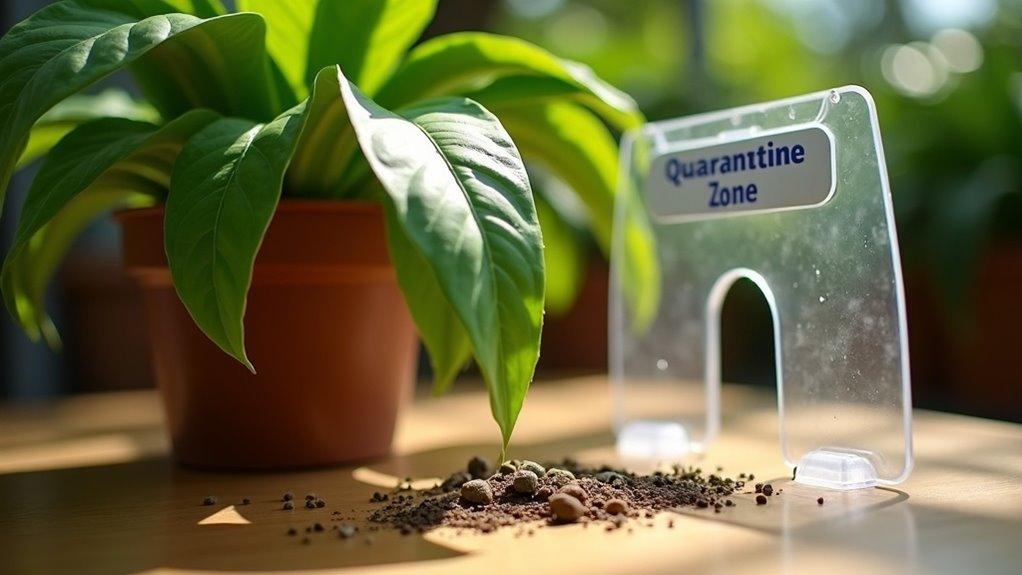
You should absolutely quarantine houseplants after purchase to protect your existing collection from pests and diseases. This process involves isolating new plants for at least two weeks—three to four for high-risk species. Inspect all plant parts thoroughly and consider repotting with sterilized soil. After initial quarantine, conduct further monitoring to catch late-appearing issues. Understanding the nuances of quarantine can greatly impact your plant’s health, so explore how to implement these steps effectively for best results.
Key Takeaways
- Quarantining new plants prevents pests and diseases from affecting your existing collection.
- A minimum quarantine period of three weeks is recommended for new plants.
- High-risk species, such as ferns and calatheas, may require up to four weeks of isolation.
- Inspect plants thoroughly upon arrival and use soapy water to eliminate potential pests.
- Regular monitoring during and after quarantine is crucial for identifying hidden issues.
When to Quarantine Houseplants
When you bring home new houseplants, it’s important to quarantine them to prevent introducing pests and diseases into your existing collection.
Isolate your new plants for at least two weeks; however, for high-risk species like ferns and calatheas, consider extending this period to three or four weeks. This timeframe allows you to monitor for any signs of pests or disease.
Additionally, quarantine is significant after bringing plants indoors from outdoor exposure during warmer months.
If you suspect any issues with plants from unknown sources, an extended quarantine of up to two months serves as a critical preventative measure to protect your collection.
How to Quarantine a Houseplant
To effectively quarantine a houseplant, start by thoroughly inspecting all parts of the plant for any signs of pests or diseases as soon as you bring it home.
Spray your new plants with soapy water or insecticidal soap to eliminate potential pests.
Next, remove the plant from its pot to check for root rot or pest infestations, and repot it using sterilized soil to prevent hidden eggs.
Place the quarantined plant in a separate room with good airflow and light, ensuring isolation from other plants for a minimum of 40 days, while regularly monitoring for any signs of issues.
Quarantine Duration
After guaranteeing your houseplant is properly quarantined, understanding the appropriate duration for this isolation period is key to preventing pest infestations and diseases from spreading.
The recommended quarantine period for new plants is at least three weeks, while some high-risk species may require four weeks or longer. Although a minimum of one to two weeks is common, many enthusiasts opt for a month to guarantee thorough monitoring.
If you suspect pests or diseases, extend it to two months. Regular inspections during this time can uncover hidden issues, such as powdery mildew or root rot, that may not be immediately visible.
Post-Quarantine Plant Care
Once you’ve completed the quarantine period, it’s crucial to conduct a meticulous final inspection of your plant to identify any remaining pests or diseases. Rinsing or wiping down the foliage helps eliminate any residues, while positioning the plant away from others for a few days minimizes transfer risks. Monitor the plant closely for several weeks post-introduction, as pest symptoms may manifest later. Treat it like the rest of your collection, making sure it receives proper care while remaining vigilant.
| Inspection Steps | Purpose |
|---|---|
| Visual Check | Identify visible pests |
| Rinse/Wipe | Remove residues |
| Isolation | Prevent cross-contamination |
| Monitor | Detect late symptoms |
| Care | Maintain plant health |
Community Practices and Resources
Engaging with community practices can greatly enhance your understanding of effective plant quarantine methods.
By sharing experiences, you can benefit from collective knowledge. Here are four key practices to reflect on:
- Quarantine Duration: Keep high-risk plants like ferns and calatheas isolated for at least three to four weeks.
- Inspect Thoroughly: Always inspect both sides of leaves and soil for hidden pests.
- Use Resources: Leverage apps like Greg for tips and community discussions on quarantine strategies.
- Participate in Forums: Join discussions to explore varying opinions based on personal experiences and plant sources.





