
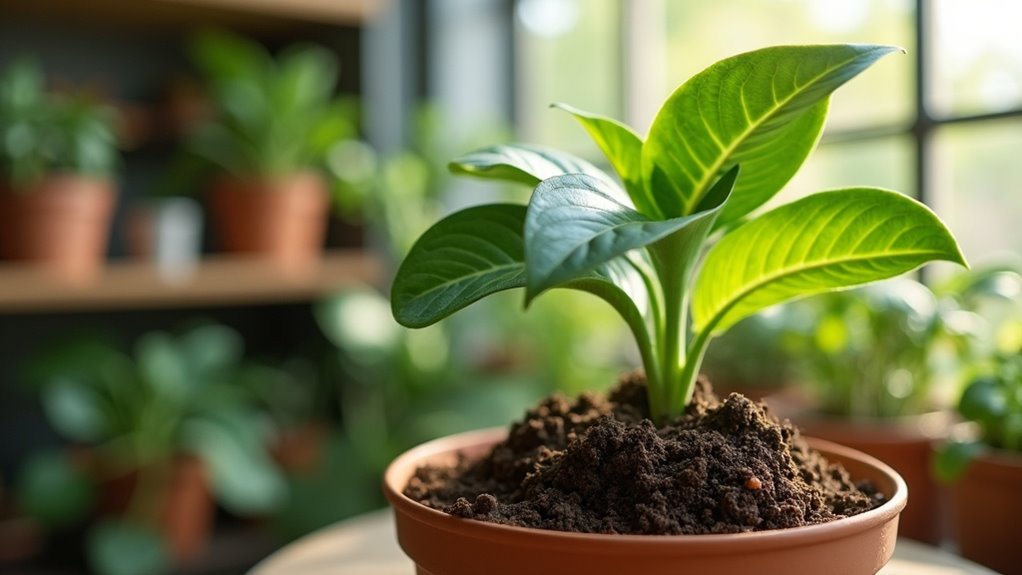
Repotting your plants annually is essential for their health and well-being. It refreshes the soil, providing essential nutrients and preventing root-bound conditions. You’ll notice signs like rapid soil drying or roots peeking through drainage holes. By repotting, you encourage healthy root development and enhance moisture retention, while combating soil compaction. This fosters vibrant foliage and blooms. There’s much more to learn about selecting the right container and watering techniques to support your plants’ growth.
Key Takeaways
- Annual repotting refreshes soil, providing essential nutrients and preventing nutrient depletion as old soil degrades.
- It aids in root pruning, promoting healthy root systems and encouraging new growth.
- Regular repotting prevents root-bound conditions, allowing roots to expand and thrive.
- Enhances overall plant vitality, moisture retention, and drainage, contributing to long-term health.
- Supports aesthetic appeal by ensuring vibrant foliage and a tidy display, enhancing enjoyment of healthy plants.
Signs Your Plant Needs Repotting
When you notice your plant’s soil drying out quickly between waterings, it’s a sign that the roots might be overcrowded and struggling to absorb moisture.
Check for roots visible through drainage holes or growing out of the pot’s bottom; these indicate your plant is root-bound.
Additionally, if your top-heavy plant frequently falls over, it’s time to repot into a wider container for stability.
Smaller leaves and minimal new growth suggest your plant’s current pot size is limiting.
Finally, a salty crust on the soil surface indicates nutrient deficiency, signaling that repotting and fresh soil are necessary for your plant’s health.
The Best Time for Repotting
The best time for repotting is early spring, aligning with your plant’s natural growth cycle and the increase in daylight.
If you notice signs like roots peeking through drainage holes or rapid soil drying, it’s time to act.
Understanding these seasonal patterns and signs will help you guarantee your plant thrives in its new environment.
Seasonal Growth Patterns
As spring approaches and temperatures rise, plants emerge from their winter dormancy, making this an ideal time for repotting.
Early spring is the best time to repot your houseplant, aligning with its active growth period. During this time, indoor plants begin to thrive, and you’ll notice increased root growth.
Observing seasonal growth patterns helps you understand when to repot, ensuring your plant adjusts effectively to its new soil. Late winter can also be suitable for certain varieties, allowing them time to acclimate.
Timing repotting with these natural cycles reduces stress and fosters healthier growth in the long run.
Signs of Need
Recognizing the signs that your plant needs repotting is essential for its health and growth. Look for roots visible through drainage holes or plants drying out quickly between waterings—these are clear signs that it needs attention.
If your plant becomes top-heavy and prone to tipping over, it’s time to repot. Additionally, compacted soil can hinder water retention and nutrient availability, indicating the necessity of a soil refresh.
Generally, you should repot houseplants every one to two years, especially if they exhibit these signs, to guarantee they thrive in a healthy environment rich with nutrients.
Understanding Rootbound Plants
When you notice your plant’s roots spilling out of the drainage holes or coiling tightly around the root ball, it’s likely rootbound.
This condition can stunt growth and increase stress susceptibility, making it essential to recognize the signs early.
To manage rootbound plants effectively, you’ll need to repot them into larger containers and gently trim the roots to promote healthy development.
Signs of Rootbound Plants
How can you tell if your plant is rootbound? Look for roots growing out of the drainage holes; this signals the plant needs a larger pot.
If you notice smaller leaves and minimal new growth, it suggests the roots are constrained, limiting nutrient uptake.
A top-heavy plant that tips over often indicates an imbalance due to being rootbound.
Additionally, if the soil dries out extremely quickly between waterings, the roots may be overcrowded, outnumbering the soil’s moisture retention capacity.
A salty crust on the soil surface can also signal struggles with nutrient uptake due to compacted roots.
Effects on Plant Growth
Although some plants may tolerate being rootbound for a time, the overall effects on growth can be detrimental if left unaddressed.
A rootbound plant often exhibits stunted growth, smaller leaves, and rapid soil drying. These issues arise because the roots have filled the container, limiting space for expansion and nutrient absorption.
Repotting is crucial in plant care, allowing you to prune roots and rejuvenate growth. Ideally, increase the pot size by two inches in diameter to alleviate crowding.
This encourages healthier growth and guarantees your container plants thrive in a more supportive soil environment.
Management Techniques for Roots
To effectively manage rootbound plants, it’s essential to recognize the signs indicating a need for intervention. If you notice roots growing out of the drainage hole or crowding at the top, it’s time for repotting.
Choose a pot that’s about 2 inches larger in diameter and use fresh potting soil to promote a healthy root system. Regular root pruning every 2-3 years can also maintain your plant’s liveliness by preventing overcrowding.
Watch for diminished growth, smaller leaves, and top-heaviness; these signs suggest your plant is root-bound and requires timely management to guarantee continued growth and health.
Choosing the Right Container
When selecting a container for repotting, aim for one that’s two inches larger in diameter than the original pot. This provides adequate space for growth without overwhelming your plant.
Make certain the new container has at least one drainage hole to prevent waterlogging and root rot.
Consider the material:
- Clay pots: Best for overwater-sensitive plants; they help keep roots drier.
- Plastic or ceramic pots: Retain moisture, ideal for underwatering-prone plants.
Avoid decorative containers without drainage; use them as outer covers instead.
Match the potting mix to your plant’s needs for ideal growth conditions.
Watering Techniques for Healthy Plants
Effective watering techniques are vital for maintaining healthy plants, as they directly influence root development and overall growth.
Thorough watering guarantees about 10% runoff from drainage holes, allowing the entire root system to receive moisture. For dry soil, start with half the usual water and let it soak before adding more, preventing waterlogging.
Thorough watering ensures moisture reaches the entire root system, starting with half the usual amount for dry soil to prevent waterlogging.
Regularly monitor for excess water in decorative containers, elevating pots with gravel for improved drainage. A consistent wet-dry cycle, between three days and a month, is essential.
Check soil moisture levels frequently to avoid rapid drying or waterlogged conditions, both of which can stress your plants.
Fertilization for Optimal Growth
Fertilization plays an essential role in supporting your plants’ growth and overall health, especially during their active growing seasons.
To achieve ideal growth in your houseplants, consider these key points:
- Use a balanced fertilizer, like a 20-20-20 ratio, every two weeks in the growing season.
- Apply slow-release fertilizers for consistent nutrient delivery over three to four months.
- Favor water-soluble fertilizers during summer to enhance nutrient absorption.
- Confirm trace minerals are included, particularly in artificial potting mixes, to maintain long-term health.
Regular fertilization replenishes nutrients washed out from the soil, guaranteeing your houseplants thrive in limited container environments.
Benefits of Annual Repotting
Maintaining a regular fertilization schedule is key to your plants’ health, but it’s equally important to contemplate how repotting can enhance their growth.
Annual repotting refreshes the soil, ensuring your plants receive essential nutrients as the old soil degrades. It also facilitates root pruning, promoting healthy root systems and encouraging new growth.
Annual repotting revitalizes soil, ensuring essential nutrients and promoting healthy root systems for vibrant new growth.
By preventing root-bound conditions, repotting allows roots to expand, supporting overall vitality. Introducing fresh soil improves moisture retention and drainage, combating compaction and nutrient depletion.
Ultimately, regular repotting enhances your plant’s aesthetic appeal, providing a stable environment for vibrant, flourishing growth.





