
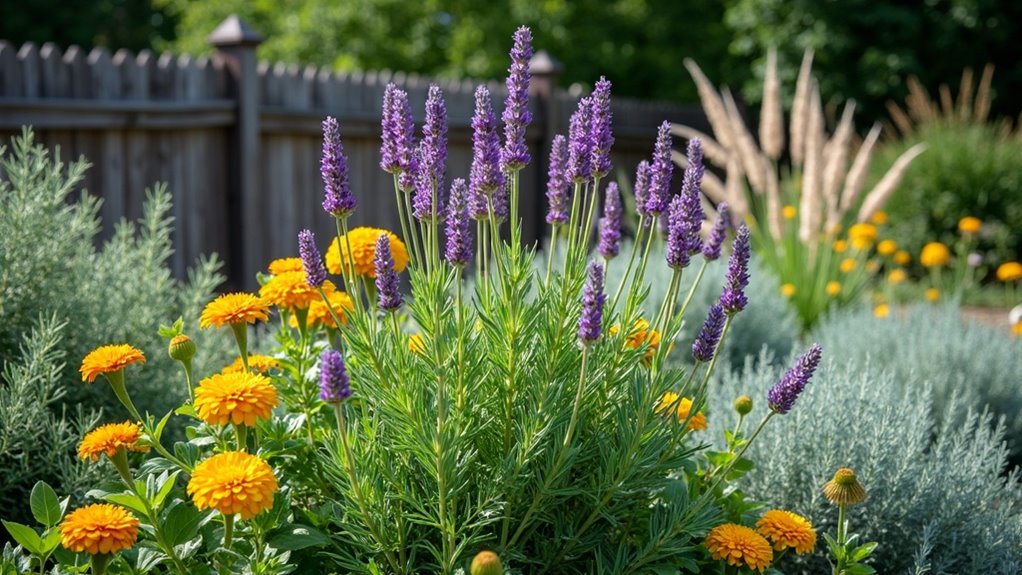
If you’re looking for deer-resistant plants for your suburban garden, consider native species like Butterfly Milkweed, Purple Coneflower, and Wild Bergamot. These plants not only thrive in local climates but also deter deer with their tastes or textures. They contribute to local ecosystems by attracting pollinators and providing wildlife habitat. Plus, their low maintenance needs make them a smart choice. Discover how to select the best options tailored to your area and gardening goals.
Key Takeaways
- Choose native plants like Butterfly Milkweed and Purple Coneflower that naturally resist deer due to their taste and texture.
- Incorporate low-maintenance plants such as Little Bluestem and Wild Bergamot that thrive in local conditions with minimal care.
- Select deer-resistant options that attract pollinators, enhancing biodiversity in your suburban garden.
- Opt for plants with strong scents or unpleasant tastes, which deter deer browsing effectively.
- Consider late-season bloomers like New England Aster to provide food for pollinators while avoiding deer damage.
Why Choose Native Plants?
When you choose native plants for your suburban garden, you’re not just enhancing your landscape; you’re also supporting local ecosystems.
Native plants thrive in your local climate and soil, needing less maintenance and resources, making them sustainable choices. They provide essential food, cover, and breeding grounds for wildlife, promoting biodiversity.
By replacing non-native species, you help restore habitats and protect local flora and fauna. Many native plants are deer resistant due to their bitter taste or strong scent, reducing deer browsing and potential damage.
Ultimately, incorporating native species contributes to conservation efforts and supports the insects and animals reliant on these plants.
Benefits of Deer-Resistant Native Plants
Using deer-resistant native plants in your garden not only minimizes the risk of deer damage but also fosters an enhanced wildlife habitat.
These plants require less maintenance, adapting effortlessly to local conditions while conserving resources.
Enhanced Wildlife Habitat
Incorporating deer-resistant native plants into your suburban garden not only minimizes deer damage but also creates a thriving habitat for local wildlife.
By selecting these plants, you enhance biodiversity, providing essential food sources and cover for various species. Native options like Butterfly Milkweed and Purple Coneflower attract crucial pollinators such as bees and butterflies, supporting ecosystem health.
Additionally, these plants are well-suited to your local soil and climate, promoting sustainable gardening.
Low Maintenance Requirements
Because deer-resistant native plants are well-adapted to local climates and soil conditions, they require considerably less maintenance once established.
Here are some benefits of incorporating these plants into your suburban garden:
- Reduced Water Needs: Native plants thrive on local rainfall, minimizing irrigation.
- Less Fertilizer: They typically require fewer nutrients, promoting soil health.
- Limited Pesticide Use: Their natural resilience reduces the need for chemical interventions.
- Sustainable Practices: You’ll contribute to ecological balance by creating self-sustaining habitats.
Biodiversity Support Benefits
While many plants serve aesthetic purposes, deer-resistant native plants play an essential role in supporting local biodiversity.
By choosing these plants, you’re enhancing local ecosystems, providing food and habitat for wildlife, including critical pollinator populations. These native species attract beneficial insects like butterflies and bees, fundamental for ecosystem health.
Additionally, incorporating deer-resistant plants aids in habitat restoration by replacing invasive species, thereby fostering a balanced environment. Selecting keystone plants among these options can greatly boost local butterfly and bee populations.
Plus, using deer-resistant native flora minimizes chemical repellents, promoting sustainable gardening practices that benefit both you and the environment.
Characteristics of Deer-Resistant Plants
Deer-resistant plants typically share several key characteristics that make them less appealing to these herbivores.
Understanding these traits can help you select the right species for your suburban gardens.
Key characteristics include:
- Unpleasant taste that deters browsing.
- Tough or hairy textures that make consumption difficult.
- Strong scents that repel deer and mask other odors.
- Local adaptations, such as spines or thorns, enhancing their resistance.
Top 8 Deer-Resistant Native Plants for Your Garden
Choosing the right plants for your suburban garden can greatly reduce deer damage while enhancing biodiversity.
Consider integrating Little Bluestem, which thrives in varied soils and supports wildlife.
Integrate Little Bluestem into your garden for vibrant wildlife support and adaptability to various soil types.
Butterfly Milkweed attracts pollinators and resists deer due to its bitter taste.
Purple Coneflower, with its vibrant flowers, is another deer-resistant flowering option that thrives in diverse conditions.
Wild Bergamot, known for its unique blossoms, draws pollinators and resists mildew.
Finally, New England Aster provides late-season food sources for pollinators and avoids deer.
These plants not only beautify your garden with various colors but also cater to gardeners in rural areas seeking resilience.
Additional Deer-Resistant Shrubs to Consider
Incorporating deer-resistant shrubs into your suburban garden can further enhance its resilience against wildlife while providing structure and visual interest.
Here are some excellent options to take into account:
- Potentilla (Happy Face) – Produces cheerful yellow blooms, growing 2-3 feet tall, hardy in zones 2-7.
- Abelia (Sweet Emotion) – Offers fragrant white and pink blossoms, reaching 5-6 feet, thriving in zones 4-8.
- Beautybush (Jolene Jolene) – Features bell-shaped pink flowers, growing 3-6 feet, hardy in zones 4-8.
- Siberian Cypress (Celtic Pride) – Low-growing, feathery foliage, suitable for zones 2-7, often untouched by deer.
These shrubs can greatly reduce deer damage while enhancing your garden’s beauty.
Strategies to Deter Deer
While creating a beautiful suburban garden, it’s essential to implement effective strategies to deter deer from causing damage.
Interplanting garlic, chives, or onions among your plants can help, as their strong scents repel deer.
Interplanting garlic, chives, or onions can effectively repel deer with their potent scents.
Consider designing your garden with varied heights and textures to mimic natural environments, making it less appealing.
Utilize noise and motion deterrents like rotating pinwheels or motion detector lights to scare them away.
Applying deer repellent sprays or mixtures made from garlic, hot pepper, and eggs can be effective.
Finally, an 8-foot fence serves as a reliable, albeit costly, barrier to keep deer out of your garden.
Finding Native Plants by Zip Code
How can you guarantee the plants in your suburban garden thrive? Start by using your zip code to find native plants tailored to your region’s climate and soil.
These plants are generally more resilient and require less maintenance, making them ideal for your garden. Here’s how to simplify the process of selecting plants:
- Use online databases that offer zip code-based searches.
- Consult local extension services for expert recommendations.
- Look for native plants known to be deer resistant.
- Consider plants that attract pollinators, enhancing local biodiversity.
This approach guarantees your garden flourishes while supporting wildlife.





