
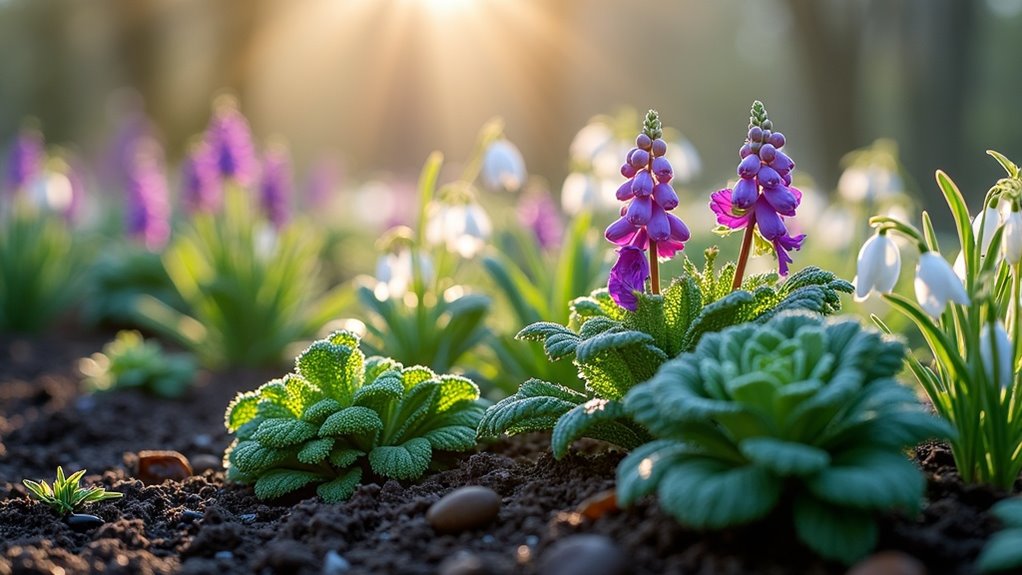
For early spring planting, consider frost-tolerant vegetables like spinach, kale, radishes, Swiss chard, and Brussels sprouts. These crops endure chilly temperatures, with spinach and kale thriving as frost enhances their flavor. Carefully sow them 4-6 weeks before the last frost for the best results. Don’t forget to use well-drained soil and protect your plants with row covers if necessary. Keep exploring to discover more helpful tips for maximizing your spring garden’s potential.
Key Takeaways
- Spinach is a hardy leafy green that can be sown 4-6 weeks before the last frost.
- Kale sweetens in flavor after frost; start indoors or sow directly 4 weeks prior to the last frost.
- Radishes are fast-growing root crops that mature in about 4 weeks and can be sown when soil is workable.
- Swiss chard and Brussels sprouts are also excellent options for early spring planting in cold conditions.
- Utilize row covers and mulch for added protection of frost-tolerant plants during unexpected late frosts.
Understanding Frost Tolerance in Plants
Understanding frost tolerance in plants is essential for successful gardening, especially in early spring when temperatures can fluctuate dramatically.
Frost tolerance varies among plants; cold-hardy plants can endure temperatures below 28°F, while semi-hardy ones tolerate light frosts between 28°F and 32°F. Leafy greens like spinach and kale thrive in these conditions, often enhancing their flavor post-frost.
Top Frost-Tolerant Vegetables for Early Spring
As temperatures begin to rise in early spring, selecting frost-tolerant vegetables guarantees a successful start to your garden.
Here are some top choices that thrive in cold weather:
- Spinach – A hardy leafy green that tolerates light frost, sow it 4-6 weeks before the last frost date.
- Kale – This vegetable sweetens after frost exposure and can be started indoors or direct sown 4 weeks before the last frost.
- Radishes – Maturing in just 4 weeks, these fast-growing root crops can be sown as soon as the soil is workable.
Embrace these hardy vegetables for a flourishing spring garden!
Planting Tips for Successful Early Growth
Successful early growth of frost-tolerant plants hinges on a few key strategies.
Direct sow your crops, like spinach and kale, 4-6 weeks before the last frost date to help them establish. Use well-drained soil enriched with organic matter, as these plants thrive in nutrient-rich conditions.
Employ row covers or cold frames for additional protection against unexpected frosts. Monitor soil moisture closely, keeping it consistent for healthy growth during cooler weather.
Finally, regularly check local forecasts to anticipate temperature fluctuations, allowing you to take timely actions to safeguard your young plants from frost damage throughout the remaining winter months.
Benefits of Growing Early Season Crops
Growing early season crops offers numerous advantages that can greatly enhance your gardening experience.
By planting frost-tolerant vegetables like Swiss chard and kale in late winter, you can enjoy:
- Earlier Harvests: Get fresh produce weeks before others, maximizing your growing season.
- Improved Flavor: Exposure to cool weather enhances the taste of crops like broccoli and Brussels sprouts.
- Pest Management: Early establishment of these crops reduces pest pressure, keeping your garden healthier.
These benefits guarantee that your gardening efforts yield productive results while supporting soil health and allowing for multiple harvests throughout the season.
Protecting Your Garden From Late Frosts
Late frosts can pose a significant threat to your early spring garden, but you can take proactive steps to safeguard your plants. Utilize frost cloths to cover plants, creating a warm microclimate that traps heat while allowing light and moisture through. Mulch around your plants to retain soil moisture and insulate against temperature drops. Water the soil thoroughly before a frost to enhance heat retention. Stay informed by monitoring local weather forecasts, and be prepared to cover vulnerable plants during predicted frost events.
| Method | Benefits |
|---|---|
| Frost Cloths | Traps heat, allows light |
| Mulch | Insulates, retains moisture |
| Thorough Watering | Enhances soil warmth |





