
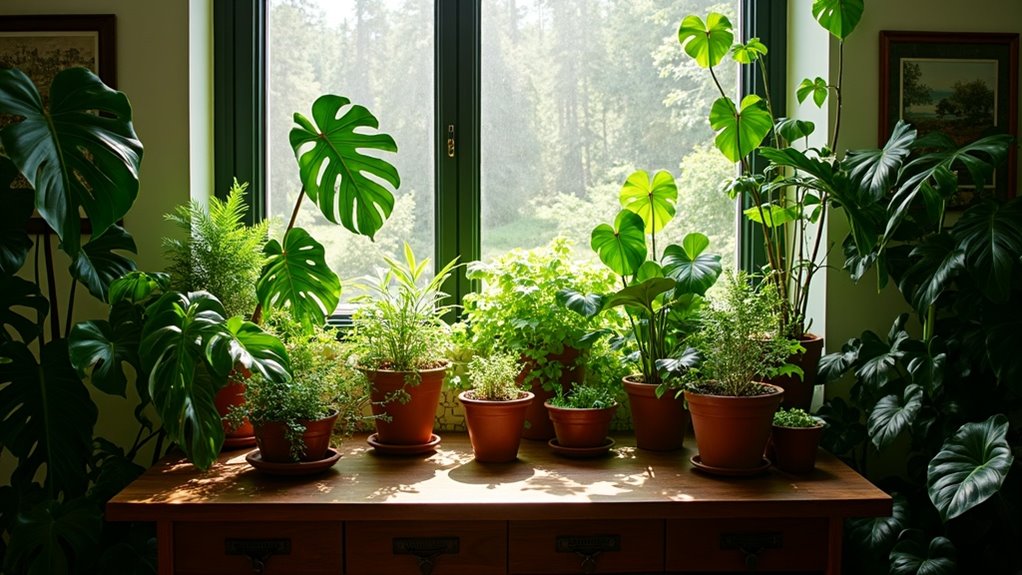
Indoor plants are those that thrive in confined environments, often boasting characteristics like low-light adaptability and air-purifying abilities. Common favorites include Pothos, Snake Plants, Spider Plants, ZZ Plants, and Peace Lilies, which offer diverse aesthetics and minimal maintenance. These plants flourish in typical indoor conditions, needing moderate humidity and stable temperatures. Choosing the right plants for your space involves evaluating light and pet safety. Discover more about how to care for these beneficial green companions.
Key Takeaways
- Indoor plants are species that thrive in low to moderate light conditions, making them suitable for home environments.
- Popular options for beginners include Pothos, Snake Plant, Spider Plant, ZZ Plant, and Peace Lily.
- They require minimal maintenance and adapt well to varying humidity and temperature ranges.
- Indoor plants purify the air by filtering harmful toxins, enhancing overall air quality.
- Care for indoor plants involves providing indirect sunlight, proper watering, and maintaining optimal humidity levels.
Characteristics of Indoor Plants
Indoor plants, while often seen as simple decorative elements, possess unique characteristics that enable them to flourish in indoor settings.
They typically thrive in low to moderate light, adapting well to environments where sunlight is limited. Their easy-going nature allows many species, like the ZZ Plant and Pothos, to tolerate varying humidity and temperature ranges, favoring 65-75°F.
Indoor plants flourish in low to moderate light, thriving in varying humidity and temperatures between 65-75°F.
In addition, several indoor plants, including the Peace Lily and Snake Plant, are renowned for their air-purifying qualities, effectively filtering harmful toxins.
With diverse sizes and minimal maintenance requirements, indoor plants cater to various aesthetic preferences and space needs, making them ideal for any home.
Popular Houseplants for Beginners
For those new to the world of houseplants, five standout options make an excellent starting point.
The Pothos, with its trailing vines, thrives in low light and is easy to care for.
The Snake Plant‘s upright leaves tolerate infrequent watering, making it another popular houseplant.
If you have pets, the Spider Plant adapts well to different light conditions and produces small “spider” plants.
The ZZ Plant, known for its glossy leaves, requires minimal maintenance and thrives in various light.
Finally, the Peace Lily offers striking white flowers and prefers indirect light, making it a favorite among beginners.
Care Requirements for Indoor Plants
Understanding the care requirements of your houseplants is essential for their health and longevity. Most indoor plants thrive under bright, indirect sunlight, so make sure they’re not exposed to direct sun. Water only when the top inch of soil is dry, avoiding overwatering. Maintain moderate to high humidity levels, using a humidifier or water tray to foster growth. Keep the temperature between 65-75°F, away from cold drafts. Remember, specific care requirements can vary greatly among species, so research individual plants for the best results.
| Light Conditions | Watering Needs | Humidity Levels |
|---|---|---|
| Bright, Indirect | Water when top inch is dry | Moderate to High |
Benefits of Having Indoor Plants
Bringing greenery into your home offers a range of benefits that extend beyond mere aesthetics. Indoor plants, with their lush green foliage, enhance air quality by filtering out harmful pollutants, promoting a healthier living environment.
They also create a serene atmosphere that helps reduce stress and boosts mental well-being. Furthermore, many varieties, like the Spider Plant and Peace Lily, are low-maintenance, making them perfect for beginners.
Choosing the Right Indoor Plants for Your Space
When you’re choosing indoor plants, first assess your lighting conditions to match plants like Fiddleleaf Figs with bright spaces and Snake Plants with low light.
Next, consider pet safety, as some plants can be harmful to animals while others, like Spider Plants, are safe.
Finally, evaluate maintenance requirements; opting for low-maintenance varieties can simplify your plant care routine.
Assess Lighting Conditions
How do you determine the best indoor plants for your space? Start by evaluating the amount of natural light available.
Different plants have varying light needs; for instance, Fiddleleaf Figs thrive in bright, indirect light, while Snake Plants can tolerate low light.
Consider lighting duration as well—Pothos thrives in low light but adapts to moderate conditions.
Many plants, like Monstera and ZZ Plant, can adapt to different light conditions, yet they flourish in their preferred environments.
Avoid placing light-loving plants, such as Jade and Rubber Plants, in darker corners, as this can hinder their growth and overall health.
Consider Pet Safety
Why should pet safety be a priority when choosing indoor plants? Many popular houseplants, like the Fiddleleaf Fig and Monstera, are toxic to pets and can lead to serious health issues.
Instead, consider pet-friendly options such as the Spider Plant and African Violet, which are safe for both cats and dogs. It’s essential to research each species; even plants like the ZZ Plant pose risks if ingested.
Always consult care guides or plant safety resources to guarantee your indoor plants enhance your space without compromising your furry companions’ well-being.
Prioritize pet safety to create a harmonious home environment.
Maintenance Requirements
Choosing the right indoor plants involves careful consideration of your space’s unique characteristics and your ability to maintain them. Assess lighting conditions and humidity levels to guarantee compatibility. Low-maintenance varieties like the ZZ Plant or Pothos are great for busy lifestyles. Here’s a table to help you choose wisely:
| Plant | Light Requirement | Humidity Level |
|---|---|---|
| Fiddleleaf Fig | Bright, indirect light | Moderate to high |
| Snake Plant | Low light | Low |
| Prayer Plant | Indirect light | High |
| Jade Plant | Bright light | Low |
| Spider Plant | Indirect light | Moderate |
Evaluate these factors for successful indoor gardening.
Tips for Maintaining Indoor Plant Health
To keep your indoor plants thriving, you need to provide them with ideal light and proper watering.
Place your plants where they’ll receive bright, indirect sunlight, as this is vital for their growth.
Additionally, tailor your watering schedule to each plant’s specific needs, allowing the soil to dry slightly between waterings to prevent overwatering.
Optimal Light Conditions
While many indoor plants flourish in bright, indirect light, understanding the specific light requirements of each species is essential for maintaining their health.
To provide ideal light conditions, consider these tips:
- Avoid direct sunlight to prevent leaf scorch for sensitive plants like Peace Lily.
- Utilize sheer curtains to filter harsh rays, benefiting delicate varieties such as Calathea.
- Rotate plants regularly for even light distribution, promoting uniform growth.
- Choose low-light tolerant species, like Snake Plant, for dim spaces.
Proper Watering Techniques
How can you guarantee your indoor plants receive the right amount of water? Start by employing proper watering techniques, which involve checking the soil moisture with your finger. If the top inch feels dry, it’s time to water.
Aim to water once a week, allowing the potting medium to dry slightly between waterings to prevent root rot and promote healthy growth. Use well-drained soil to guarantee excess water escapes, reducing the risk of overwatering.
Adjust your watering schedule based on the season, providing more water during spring and summer while cutting back in fall and winter to maintain ideal plant health.





