
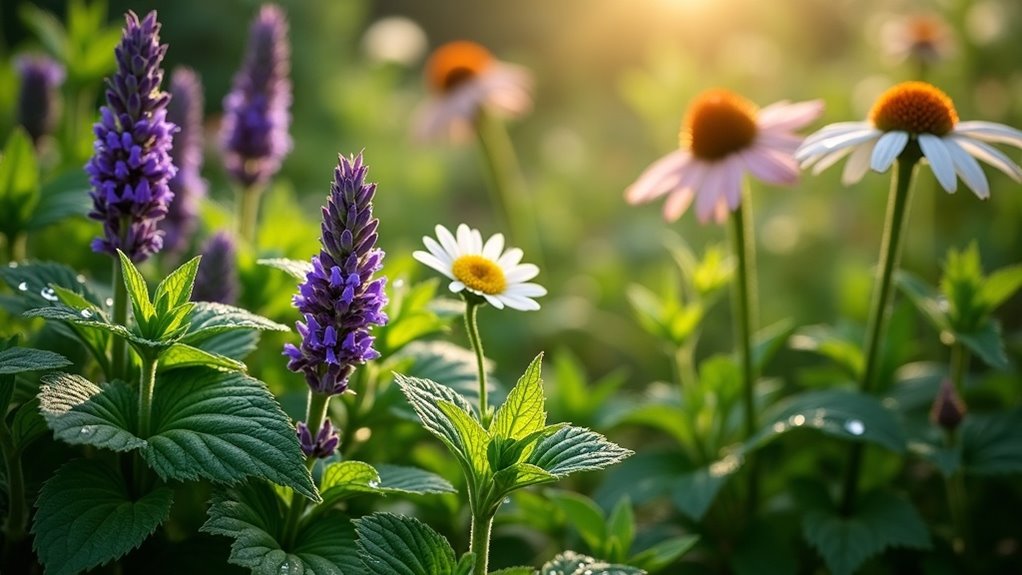
Medicinal plants, often called nature’s pharmacy, play a crucial role in promoting health and treating ailments. Common examples like chamomile, peppermint, and turmeric offer soothing, anti-inflammatory, and antioxidant benefits. Whether you want to calm your nerves with lavender or boost your immunity with echinacea, these plants have something for everyone. Being aware of safety and growing tips is essential, so you can maximize their potential. Discover more fascinating details about these incredible herbs!
Key Takeaways
- Medicinal plants include well-known herbs like Calendula, Chamomile, Peppermint, Holy Basil, and Lavender, each with unique health benefits.
- Echinacea boosts the immune system, while Turmeric provides anti-inflammatory and antioxidant effects.
- Many medicinal plants possess properties like anti-inflammatory and antioxidant effects, valuable for traditional and modern medicine.
- Proper preparation, such as drying or tincturing, maximizes the potency of medicinal herbs for year-round use.
- Always consult a healthcare provider before using herbal products, especially for pregnant or nursing individuals.
Overview of Medicinal Plants
Medicinal plants, often regarded as nature’s pharmacy, have been integral to human health for millennia. These plants possess unique properties that are used to help cure various ailments.
Scientific research highlights their antioxidant and anti-inflammatory properties, which contribute to overall health. In many cultures, traditional medicine relies heavily on these natural remedies, providing accessible solutions for communities.
Notably, many modern pharmaceuticals trace their origins back to medicinal plants, such as aspirin from willow bark.
However, conservation is essential, as climate change and habitat destruction threaten these invaluable resources and their biodiversity, underscoring the need for sustainable practices.
Plant Profiles
Exploring the world of medicinal plants reveals a rich tapestry of healing potential, where each species offers unique benefits and applications.
Calendula is renowned for its anti-inflammatory properties, effectively treating skin ailments and digestive problems.
Calendula is celebrated for its powerful anti-inflammatory effects, making it an excellent remedy for skin and digestive issues.
Chamomile’s calming effects make it a popular tea for relaxation and digestive support, while its topical use helps with skin issues.
Peppermint boasts antimicrobial properties, soothing sore throats and coughs.
Holy Basil serves both respiratory and skin needs with its gentle effects.
Finally, Lavender is cherished for its calming effects, aiding in sleep and anxiety relief, making it a versatile ally in holistic health.
Benefits of Common Medicinal Plants
When you consider the myriad benefits of common medicinal plants, it’s clear that nature offers a wealth of healing properties. Echinacea boosts your immune system, while turmeric provides anti-inflammatory and antioxidant effects. Chamomile serves as a calming herbal remedy, perfect for easing anxiety. Lavender promotes relaxation and better sleep, whether through tea or aromatherapy. Peppermint acts as a digestive aid and soothes cold symptoms.
| Plant | Benefits | Usage |
|---|---|---|
| Echinacea | Immune support | Tea or capsules |
| Turmeric | Anti-inflammatory, antioxidant | Spice or supplement |
| Chamomile | Calming remedy | Tea |
| Lavender | Reduces anxiety, improves sleep | Aromatherapy or tea |
| Peppermint | Digestive aid, soothes throat | Tea or oil |
Safety and Precautions
While the benefits of common medicinal plants can be impressive, it’s crucial to approach their use with caution.
Always seek medical advice before using herbal products, especially if you’re pregnant, nursing, or on other medications, to avoid potential interactions.
Be aware that some plants, like Hemlock and Autumn Crocus, are toxic and can cause severe reactions.
Proper dosage is critical; for example, exceeding 240 mg of Ginkgo Biloba can lead to headaches and gastrointestinal upset.
Conduct thorough research on potential allergens and side effects, as even familiar herbs like Chamomile can trigger allergic reactions in sensitive individuals.
Safety first!
Growing and Using Medicinal Herbs
Growing your own medicinal herbs can be a rewarding and enriching experience. With minimal care, herbs like chamomile and peppermint thrive in well-drained soil and sunlight.
Harvesting at peak growth guarantees maximum potency, as leaves are best collected just before flowering for ideal flavor and health benefits. Proper preparation, such as drying leaves or creating tinctures, allows for year-round use.
Companion planting with basil or marigold enhances growth while deterring pests. Understanding each herb’s plant properties, like lavender for relaxation and echinacea for immune support, enables you to select the right herbs for your needs, including those for skin conditions used externally.





