
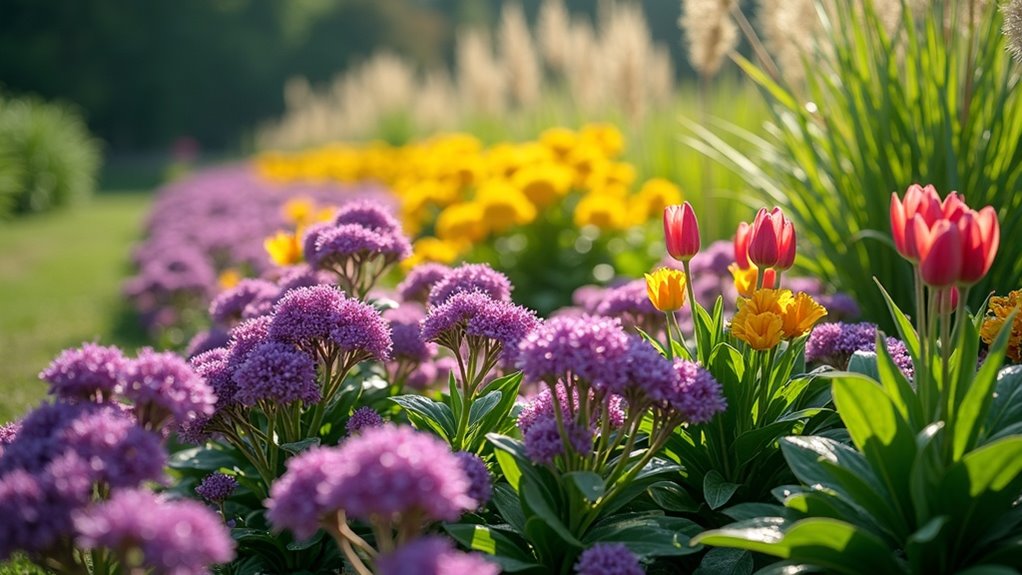
Perennial plants are those that return each year, thriving in various climates. They usually live for at least two years and can be found in different varieties, including drought-tolerant types like Coneflower and shade-loving ones like Hosta. These plants enhance your garden’s beauty while requiring less maintenance over time. Choosing the right perennials can attract beneficial wildlife and support a healthy ecosystem in your outdoor space. Discover more about the best options for your garden!
Key Takeaways
- Perennial plants return year after year, dying down in colder months and regrowing in warmer seasons.
- Common perennial examples include Catmint, Coneflower, Heuchera, Hosta, Russian Sage, and Rudbeckia.
- They thrive in hardiness zones typically ranging from 3 to 9, adapting to specific sunlight and soil preferences.
- Perennials require initial care but become self-sufficient once established, reducing yearly gardening work and costs.
- New varieties continually enhance vibrancy, resilience, and disease resistance in perennial plants for diverse garden designs.
Definition of Perennials
When you think about garden plants that come back season after season, perennials are likely what come to mind.
These are perennial plants that return year after year, dying down in colder months and regrowing when temperatures rise. They thrive in various hardiness zones, typically ranging from 3 to 9.
Unlike annuals, which complete their life cycle in one growing season, perennials live for at least two years, often much longer with proper care.
Initially, they need watering and maintenance, but once established, they become self-sufficient, relying largely on rainfall and adapting to their specific sunlight and soil preferences.
Benefits of Perennials in the Garden
While the appeal of colorful blooms and lush greenery is undeniable, the benefits of incorporating perennials into your garden extend far beyond mere aesthetics.
Perennials come back every year, markedly reducing your yearly gardening work and costs. They provide an ever-changing display of seasonal flowers, inviting you to revisit your garden regularly.
Perennials return each year, cutting down on gardening effort and costs while offering a vibrant seasonal display.
With their vibrant colors and textures throughout the seasons, they enhance your outdoor space’s beauty. Additionally, many perennials attract beneficial wildlife, like pollinators and birds, fostering biodiversity.
Their long lifespan and minimal upkeep once established make them a valuable investment for any garden, offering lasting charm and ecological rewards.
Types of Perennial Plants to Grow
When you’re planning your garden, consider the variety of perennial plants available to suit different conditions.
Drought-tolerant options like Catmint and Coneflower flourish in dry spots, while shade-loving choices such as Heuchera and Hosta thrive in low light.
If your garden gets plenty of sun, sun-loving perennials like Russian Sage and Rudbeckia will add resilience and stunning beauty.
Drought-Tolerant Perennials Selection
If you’re looking to create a sustainable garden with minimal water needs, selecting drought-tolerant perennials is a smart choice.
These plants thrive in full sun and are perfect for hot, dry spots, requiring less water once established. Consider adding Russian Sage (Salvia Yangii) and Catmint (Nepeta) to your garden; they’re hardy and adaptable to various soil conditions.
Beyond their resilience, drought-tolerant perennials attract beneficial wildlife like pollinators and butterflies, enhancing your garden’s biodiversity.
Shade-Loving Perennials Options
Creating a diverse garden doesn’t just mean choosing plants that withstand the heat; it also involves incorporating shade-loving perennials that thrive in low-light conditions.
Consider planting Heuchera and Hosta; these perennial flowers not only bring vibrant foliage but also bloom beautifully throughout the growing season. For early spring color, try Astilbe or Brunnera, which add unique shapes and hues.
These hardy plants flourish in rich, well-draining soil and attract pollinators, enhancing your garden’s biodiversity. Once established, they require minimal maintenance, making them perfect for low-fuss gardening while brightening shaded areas effortlessly.
Sun-Loving Perennials Choices
Sun-loving perennials are a fantastic choice for gardeners looking to fill their outdoor spaces with vibrant colors and textures. Varieties like Russian Sage, Coneflower, and Catmint not only showcase stunning blooms but also attract pollinators.
Long-lasting options, such as Helenium Autumnale and Black-Eyed Susan, provide vibrant color from late spring through fall with minimal upkeep. Plants like Heuchera and Bearded Iris enhance biodiversity by drawing in butterflies and hummingbirds.
For best results, plant these sun-loving perennials in well-drained soil during the cooler seasons of spring or fall, tailored to your hardiness zone for ideal growth.
When & Where to Plant Perennials
When you’re ready to plant perennials, timing and location are essential for their success. Aim for late spring or fall, as these cooler seasons provide ideal conditions.
Make sure you choose well-drained soil, as overly wet conditions can hinder growth. Consider each perennial’s specific sun and soil preferences when selecting your planting spots, promoting healthy development.
It’s also important to space your plants according to their mature size, allowing strong root systems to form. Finally, make certain the soil is warm but not too hot, and provide gentle sun exposure to help your perennials acclimate to their new home.
Special Features of Perennials
As you explore the special features of perennials, you’ll discover exciting new varieties for 2025 that can refresh your garden.
Many of these plants not only resist deer but also attract essential pollinators, enhancing biodiversity in your landscape.
With these options, you can create a thriving garden that’s both beautiful and beneficial to local wildlife.
New Varieties for 2025
With an exciting array of new perennial varieties debuting in 2025, gardeners will find innovative options that elevate their landscapes.
These selections are perfect for enhancing your garden, promising vibrant blooms and resilient growth that come back year after year, especially in early summer.
- Increased resilience to various climates
- Attracts pollinators, boosting biodiversity
- Improved disease resistance for sustainability
- Diverse colors and forms for creative designs
Explore these new additions to create a thriving garden that not only looks beautiful but also supports a healthier ecosystem.
Embrace the future of perennial gardening!
Deer Resistant Options
If you’re looking to protect your garden from deer while still enjoying the beauty of perennials, consider incorporating deer-resistant options.
Plants like Russian Sage, Lavender, and Coneflower not only deter deer with their strong scents and tough foliage but also provide vibrant blooms to enhance your garden’s aesthetic.
By selecting these deer-resistant perennials, you can create a visually appealing space that thrives with minimal maintenance.
Additionally, these plants help boost biodiversity, attracting beneficial pollinators without the risk of deer damage.
Embrace these options to enjoy a flourishing garden that stays safe from unwanted browsing.
Attracting Pollinators and Wildlife
Incorporating deer-resistant perennials not only protects your garden but also creates a vibrant habitat for pollinators and wildlife.
By selecting the right plants, you can attract a variety of beneficial creatures throughout the growing season.
Consider these options:
- Echinacea (Coneflower) for bees and butterflies.
- Helenium Autumnale (Sneezeweed) to support early-season pollinators.
- Heuchera (Coral Bells), a favorite of hummingbirds.
- Achillea (Yarrow) and Catmint (Nepeta) for beneficial insects.
With these perennials, you’ll enhance biodiversity and provide essential food sources from early spring to late summer, fostering a flourishing ecosystem in your garden.
Perennials and Wildlife Support
When you choose to plant perennial flowers, you’re not just enhancing your garden’s beauty; you’re also creating a vibrant ecosystem that supports local wildlife.
Perennial plants attract diverse pollinators like bees, butterflies, and hummingbirds, which are vital for a healthy environment. Many of these plants also provide essential food sources for birds and larval butterflies, boosting wildlife populations.
By incorporating perennials, you foster habitats for beneficial insects and improve soil health through increased biodiversity.
Selecting deer-resistant varieties guarantees your garden thrives while still supporting wildlife without drawing in unwanted herbivores.
Enjoy the benefits of a flourishing, sustainable garden!





