
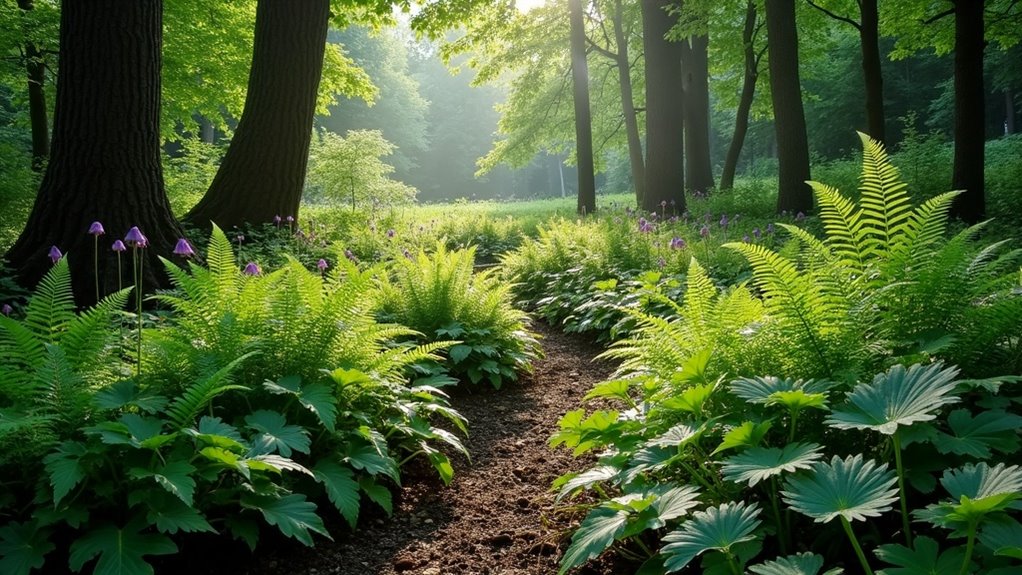
In woodland gardens, you’ll find an array of shade-loving plants that thrive in low-light conditions. Consider ferns for their vibrant foliage, rhododendrons for stunning blooms, and daffodils for cheerful pops of color. Hostas provide excellent ground cover, while ninebark adds visual interest with its unique bark and flowers. Anemone Wild Swan and heuchera are also great choices, offering diverse textures and colors. Explore these options to enhance your garden’s beauty and health.
Key Takeaways
- Ferns are essential in woodland gardens, thriving in shade and enhancing biodiversity with their attractive foliage.
- Hostas are versatile ground cover plants that come in various sizes and colors, making them popular for shaded areas.
- Rhododendrons offer vibrant spring blooms and thrive in part to full shade, attracting pollinators to your garden.
- Astilbes and Bleeding Hearts provide colorful flowers and unique shapes, adding visual interest to shaded spaces.
- Solomon’s Seal features graceful arching stems, making it a beautiful addition to woodland gardens with low light.
Ferns
Ferns are an essential component of any woodland garden, thriving in shaded environments that mimic their natural habitat.
These shade plants come in various sizes and shades, offering diverse landscaping options to suit your aesthetic preferences. Once established, most ferns require minimal care, making them ideal for gardeners of all skill levels.
Their attractive foliage provides visual interest throughout the growing season, even in low light. Additionally, ferns enhance the biodiversity of woodland gardens, supporting local ecosystems and providing habitats for wildlife.
Incorporating ferns into your garden not only beautifies the space but also fosters a vibrant, thriving environment.
Rhododendron
Rhododendrons bring vibrant spring colors to your shaded woodland garden, blooming in a stunning array of pastels and reds.
These plants thrive in part to full shade and prefer well-drained soil, so it’s essential to avoid clay soil to prevent root rot.
Blooming Spring Colors
In the vibrant tapestry of spring, the Rhododendron stands out with its stunning blooms that range from soft pastels to bold reds, making it an enchanting choice for woodland gardens.
These remarkable shade-loving plants thrive in part to full shade, ideal for shaded areas. Their vivid, blooming spring colors not only enhance visual interest but also attract essential pollinators, contributing to your garden’s ecological balance.
Hardy in Zones 4 to 8, Rhododendron adapts well to various climates. Just verify you plant them in well-drained soil to prevent root rot, maximizing their beauty and impact in your shade garden.
Soil Preferences and Care
To guarantee your Rhododendron thrives, focus on providing well-drained, acidic soil, as these plants are particularly sensitive to poor drainage and high clay content. They prefer part to full shade, ensuring vibrant blooms in spring. Regular watering is essential, especially during dry spells, to keep the soil consistently moist without becoming waterlogged. Additionally, mulching around the base helps retain soil moisture and insulates roots in colder months.
| Soil Type | Light Preference | Care Requirements |
|---|---|---|
| Well-drained | Part to Full Shade | Regular watering |
| Acidic | Mulch for moisture retention | |
| Low clay content | Monitor for root rot |
Daffodils
Daffodils thrive in woodland conditions, making them perfect for shaded areas in your garden.
Their bright yellow blooms not only add color but also naturalize and multiply, enhancing your landscape with minimal maintenance.
With various varieties available, you can choose the ideal type to suit your design while enjoying their adaptability to different soil types.
Growing Conditions Required
While many plants struggle in shaded environments, daffodils flourish under such conditions, making them ideal for woodland gardens.
These cheerful flowers thrive in partial shade, benefiting from dappled light filtering through trees. They prefer well-drained soil and can adapt to loamy or sandy conditions.
Daffodils require minimal care, allowing you to enhance shaded areas without extensive maintenance. Plant them where they can naturalize and multiply over time, providing vibrant blooms in early spring as other plants emerge.
Benefits of Daffodils
Incorporating daffodils into your woodland garden offers numerous advantages that enhance both aesthetics and biodiversity.
These shade-loving bulbs thrive in woodland conditions, easily naturalizing and multiplying over time. Their cheerful yellow flowers bloom in early spring, injecting vibrant color into shaded areas.
Daffodils require minimal care, adapting well to various garden designs, making them a low-maintenance choice. Additionally, they’re resistant to deer and rabbits, ensuring reliable color without the risk of common garden pests.
With their ability to thrive in diverse soil types and moisture levels, daffodils contribute notably to the ecological richness of your garden.
Varieties and Colors Available
When considering the varieties and colors available, you’ll find that daffodils offer a stunning array of options to enhance your woodland garden.
Mainly known for their cheerful yellow flowers, these plants also come in shades of white, orange, and even pink, providing versatility for various garden designs.
Daffodils can naturalize over time, creating a vibrant display that thrives in shaded areas. As low-maintenance native plants, they require minimal care, making them ideal for gardeners.
Their early spring blooms inject color into landscapes, enriching woodland settings that might otherwise lack floral interest during this season.
Ninebark
Ninebark (Physocarpus opulifolius) stands out as a versatile and hardy shrub perfect for woodland gardens. Thriving in partial shade, it features beautiful white flowers in spring and berries that attract wildlife.
You’ll appreciate its unique peeling bark, providing year-round visual interest. Here are four reasons to contemplate Ninebark for your garden:
- Adaptable to various soil types
- Low-maintenance once established
- Hardy in USDA Zones 3 to 7
- Adds texture and layers to your landscape
Integrating Ninebark into your woodland garden guarantees a stunning display that requires minimal effort, making it an ideal choice for busy gardeners.
Hosta
If you’re looking to add vibrant foliage and texture to your woodland garden, Hosta is an excellent option.
As one of the most popular shade plants, Hostas thrive even in full shade and come in various sizes and colors. These hardy perennials require low maintenance, making them perfect for ground cover or border plants.
Hostas are ideal shade plants, thriving in low light with diverse sizes and colors, perfect for effortless garden beauty.
They grow from 8 inches to over 4 feet tall, depending on the variety, and prefer well-drained soil with part sun to light shade.
Additionally, Hostas resist deer and rabbits, ensuring your garden remains intact despite herbivore pressure.
Consider Hostas for a lush, resilient display.
Anemone Wild Swan
Anemone Wild Swan adds an enchanting charm to woodland gardens with its delicate, swan-like white flowers that bloom in early spring.
This shade-loving perennial thrives in part to full shade, making it ideal for low-light areas.
Here are some reasons to contemplate it for your garden:
- Unique, swan-shaped blooms enhance visual interest.
- Grows 12 to 18 inches tall, perfect for borders and underplanting.
- Low maintenance, requiring minimal care for busy gardeners.
- Deer-resistant, safeguarding your investment in areas with high deer populations.
With its striking beauty and resilience, Anemone Wild Swan is a superb addition to any woodland garden.
Heuchera
While you explore options for your woodland garden, consider Heuchera, commonly known as coral bells, which excels in shady areas.
This perennial thrives in well-drained soil and prefers medium moisture conditions, making it ideal for various shade environments.
Heuchera showcases vibrant foliage in colors like green, purple, and bronze, adding visual interest throughout the growing season.
Heuchera adds vibrant foliage in shades of green, purple, and bronze, enhancing visual appeal throughout the growing season.
In late spring to early summer, it produces delicate flower spikes that attract pollinators such as bees and hummingbirds.
Hardy in USDA Zones 3 to 9, Heuchera is a versatile choice for enhancing your woodland gardens with beauty and ecological benefits.





