
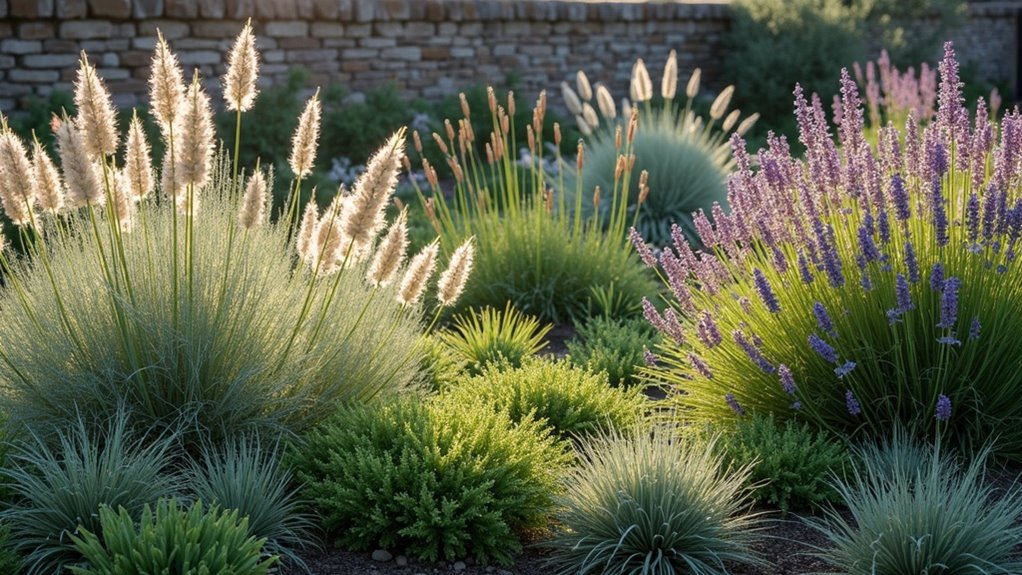
For exposed gardens, consider wind-tolerant plants like Stipa Tenuissima, which thrives in sunny conditions, and Geranium Glenluce, offering beautiful blooms while attracting pollinators. Brachyglottis Compacta ‘Sunshine’ is a tough shrub, renowned for its vibrant flowers, while Crataegus Monogyna makes a robust hedging option. Don’t overlook the stunning Allium Cristophii, which adds drama with its large flower heads. Each of these plants provides aesthetic appeal and ecological benefits; you’ll find even more options to enhance your garden’s resilience.
Key Takeaways
- Stipa Tenuissima thrives in windy conditions, featuring delicate foliage and drought-tolerance, perfect for sunny, exposed gardens.
- Geranium Glenluce offers stunning pink blooms, attracting pollinators while adapting well to various soil types in sunny locations.
- Brachyglottis Compacta ‘Sunshine’ is a tough evergreen shrub with yellow flowers, ideal for coastal gardens and resistant to drought and salt.
- Crataegus Monogyna provides robust structure, fragrant white blooms, and glossy fruits, making it suitable for hedges in exposed areas.
- Allium Cristophii features dramatic spherical flower heads, thrives in sunny, windy environments, and attracts essential pollinators like bees and butterflies.
Stipa Tenuissima
When you’re looking to add a touch of elegance to your exposed garden, Stipa tenuissima, or Mexican feather grass, is an excellent choice.
This hardy ornamental grass thrives in sunny sites and is perfect for windy conditions. It prefers well-drained soil and showcases delicate yellow-green leaves and silver-green flowers that gracefully sway in the breeze.
Drought-tolerant and resilient, it withstands challenging conditions, making it suitable for various landscapes. Blooming from late spring to early summer, Stipa tenuissima reaches heights of up to 2 feet, enhancing your garden’s visual interest and adding movement to your plant combinations, especially with alliums.
Geranium Glenluce
Geranium Glenluce is a hardy perennial that showcases stunning light candyfloss-pink flowers, creating a vibrant display in your garden from spring to summer.
Its ability to attract various insects makes it an excellent choice for enhancing pollinator-friendly spaces.
With its robust nature, this plant not only thrives in sunny, exposed locations but also pairs well with other resilient species for a dynamic garden landscape.
Hardy Flowering Characteristics
The vibrant candyfloss-pink flowers of Geranium Glenluce stand out in exposed gardens, showcasing its hardy flowering characteristics.
As a hardy perennial, this plant excels in windy conditions, proving to be a reliable choice among wind-resistant plants. Its long blooming season spans from spring to summer, bringing sustained color to your landscape.
Geranium Glenluce can tolerate a range of soil types, making it versatile for various gardening scenarios. Ideal for low-maintenance landscaping, it requires minimal care while providing stunning displays.
Whether you choose pink, purple, or white, these flowers enhance any garden’s aesthetic appeal effortlessly.
Insect Attraction Benefits
While cultivating an exposed garden, you’ll find that incorporating Geranium Glenluce not only enhances visual appeal but also serves as a magnet for beneficial insects. This hardy plant’s candyfloss-pink flowers attract bees and butterflies, boosting pollinator activity. Its insect-attracting qualities increase biodiversity, supporting local ecosystems by providing food sources. Additionally, Geranium Glenluce thrives in windy conditions, ensuring resilience while attracting essential pollinators that enhance garden health.
| Insect Type | Benefits |
|---|---|
| Bees | Improve pollination rates |
| Butterflies | Enhance biodiversity |
| Other Beneficial Insects | Support ecosystem stability |
Ideal Garden Pairings
When planning an exposed garden, pairing Geranium Glenluce with other wind-tolerant plants can create a stunning and resilient landscape.
This hardy plant, with its large, candyfloss-pink flowers, thrives in sunny, windy spaces, making it an ideal choice for your garden.
You can enhance its beauty by combining it with low-maintenance perennials like ornamental grasses and alliums, which also offer excellent wind resistance.
These flowering plants not only complement Geranium Glenluce’s vibrant colors but also support a diverse ecosystem by attracting beneficial insects.
Together, these ideal garden pairings will guarantee a dynamic and enduring display in your exposed garden.
Brachyglottis Compacta Sunshine
Brachyglottis compacta ‘Sunshine’ stands out as an exceptional choice for gardeners dealing with challenging, exposed environments.
This tough evergreen shrub boasts ovate, hairy grey-green leaves and vibrant yellow, daisy-like flowers that bloom in summer.
Its remarkable drought and salt tolerance make it ideal for coastal gardens, providing effective wind protection.
Thriving in full sun and well-drained soil, this low-maintenance plant creates colorful displays while attracting pollinators like bees and butterflies.
With its unique silver foliage adding visual interest year-round, Brachyglottis compacta ‘Sunshine’ guarantees your garden flourishes even in the harshest conditions.
Crataegus Monogyna
Hawthorn, scientifically known as Crataegus monogyna, is a robust and versatile addition to any exposed garden. Its adaptability makes it thrive in various soil types and withstand windy conditions, perfect for coastal areas.
Here are three key benefits of this hardy plant:
- Fragrant Flowers: In May, it showcases clusters of white blooms that attract pollinators, enhancing biodiversity.
- Glossy Fruits: The round haws not only add visual appeal but also provide food for birds.
- Effective Hedging: Crataegus monogyna offers privacy and structure, making it an excellent choice for creating protective barriers in exposed gardens.
Allium Cristophii
Allium cristophii, often referred to as Persian onion, stands out in exposed gardens with its impressive, spherical flower heads that can reach up to 6 inches in diameter.
This perennial thrives in sunny, windy garden environments thanks to its sturdy structure. It produces dramatic globes of star-shaped flowers, attracting essential pollinators like bees and butterflies.
Best planted in large drifts, allium cristophii pairs beautifully with ornamental grasses, such as Stipa tenuissima.
Once established, it’s drought-tolerant and requires minimum maintenance, delivering vibrant color and texture to your exposed borders while adding flair to your landscape.
Eryngium Variifolium
Eryngium variifolium, known as variegated sea holly, brings a striking visual element to exposed gardens with its distinctive spiny leaves and clusters of grey-blue flowers that bloom during the summer months of July and August.
This wind-tolerant plant thrives in coastal gardens, showcasing impressive drought tolerance. To guarantee ideal growth, consider these key factors:
- Soil: Eryngium variifolium prefers well-drained soil.
- Sunlight: It flourishes in full sun, enhancing flowering potential.
- Pollinators: Attracts beneficial pollinators like bees and butterflies, promoting biodiversity.
With a mature height of 24-30 inches, it adds significant visual interest to garden designs.
Erysimum Bowless Mauve
Erysimum Bowless Mauve is a perennial wallflower that showcases vibrant mauve flowers from early summer through autumn, making it a standout in exposed gardens.
This plant not only thrives in full sun and well-drained soil but also attracts essential pollinators like bees and butterflies, enhancing biodiversity in your outdoor space.
While it may be short-lived, its ease of propagation from cuttings guarantees you can maintain a continuous display of its beauty.
Growth Habits and Characteristics
Although often chosen for their vibrant blooms, perennial wallflowers like Erysimum Bowless Mauve also exhibit remarkable growth habits that make them ideal for exposed gardens.
- Resilience: This plant’s structure withstands windy conditions, allowing it to thrive where others may falter.
- Foliage: Erysimum’s compact growth habit complements its stunning flowers, enhancing garden aesthetics.
- Growing Conditions: It flourishes in full sun and well-drained soil, ensuring robust growth and consistent blooming from early summer to autumn.
These characteristics make Erysimum Bowless Mauve a practical, long-lasting choice for gardeners aiming to maintain color in challenging environments.
Attracting Pollinators and Wildlife
How can you enhance your garden while supporting local wildlife? Incorporating Erysimum Bowless Mauve is a fantastic choice for exposed gardens.
This perennial wallflower thrives in well-drained soil and blooms from early summer to autumn, providing a continuous source of nectar vital for attracting pollinators like bees and butterflies.
Its vibrant mauve flowers not only beautify your garden but also bolster local ecosystems by supporting essential species.
While Erysimum Bowless Mauve is short-lived, you can easily propagate it from cuttings, ensuring a steady supply of pollinator-friendly blooms year after year.
Transform your garden into a haven for wildlife today!





