
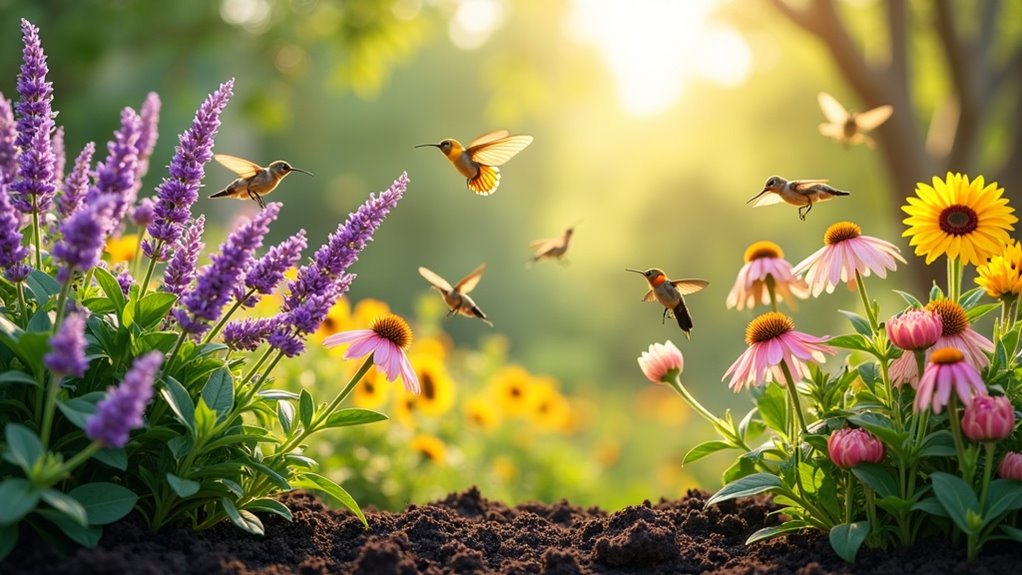
To attract pollinators and enhance garden biodiversity, focus on native plants. Incorporate perennials like Common Yarrow and New England Aster, which supply nectar throughout the growing season. Include trees and shrubs like Canadian Serviceberry and Elder Trees for early nourishment. Adding herbs, such as mint or thyme, can also entice pollinators. Prioritize plant selection and diverse bloom times to support various species. Understanding these essentials will help you create a thriving ecosystem that encourages pollinator activity.
Key Takeaways
- Incorporate native plants like milkweed, coneflowers, and New England aster to provide essential nectar and pollen for pollinators.
- Select perennial varieties that bloom at different times to ensure a continuous food source throughout the growing season.
- Include trees and shrubs such as Canadian serviceberry and golden currant, which offer early-season nectar and attract diverse pollinators.
- Choose plants with simple, flat flower structures to facilitate easier feeding for butterflies and bees.
- Engage community initiatives to maintain gardens, fostering local stewardship and promoting awareness about pollinator importance.
Importance of Native Plants for Pollinators
While you may be keen to attract pollinators to your garden, understanding the importance of native plants is essential.
These plants provide essential nectar and pollen specifically adapted to local ecosystems, which pollinators love. By incorporating a diversity of native plants, you support various species, including butterflies and moths, as they rely on them as host plants during their lifecycle.
Incorporating diverse native plants attracts pollinators and supports essential species like butterflies and moths throughout their lifecycle.
Native plants also offer crucial nesting sites for above-ground bees, enhancing their populations.
Ultimately, using native plants fosters greater biodiversity and ecological resilience, creating a thriving habitat that benefits both pollinators and your garden’s overall health.
Perennial Flowers for Pollinators
When selecting perennial flowers for your garden, consider essential varieties like Common Yarrow, New England Aster, and Coneflower, each offering unique benefits for pollinators.
Understanding their bloom times helps guarantee a continuous supply of nectar throughout the growing season, enhancing habitat for bees, butterflies, and hummingbirds.
Essential Perennial Varieties
To create a thriving garden that attracts a diverse array of pollinators, you should consider incorporating essential perennial varieties known for their ecological benefits.
Here are four must-have native plants:
- Common Yarrow: Blooms profusely, providing nectar for various pollinators and thrives in diverse conditions.
- New England Aster: Offers vital late-season food for bees and butterflies from August to October.
- Milkweed: Attracts butterflies and hummingbirds, serving as the primary host for monarch caterpillars.
- Coneflower: Drought-tolerant with a long blooming period, it supports pollinators throughout the growing season.
These plants enhance garden biodiversity while ensuring pollinator health.
Bloom Times Overview
Incorporating perennial flowers with varied bloom times into your garden is essential for attracting and sustaining pollinators throughout the growing season. Here’s an overview of some flowering plants and their bloom times:
| Flowering Plant | Bloom Time |
|---|---|
| Milkweed | June to August |
| Common Yarrow | Summer |
| Coneflowers | June to September |
| New England Aster | August to October |
| Goldenrod | Late summer to fall |
Habitat Enhancement Benefits
Enhancing habitats with perennial flowers greatly benefits pollinators by providing them with reliable sources of nectar and pollen.
By incorporating these plants, you can:
- Attract pollinators like bees and butterflies, significant for ecosystem health.
- Support beneficial insects with consistent food sources throughout their life cycles.
- Create a vibrant, biodiverse garden that flourishes year after year.
- Guarantee continuous blooming from spring through fall, essential for pollinator survival.
Plants like New England Aster and Joe-pye Weed not only beautify your garden but also play a key role in maintaining ecological balance and attracting pollinators effectively.
Annual Flowers for Pollinators
When you choose annual flowers for your garden, you’re not just adding color; you’re creating a vibrant habitat that attracts essential pollinators like bees and butterflies.
Consider including Nasturtium, which offers bright colors and accessible nectar.
Including Nasturtium in your garden adds vibrant colors and provides accessible nectar for pollinators.
Cosmos blooms from late July to the first frosts, providing a continuous food source during late summer and early autumn.
Lantana’s long blooming period features vibrant clusters that change color, while marigolds attract pollinators with their rich nectar.
Zinnias, known for their colorful, long-lasting flowers, are also an excellent choice to support pollinator populations throughout the growing season.
Trees and Shrubs That Attract Pollinators
Selecting the right trees and shrubs for your landscape can markedly boost the presence of pollinators in your garden.
Here are some exceptional choices:
- Canadian Serviceberry – Offers early-season nectar for bees and butterflies.
- Arrowwood Shrub – Features white spring flowers, attracting pollinators, birds, and butterflies.
- Golden Currant – Its fragrant yellow flowers entice bees, butterflies, and hummingbirds, enhancing biodiversity.
- Elder Trees – Bloom early, providing essential nectar while offering edible flowers and berries.
These plants that bloom not only help pollinators but also create a vibrant ecosystem, enriching your garden’s beauty and functionality.
Herbs Attractive to Pollinators
Incorporating herbs into your landscape not only adds flavor to your culinary creations but also plays a significant role in attracting pollinators. Herbs like lavender, dill, and chives provide essential nectar and pollen, supporting diverse pollinator life cycles. Flowering herbs such as coriander and fennel enhance garden aesthetics while encouraging visits throughout the growing season. Consider these herbs for your pollinator garden:
| Herb | Pollinator Attraction | Benefits |
|---|---|---|
| Lavender | Bees, Butterflies | Aromatic, drought-tolerant |
| Dill | Flies, Bees | Culinary use, self-seeds |
| Chives | Bees | Edible flowers, easy to grow |
| Mint | Bees, Hummingbirds | Strong aroma, pest deterrent |
| Oregano | Bees | Flavorful, perennial |
Growing a dedicated herb garden creates a thriving habitat for pollinators.
Tips for Plant Selection
To create a pollinator-friendly garden, it’s essential to choose the right plants that thrive in your local environment. Here are some tips to guide your selection:
- Opt for native plants to provide effective nectar and pollen sources.
- Include a variety of flowering plants that bloom at different times, ensuring a continuous food supply.
- Select plants with simple, flat flower structures to attract birds and make feeding easier for pollinators.
- Incorporate host plants for butterfly and moth larvae, enriching your garden’s ecosystem.
These choices will enhance biodiversity and support crucial pollinator populations.
Garden Layout and Maintenance for Pollinators
Creating an inviting environment for pollinators requires careful consideration of your garden’s layout and maintenance practices.
Design pollinator pathways to facilitate easy access for bees and butterflies, grouping similar flowers together for better visibility. Incorporate sheltered areas to protect them from harsh weather while providing safe resting spots.
Guarantee a consistent water source, like a shallow dish with stones, to support these essential insects.
Regularly maintain and prune your plants to promote healthy growth and remove diseased or invasive species.
Rotate plant placements annually to enhance soil health and biodiversity, fostering a dynamic ecosystem for all pollinators.
Community Involvement in Pollinator Gardens
While many gardeners recognize the importance of pollinators, engaging your community in pollinator gardens can greatly amplify this awareness.
Here are ways to foster community involvement:
- Organize workshops to educate about flowers that attract pollinators.
- Host volunteer days for planting and maintaining gardens, enhancing local stewardship.
- Collaborate with schools to create gardens that inspire youth to protect pollinators.
- Establish a newsletter or social media group to share successes and updates.
These actions not only increase biodiversity but also strengthen community ties, ensuring a collective effort in preserving our essential pollinator populations.





