
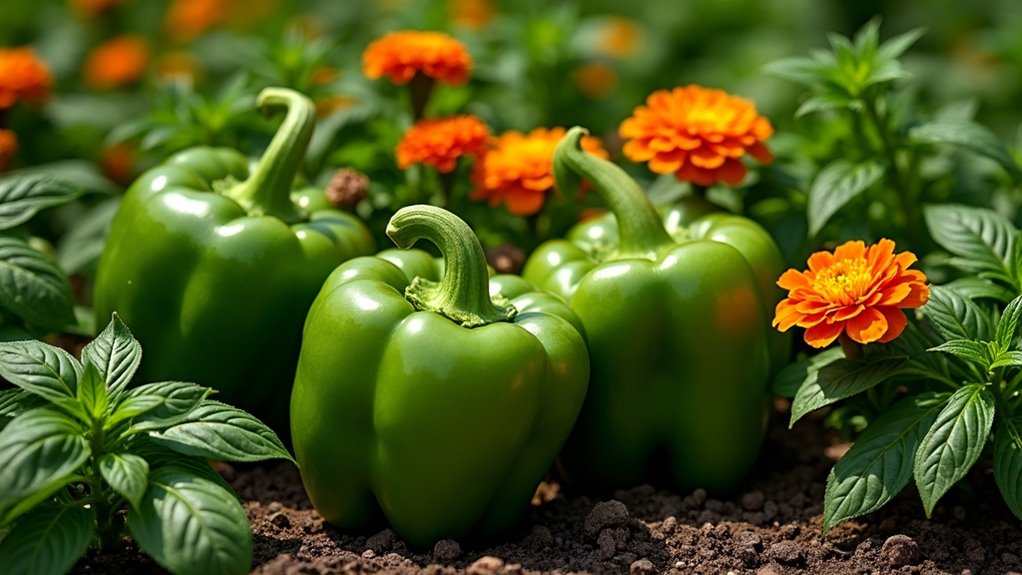
When companion planting with peppers, consider adding basil, marigolds, carrots, spinach, and onions. These plants enhance flavor, repel pests, and improve soil health. Basil keeps aphids at bay, while marigolds attract beneficial insects like ladybugs. Carrots and spinach provide ground cover that conserves moisture and suppresses weeds. Onions fend off pests like cabbage worms. However, be wary of fennel and brassicas, as they can hinder pepper growth. Discover more companion planting tips for a thriving garden ecosystem.
Key Takeaways
- Basil enhances the flavor of peppers while repelling pests like aphids, making it an ideal companion plant.
- Marigolds deter nematodes and attract beneficial insects, contributing to improved pest control in pepper gardens.
- Carrots act as living mulch, retaining soil moisture and improving aeration for pepper plants.
- Spinach provides ground cover that suppresses weeds and conserves moisture, benefiting surrounding pepper plants.
- Onions protect peppers from pests such as aphids and cabbage worms, enhancing overall plant health.
Understanding Companion Planting for Peppers
When you engage in companion planting with peppers, you’re not just growing vegetables; you’re creating a thriving ecosystem that enhances plant health and productivity. This technique improves soil health and pest control, allowing your pepper plants to flourish.
Ideal companions like basil repel pests and enhance flavor, while marigolds attract beneficial insects and deter nematodes, improving yields. Additionally, carrots aerate the soil and attract pollinators.
However, be cautious with plants to avoid, such as fennel and brassicas, as they compete for nutrients and inhibit growth. By understanding these dynamics, you can cultivate a more productive and resilient garden.
Top Companion Plants for Peppers
Companion planting with peppers can greatly boost their growth and resilience, and several key plants excel in this role.
Basil enhances flavor and repels pests like aphids.
Marigolds deter nematodes and attract beneficial insects, aiding pest control.
Carrots act as living mulch, retaining soil moisture and improving aeration with their deep roots.
Spinach provides ground cover that suppresses weeds and conserves moisture without competing for nutrients.
Finally, Onions protect peppers from pests such as aphids and cabbage worms while coexisting harmoniously.
Incorporating these companions into your garden will enhance your pepper plants’ health and productivity.
Benefits of Companion Planting With Peppers
Companion planting with peppers offers significant benefits, including enhanced growth potential, natural pest control, and improved soil health.
By strategically pairing peppers with certain plants, you can attract beneficial insects, reduce pest populations, and promote better root development through improved soil structure.
This approach not only boosts your pepper yield but also fosters a more sustainable gardening environment.
Enhanced Growth Potential
Utilizing companion planting with peppers can greatly enhance their growth potential by creating a symbiotic environment in your garden.
Here are some key benefits you’ll experience:
- Soil Nutrients: Companion plants like basil enrich the soil, providing essential nutrients to your pepper plants.
- Weed Suppression: Spinach acts as a ground cover, reducing competition for resources.
- Attract Pollinators: Herbs like cilantro draw beneficial insects, improving pollination rates.
- Moisture Retention: Ground cover plants help maintain soil moisture, fostering healthier growth.
Through these benefits, you’ll cultivate a thriving pepper garden that flourishes with enhanced growth.
Natural Pest Control
Creating a thriving pepper garden isn’t just about enhancing growth; it also involves managing pests naturally. Companion planting with herbs like basil and cilantro can repel pests such as aphids, spider mites, and thrips, minimizing your reliance on chemical pesticides.
Marigolds attract beneficial insects like lacewings and ladybugs, providing effective organic pest control. Nasturtiums act as a trap crop for aphids, diverting them from your peppers.
Additionally, planting onions can deter aphids and cabbage worms. By incorporating plants like borage and calendula, you’ll attract pollinators, improving pollination rates and ultimately enhancing yield in your pepper garden.
Improved Soil Health
When incorporating companion plants with your peppers, you not only boost growth but also markedly enhance soil health.
Here’s how companion planting can improve your garden:
- Legumes fix nitrogen, enriching the soil’s nutrients for your pepper plants.
- Deep-rooted plants, like carrots, aerate the soil, improving moisture retention.
- Ground cover plants, such as spinach, reduce erosion and suppress weeds, maintaining moisture.
- Annual rotation of companion plants introduces fresh nutrients, preventing soil depletion.
Together, these practices promote beneficial microbial activity, resulting in healthier, more productive pepper plants.
Prioritize soil health for a thriving garden!
Plants to Avoid Near Peppers
To guarantee healthy growth and ideal yields, it’s essential to recognize which plants to avoid near peppers.
Fennel releases allelochemicals that inhibit pepper growth and compete for nutrients.
Fennel can hinder pepper growth by releasing allelochemicals and competing for essential nutrients.
Brassicas, such as cabbages and broccoli, also compete for soil resources and can attract pests detrimental to peppers.
Potatoes share common pests and diseases, increasing infestation risks.
Corn competes for sunlight and nutrients, potentially stunting pepper development.
Finally, tomatoes, being part of the nightshade family, can introduce similar pests and diseases, making them unsuitable companions.
Avoid these plants to guarantee your peppers thrive and produce abundantly.
Tips for Successful Companion Planting
Successful companion planting with peppers hinges on understanding the specific needs of both your peppers and their partners in the garden.
Follow these tips for successful companion planting:
- Choose companion plants with similar light and water requirements to maximize healthy growth.
- Space companion plants 12 to 18 inches apart to guarantee adequate sunlight and airflow.
- Use plants like basil or marigolds to repel pests and attract beneficial insects.
- Regularly monitor plants for pests and diseases, as vigilance is key to maintaining a thriving garden ecosystem.
Enhancing Your Pepper Garden Ecosystem
To enhance your pepper garden ecosystem, select ideal companion plants that provide mutual benefits.
Incorporating herbs, flowers, and vegetables not only increases biodiversity but also helps repel pests and improve soil health.
Ideal Companion Plant Choices
When you choose the right companion plants for your pepper garden, you can markedly enhance its overall health and productivity.
Consider these ideal companions:
- Basil – Repels pests like aphids, enhances pepper flavor.
- Marigolds – Deter nematodes, attract beneficial insects for pest control.
- Onions – Protect against slugs and aphids, nutrient-friendly neighbors.
- Spinach – Provides ground cover, retains soil moisture, attracts beneficial insects.
Incorporating these plants not only improves your garden environment but also promotes a thriving ecosystem, ensuring your peppers flourish while minimizing pest issues.
Benefits of Biodiversity
Biodiversity plays an essential role in enhancing your pepper garden ecosystem by fostering a dynamic environment that promotes soil health and pest management.
Companion planting with diverse herbs and vegetables boosts beneficial insects, increasing pest resistance and reducing reliance on chemical pesticides. The varied plant species improve soil health by promoting microorganisms and nutrient availability.
Additionally, flowering companions enhance pollination, attracting bees and improving fruit set. This natural competition creates a balanced system that heightens disease resilience, making your garden more adaptable to environmental stressors.
Ultimately, a biodiverse garden thrives, ensuring robust pepper production and a healthier ecosystem.





