
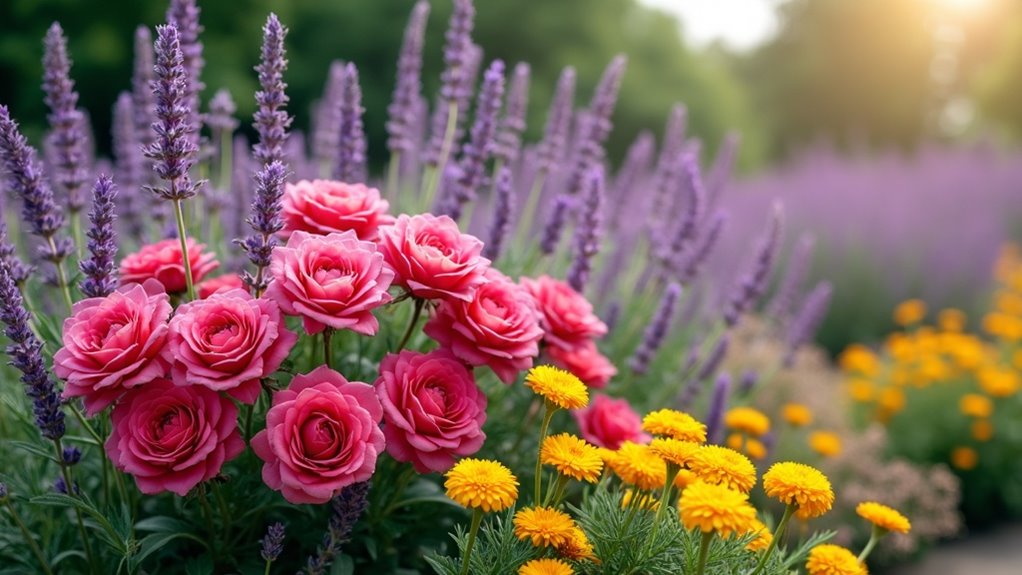
When choosing companion plants for your roses, consider annuals like Sweet Alyssum, Angelonia, and Calibrachoa, which thrive in full sun and attract pollinators. For perennials, Agastache and English Lavender can enhance your garden’s health by repelling pests. Remember, it’s essential to avoid invasive and shade-loving plants, as they can harm your roses’ vibrancy. Understanding these compatibilities is important for your garden’s success, and you’ll soon discover more excellent choices for harmonious plant relationships.
Key Takeaways
- Annual companions like Angelonia, Calibrachoa, and Verbena enhance rose gardens with beauty and thrive in similar conditions.
- Perennial plants such as Bee Balm and English Lavender attract beneficial insects while repelling pests, promoting rose health.
- Coreopsis and Artemisia add vibrant colors and textural contrast, thriving in the same sunlight and water conditions as roses.
- Avoid invasive species and shade-loving plants like Hostas, which can compete for resources and inhibit rose growth.
- Ensure companion plants have similar water and sunlight needs to support healthy rose blooming and overall garden harmony.
Annual Companions for Roses
When you’re looking to enhance your rose garden, consider incorporating annual companions that not only beautify your space but also thrive alongside your roses.
Angelonia, or summer snapdragon, flourishes in full sun, offering vibrant spires from late spring to fall.
Calibrachoa, known as million bells, trails beautifully and blooms until frost, adding striking color against taller shrub roses.
Verbena provides a continuous display of bright flowers while camouflaging bare lower branches.
When selecting these annual companions for roses, verify they share similar growing requirements regarding sun exposure and moisture needs, promoting healthy growth through effective companion planting.
Sweet Alyssum (Lobularia Maritima)
Sweet Alyssum (Lobularia maritima) thrives in full sun and flourishes alongside your roses, creating an eye-catching display with its honey-scented blooms.
Its ability to attract pollinators not only enhances the beauty of your garden but also boosts the health of your rose plants.
Additionally, its dense growth habit offers a practical solution for weed suppression, making it a valuable companion in your rose garden.
Growing Conditions Required
To successfully grow sweet alyssum (Lobularia maritima) alongside roses, you’ll need to confirm it receives a minimum of six hours of full sunlight each day.
These annuals thrive in well-drained soil, so make certain your planting area avoids waterlogged conditions while maintaining light moisture.
With a height of 4 to 10 inches and a spread of 10 to 48 inches, sweet alyssum serves as an excellent ground cover around your rose bushes.
Understanding these growing requirements is essential, as this companion plant not only enhances the garden’s beauty but also supports the health of your roses throughout the growing season.
Aesthetic Appeal Benefits
As you consider enhancing the visual charm of your rose garden, incorporating sweet alyssum (Lobularia maritima) can be a game changer. This companion plant for roses produces honey-scented blooms in soft shades, adding continuous color and texture from spring until the first hard frost.
With a height of just 4 to 10 inches, sweet alyssum effectively fills gaps around your roses, enhancing their aesthetic appeal. Its newer hybrids bloom nonstop and require no deadheading, making maintenance a breeze.
Thriving in full sun, sweet alyssum beautifully complements your roses while enriching the overall beauty of your garden.
Attracting Pollinators Effectively
While roses are well-known for their stunning blooms, pairing them with sweet alyssum (Lobularia maritima) can greatly boost your garden’s pollinator appeal.
This low-maintenance ground cover not only enhances the beauty of your rose bushes but also effectively attracts beneficial insects.
Consider these points:
- Pollinator Magnet: Its tiny, honey-scented blooms draw bees and butterflies, enhancing biodiversity.
- Continuous Blooms: Flowering from spring until frost guarantees a steady supply of nectar.
- Visual Harmony: Sweet alyssum’s low height fills gaps around taller roses, creating a layered aesthetic.
Together, they cultivate a vibrant, thriving ecosystem.
Angelonia (Angelonia Spp. and Hybrids)
Angelonia, often referred to as summer snapdragon, is an exceptional companion plant for roses, especially in gardens that bask in full sun.
This vibrant plant grows 1 to 3 feet tall, making it a perfect rose companion, adding height and color. Its colorful spires bloom from late spring until fall, ensuring a continuous display alongside your roses.
Angelonia thrives in warmer climates and is heat resistant, just like your roses. With low maintenance needs and the ability to attract beneficial pollinators, plant alongside roses for a harmonious garden environment where both can flourish without competing for resources.
Calibrachoa (Calibrachoa Hybrids)
Calibrachoa, commonly known as million bells, makes a striking addition to rose gardens, particularly as it thrives in full sun and offers a vibrant splash of color.
This annual plant is an excellent companion for roses due to its unique traits:
- Trailing Habit: It fills gaps between taller shrub roses, creating visual harmony.
- Continuous Blooms: Calibrachoa flowers from planting until frost, enhancing the garden’s beauty without the need for deadheading.
- Low Maintenance: Once established, it’s drought-tolerant and doesn’t aggressively compete for resources, allowing both roses and calibrachoa to flourish together.
Perennial Companions for Roses
When you choose perennial companions for your roses, you not only enhance their beauty but also create a more resilient garden ecosystem.
Plants like bee balm and English lavender attract beneficial insects while repelling harmful pests, promoting a healthier environment for your roses.
Attracting beneficial insects with bee balm and English lavender creates a healthier, pest-resistant environment for your roses.
Coreopsis thrives in similar growing conditions, adding vibrant colors that complement your blooms.
Meanwhile, artemisia provides a textural contrast with its silvery foliage, tolerating heat and drought.
Agastache (Agastache Spp. and Hybrids)
When you consider Agastache as a companion for your roses, you’ll appreciate its pest-repelling properties and compatibility with similar growing conditions.
This hardy perennial not only thrives in full sun, but its fragrant foliage also deters common garden pests, promoting the health of your roses.
Additionally, Agastache’s drought-tolerant nature aligns perfectly with the needs of roses, ensuring both plants flourish in well-drained soil.
Pest Resistance Benefits
While you may not realize it, incorporating Agastache into your rose garden can greatly enhance your pest resistance strategy. This fragrant perennial not only repels common pests like aphids but also contributes to a healthier garden ecosystem.
Here are some key benefits of Agastache:
- Natural Deterrent: Its strong scent naturally repels unwanted pests.
- Beneficial Pollinators: It attracts bees and butterflies, promoting pollination for your roses.
- Visual Appeal: Agastache’s colorful flower spikes add beauty while enhancing overall garden health.
Ideal Growing Conditions
Incorporating Agastache into your rose garden not only improves pest resistance but also requires an understanding of its ideal growing conditions to thrive alongside your roses.
This versatile companion plant flourishes in full sun and thrives in USDA hardiness zones 5-9. Agastache prefers well-drained soil and is drought-resistant once established, making it an excellent match for healthy roses.
Growing between 1 to 6 feet tall, it adds vertical interest while blooming from summer to early fall, attracting pollinators.
English Lavender (Lavandula Angustifolia)
English lavender (Lavandula angustifolia) stands out as an excellent companion for roses, sharing similar sunlight and soil preferences. Here’s why you should consider planting them together:
- Pest Repellent: Lavender effectively deters aphids, protecting your roses from common pests.
- Pollinator Attraction: Its blooms attract beneficial insects like bees and butterflies, promoting a healthy garden ecosystem.
- Soil Compatibility: Lavender thrives in well-drained, slightly alkaline soil, which complements the slightly acidic conditions preferred by roses.
What Not to Plant With Roses
Choosing the right companions for your roses is just as important as selecting beneficial plants like lavender.
Avoid invasive species that aggressively compete for resources, as they can harm your roses’ health and disrupt garden balance. Shade-loving plants, such as hostas and ferns, are unsuitable since roses thrive in full sun.
Additionally, steer clear of aggressive plants like certain grasses; they can overshadow roses and deplete nutrients. Finally, don’t plant anything with differing water or sunlight needs, as that can hinder your roses’ growth and blooming.
Prioritize harmony in your garden to guarantee vibrant, flourishing roses.





