
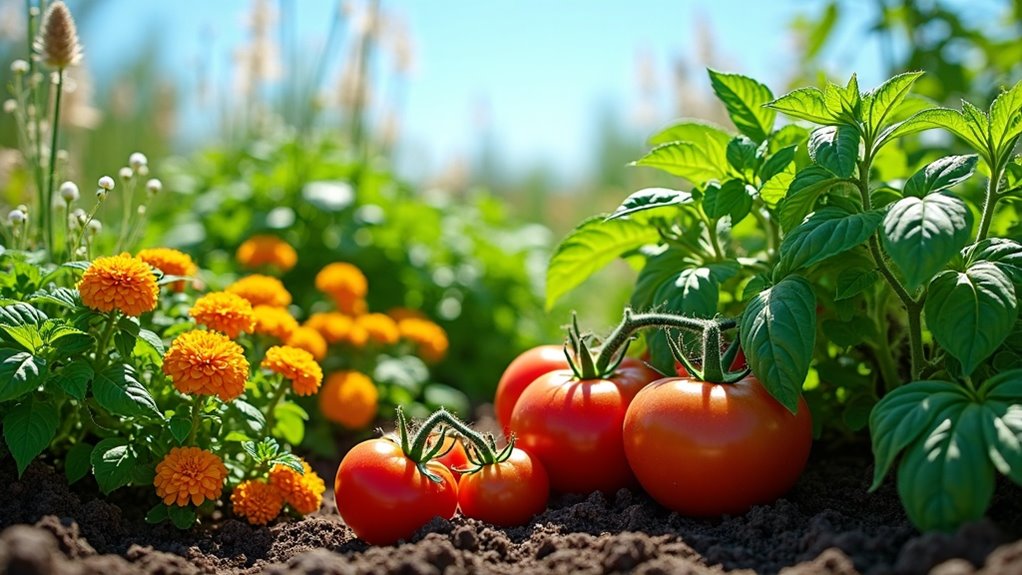
Companion planting with tomatoes involves using plants like basil, marigolds, and borage that enhance growth and deter pests. Basil boosts flavor and repels harmful insects, while marigolds attract beneficial insects and ward off nematodes. Additionally, borage improves soil health and attracts pollinators. However, avoid planting corn, potatoes, and fennel as they can compete for nutrients or inhibit growth. Discovering effective combinations can lead to a flourishing garden ecosystem that thrives on symbiotic relationships.
Key Takeaways
- Basil enhances flavor, repels pests, and thrives alongside tomatoes, making it an ideal companion plant.
- Marigolds deter nematodes and attract beneficial insects, promoting a healthier tomato garden.
- Borage improves soil health and attracts pollinators, supporting tomato growth and yield.
- Garlic masks tomato scents, helping to repel unwanted pests and protect the plants.
- Chives not only protect against aphids but also provide an edible option near tomato plants.
What Are Companion Plants?
Companion plants serve as strategic allies in your garden, promoting healthier growth and pest resistance.
These specific crops are planted close together to enhance each other’s growth and deter harmful pests. For instance, companion plants can attract beneficial insects, like ladybugs and parasitic wasps, which provide natural pest control for crops such as tomatoes.
Companion plants work together to boost growth and attract beneficial insects, enhancing pest control for crops like tomatoes.
Additionally, some plants, particularly legumes, enrich soil health by increasing nutrient availability.
However, be cautious; certain plants, like corn and brassicas, may compete for nutrients and space, hindering tomato growth.
Understanding these dynamics is essential for fostering a thriving garden ecosystem.
Benefits of Companion Planting
Companion planting with tomatoes offers significant benefits, including enhanced pest control, improved soil health, and increased pollination rates.
By strategically selecting companion plants, you can attract beneficial insects that manage pests while enriching your soil with essential nutrients.
This symbiotic approach not only boosts your tomato yields but also fosters a thriving garden ecosystem.
Enhanced Pest Control
When you incorporate specific plants alongside your tomatoes, you can greatly enhance pest control in your garden.
Companion plants like marigolds effectively repel pests, including root-knot nematodes and aphids, thanks to their strong scent.
Basil, on the other hand, masks the tomato’s aroma, making it harder for pests like thrips and tomato hornworms to find them.
Herbs such as chives and garlic release oils that deter aphids and spider mites.
Additionally, nasturtiums act as trap crops, luring aphids away.
Ultimately, borage not only attracts pollinators but also keeps tomato hornworms at bay, providing robust enhanced pest control.
Improved Soil Health
Improving soil health is essential for cultivating robust tomato plants, and incorporating diverse plant species can greatly contribute to this goal. Companion planting enhances nutrient availability by introducing legumes that fix nitrogen, benefiting heavy feeders like tomatoes. Additionally, diverse species improve soil structure, aeration, and water retention. Certain plants produce natural fungicides, deterring soil-borne diseases, while garlic and onions suppress pathogens. This balanced ecosystem fosters beneficial microbes, which are vital for overall soil fertility and health.
| Companion Plant | Benefit | Effect on Soil Health |
|---|---|---|
| Legumes | Fix nitrogen | Enhances nutrient levels |
| Garlic | Deters pathogens | Reduces diseases |
| Onions | Suppresses pathogens | Protects tomato roots |
| Marigolds | Natural fungicide | Improves disease resistance |
| Clover | Soil structure | Aids water retention |
Increased Pollination Rates
Attracting pollinators is essential for increasing the yield of tomato plants, and strategically interplanting with flowering species can greatly enhance this process.
Companion plants like calendula and zinnias draw beneficial insects that boost pollination rates, leading to better fruit set. Lavender attracts bumblebees, enhancing the quality of your tomatoes, while marigolds not only attract pollinators but also deter pests that could harm flowers.
Incorporating herbs like basil and dill creates a diverse environment, further appealing to pollinators. Research shows that companion planting can improve productivity by up to 20% through increased pollination rates, making this strategy invaluable for your garden.
Best Companion Plants for Tomatoes
Companion planting can greatly enhance your tomato garden by fostering healthier plants and boosting yields. Among the best companion plants for tomatoes, basil stands out, repelling pests like aphids while enhancing flavor.
Enhance your tomato garden with companion planting, using basil to repel pests and elevate flavor.
Marigolds deter root-knot nematodes and attract beneficial insects like ladybugs, making them essential allies.
Borage improves soil health, repels tomato hornworms, and attracts pollinators, which aids in tomato pollination.
Garlic masks the scent of ripening tomatoes, effectively repelling pests.
Finally, chives protect against aphids and spider mites with their aromatic presence, while also providing culinary benefits.
These plants work together, creating a thriving tomato environment.
Companion Plants to Attract Beneficial Insects
In any thriving garden, the presence of beneficial insects is essential for maintaining healthy plants and controlling pest populations.
Consider planting companion plants for tomatoes like calendula and zinnias, which attract ladybugs and lacewings.
Lavender not only draws bumblebees for better pollination but also repels certain pests.
Marigolds deter harmful insects such as nematodes while attracting pollinators.
Borage is invaluable as it attracts beneficial insects and repels pests like tomato hornworms.
Ultimately, sweet alyssum serves as ground cover and invites parasitic wasps to manage aphid populations, supporting overall garden health and enhancing tomato productivity.
Companion Plants for Organic Pest Control
While you might think of tomatoes as the star of your garden, their success can depend heavily on the right companion plants for organic pest control.
Marigolds repel root-knot nematodes and deter pests like aphids, while nasturtiums act as trap crops, drawing these pests away.
Marigolds fend off nematodes and aphids, while nasturtiums lure these pests away as effective trap crops.
Calendula’s fragrance repels hornworms and attracts beneficial pollinators, enhancing tomato yields.
Chives release oils that deter aphids and spider mites, providing both protection and edibility.
Finally, borage attracts pollinators and helps repel tomato hornworms, creating a healthier garden ecosystem.
Choosing these companion plants can greatly boost your tomatoes’ resilience against pests.
Worst Companion Plants for Tomatoes
Choosing the right companions for your tomato plants is just as important as selecting those that boost pest control.
Some of the worst companion plants can hinder your tomato’s growth and health.
- Corn attracts pests like the corn earworm
- Potatoes compete for nutrients and space
- Brassicas stunt tomato growth and share pests
- Fennel secretes chemicals that inhibit tomato growth
Avoid these plants in your garden, as they not only compete for nutrients but also attract pests that can harm your tomatoes, leading to a less fruitful harvest.
Make informed choices for a thriving garden!
Tips for Successful Companion Planting
When planning your tomato garden, consider ideal plant pairings that thrive in similar conditions, like full sun and rich soil.
Pay attention to spacing and arrangement to avoid overcrowding, which can lead to competition for nutrients.
Additionally, implementing seasonal planting strategies will help maximize growth and guarantee a healthy, productive garden.
Optimal Plant Pairings
Companion planting can greatly enhance your tomato garden’s health and productivity, especially when you select ideal plant pairings.
Consider integrating the following companions:
- Basil plants to boost flavor and repel pests like aphids.
- Marigolds that deter root-knot nematodes and attract beneficial insects.
- Borage, known for attracting pollinators and improving soil health.
- Nasturtiums act as trap crops, drawing aphids away from tomatoes.
Spacing and Arrangement
Effective spacing and arrangement are essential for maximizing the benefits of companion planting with tomatoes. Place taller companion plants, like sunflowers and zinnias, to the north to prevent shading.
Maintain 12 to 24 inches of spacing between tomato plants and their companions, promoting air circulation and nutrient uptake. Interplant herbs such as basil and oregano close to tomatoes for enhanced flavor and pest control.
Select companion plants with shallow root systems, like radishes, to minimize competition for water and nutrients. Additionally, consider planting legumes, like bush beans, within 12 inches to provide nitrogen without overshadowing your tomatoes.
Seasonal Planting Strategies
To guarantee a flourishing tomato garden, you should strategically plan your companion planting around the ideal growing season. Here are some tips:
- Plant after the last frost when temperatures range from 65 to 85°F (18.3 to 29.4°C).
- Introduce fast-growing companion plants like radishes or bush beans early for pest control.
- Stagger planting of herbs, such as basil and cilantro, to enhance pest resistance.
- Implement seasonal crop rotation with nitrogen-fixing plants like black-eyed peas to improve soil nutrients.
Enhancing Garden Biodiversity With Companion Plants
When you incorporate a variety of companion plants alongside your tomatoes, you not only enhance the visual appeal of your garden but also foster a vibrant ecosystem.
By mixing herbs and flowers like basil and marigolds, you attract beneficial insects such as pollinators and pest predators, which promotes a healthier environment. These companion plants improve pest control while enhancing nutrient availability and soil health through their diverse root systems.
Additionally, they provide living mulch, reducing soil evaporation and suppressing weeds. This diversity encourages beneficial microorganisms, supports nutrient cycling, and ultimately strengthens your garden’s resilience against pests and diseases, enhancing garden biodiversity.





