
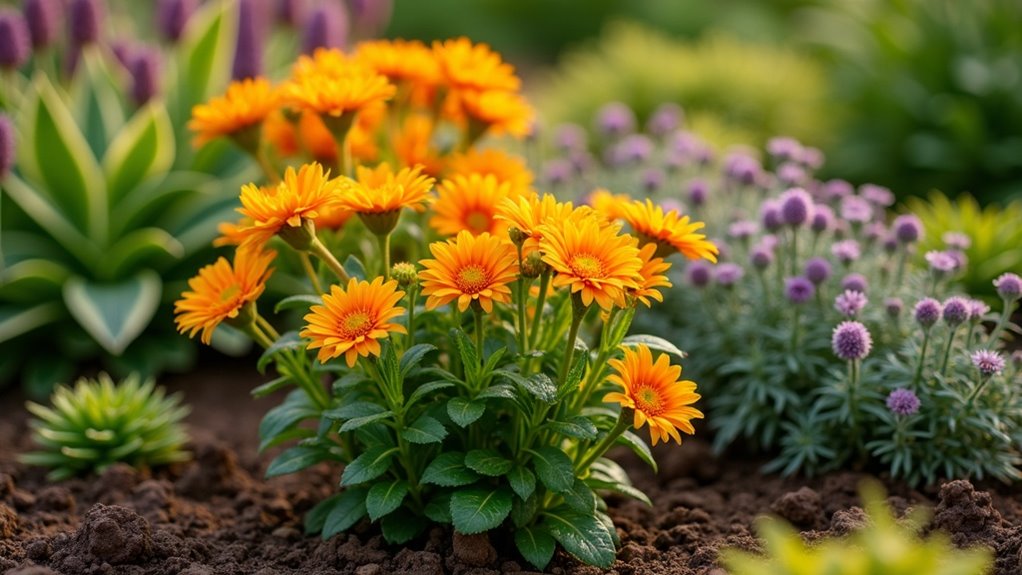
In fall, you can multiply your garden by dividing perennials like phlox, peonies, astilbe, black-eyed Susans, and daylilies. This process rejuvenates plants, promotes larger blooms, and reduces nutrient competition. To guarantee successful division, water the plants a day or two beforehand, and use a spade or fork to lift them gently. After separating the healthy roots, replant them in well-draining soil. Following the right care will enhance their growth and longevity—learn more about proper techniques for ideal results.
Key Takeaways
- Phlox can be divided in early fall for improved growth and blooming potential.
- Peonies should be divided in early fall to rejuvenate and enhance flowering.
- Astilbe needs division every few years to prevent overcrowding and maintain vibrancy.
- Black-Eyed Susans thrive with early fall division, resulting in better blooms.
- Daylilies should be divided every 3-4 years after flowering for optimal performance.
Benefits of Dividing Perennials
When you divide perennials in the fall, you’re not just splitting plants; you’re rejuvenating them for a more vibrant future. The benefits of division are significant. By addressing overcrowded perennials, you reduce competition for nutrients, resulting in larger blooms and healthier growth.
The best time for division is mid-September to mid-October, allowing newly created sections to establish roots before winter. This timing enhances their chances of successful regrowth in spring.
Properly divided plants can thrive for years, ensuring robust flowers and longevity, with some like peonies lasting over 50 years without needing division. Embrace fall for ideal plant health!
Best Perennials to Divide in Fall
Dividing perennials in the fall can greatly enhance your garden’s health, with several key species thriving under these conditions.
Fall is the ideal time to divide perennials like Phlox and Peonies, promoting healthy growth and allowing their root systems to establish before spring.
Astilbe should be divided every few years to prevent overcrowding, while Black-Eyed Susans benefit from early fall division to boost blooms in older plants.
Daylilies, too, thrive when divided every 3-4 years post-flowering.
Preparation for Dividing Perennials
Successfully dividing perennials requires careful preparation to guarantee the process goes smoothly and the plants thrive after replanting.
Start by watering the plants generously one to two days before division, providing moist soil for easier digging. Choose a cloudy or cooler fall day to minimize root stress.
Prepare your tools, such as a sharp knife, spade, or garden fork, for effective separation. Before division, cut back the foliage to about six inches to facilitate handling.
Finally, make certain the new location for replanting is well-draining and provides adequate spacing to promote healthy growth in your divided perennials.
Steps for Dividing Perennials
To effectively divide perennials, follow these clear steps that guarantee both the plant’s health and your gardening success. First, water well a day or two prior to division. Then, use a spade or garden fork to lift the plant, ensuring you maintain the integrity of the root ball. Rinse excess soil, identifying healthy roots and trimming any damaged parts. Next, use a sharp knife to separate the sections, ensuring each has healthy roots and growth points. Finally, replant immediately in well-draining soil, at the same depth, and water thoroughly to minimize transplant shock.
| Step | Action |
|---|---|
| 1. Water | Water well before dividing |
| 2. Lift | Use a spade to carefully lift the plant |
| 3. Rinse | Rinse off excess soil |
| 4. Divide | Use a sharp knife to separate sections |
| 5. Replant | Replant immediately in well-draining soil |
Specific Perennials to Divide
When it comes to dividing specific perennials, consider peonies, phlox, and Siberian iris as prime candidates.
You should divide peonies in early fall to guarantee strong regrowth, while phlox benefits from this timing to enhance both growth and flowering.
Additionally, dividing Siberian iris every three to four years in the fall promotes better blooms, so be careful to maintain root integrity during the process.
Peonies and Their Division
Although peonies can thrive for over 50 years without needing division, you might find it necessary to divide them if they become overcrowded or if their blooms start to weaken.
The best time to divide peonies is in early fall, specifically from mid-September to mid-October, ensuring successful regrowth before winter.
When dividing, make sure each section contains about four eyes to promote strong growth and flowering.
Cut the stems to ground level for easier removal, and water generously before lifting.
Replant the sections immediately in well-draining soil, avoiding deep planting to encourage blooming in the coming years.
Benefits of Phlox Division
Dividing phlox in early fall not only boosts the plant’s growth but also enhances its flowering for the following season. This division rejuvenates less prolific plants, promoting more vibrant blooms.
By separating the roots, you guarantee they establish better before spring, leading to a stronger start for new growth. To optimize regrowth, each division should ideally contain 2-3 shoots along with healthy roots.
After planting the divisions, applying mulch protects the new roots and helps retain moisture, further supporting the plants as they settle in. This careful approach will yield a flourishing display of phlox blooms in the upcoming season.
Optimal Timing for Irises
After enjoying the vibrant blooms of phlox, it’s time to shift focus to another perennial: irises.
For bearded irises, fall is the perfect time to divide plants after blooming, ideally in late summer or early fall. This timing minimizes root rot and supports healthy growth.
Additionally, Japanese irises benefit from division every four years to enhance flowering, while Siberian irises require division every three to four years to rejuvenate overcrowded plants.
When dividing, guarantee each rhizome section has at least three fans of leaves to promote robust regrowth.
Proper division helps maintain vigor and improves flowering for stunning displays.
General Care Post-Division
Once you’ve divided your perennials, it’s crucial to closely monitor moisture levels to guarantee the soil remains consistently damp. This helps establish new roots without causing rot. Protect your divisions from extreme weather, like frost or intense sunlight, to minimize stress. Lightly fertilize with a balanced fertilizer to encourage healthy regrowth, but avoid over-fertilization. Mulching around the base retains moisture, regulates temperature, and suppresses weeds. Regularly check for signs of stress or disease in the weeks following division to address any issues promptly.
| Task | Purpose |
|---|---|
| Monitor moisture | Ensure damp soil for roots |
| Apply mulch | Retain moisture, regulate temp |
| Check for disease | Address issues quickly |
Final Thoughts
While many gardeners may overlook the importance of timing, dividing perennials in the fall can greatly enhance their health and vigor.
Fall division allows for ideal root establishment before winter, leading to improved plant vigor year after year. By regularly dividing plants such as yarrow, daylilies, and hostas, you prevent overcrowding while promoting healthy growth and vibrant blooms.
Additionally, fall is the perfect time to rejuvenate flowering in varieties like black-eyed Susans and phlox. Embrace this seasonal opportunity to enhance flowering and propagate hard-to-find plants, ensuring your garden thrives beautifully through each season.





