
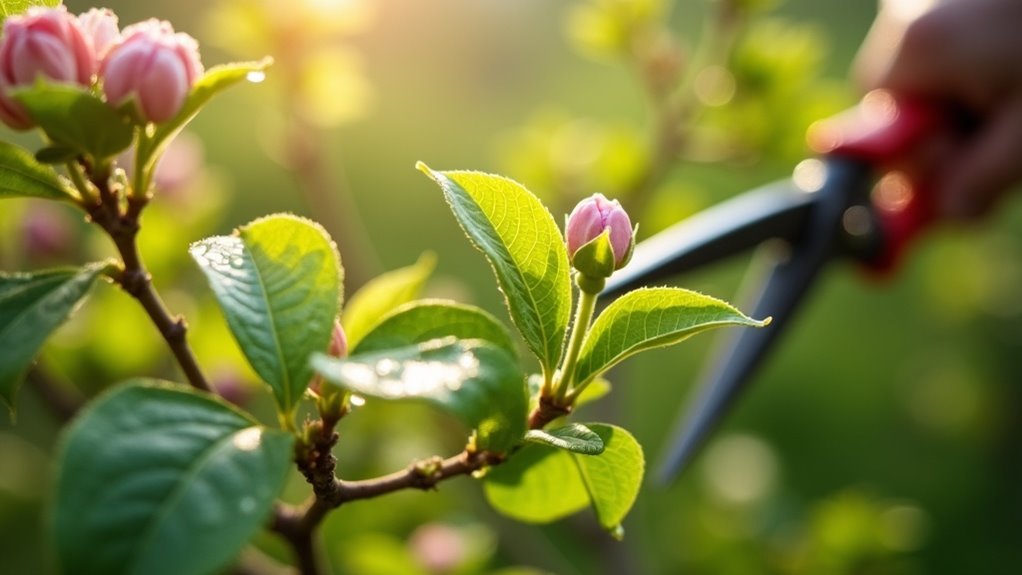
You can safely prune summer bloomers like butterfly bushes and roses in late winter to early spring, as well as evergreens during spring or summer. This timing encourages healthy growth and maintains strong structure. Don’t forget to remove any dead branches for improved overall health. Additionally, certain perennials benefit from spring pruning. By mastering these pruning techniques, you’ll set yourself up for a vibrant growing season ahead. There’s always more to learn about proper plant care techniques.
Key Takeaways
- Spring bloomers like lilacs and forsythia should be pruned immediately after flowering to avoid losing next year’s blooms.
- New wood bloomers, such as crape myrtles and butterfly bushes, can be pruned in late winter to early spring without harming their flowering potential.
- Evergreens can be pruned in spring or summer to control size and promote healthy growth while removing dead branches.
- Fruit trees should be pruned in late winter to remove dead and diseased wood, promoting healthy growth for better yields.
- Avoid pruning plants in late summer to prevent new growth that may not harden off before winter.
Understanding Old Wood vs. New Wood
When you’re pruning plants, it’s essential to understand the difference between old wood and new wood, as this knowledge directly impacts your pruning strategy.
Old wood bloomers, like lilacs and azaleas, produce flowers from buds formed the previous summer, so you should prune them immediately after they bloom to preserve next year’s flower buds.
In contrast, new wood bloomers, such as crape myrtles and butterfly bushes, flower on buds formed in the current spring; these can be pruned in late winter to early spring without hindering their blooming potential.
Mastering this distinction guarantees vibrant flowering in the seasons ahead.
Pruning Summer Bloomers
When pruning summer bloomers, timing is essential; aim for late winter to early spring for ideal results.
Focus on removing dead growth to encourage new, healthy shoots that will support vibrant blooms.
Pruning at the right time not only boosts flowering potential but also helps maintain the plant’s overall vigor.
Ideal Pruning Timing
To guarantee vibrant blooms and healthy growth in summer-flowering plants, timing your pruning is essential.
Pruning too early can disrupt the plant’s development, while late winter to early spring is ideal for summer bloomers like abelia, butterfly bush, and roses. This timing encourages new growth and allows the plants to form necessary buds for summer flowering.
Pruning during this period promotes maximum health growth, as plants focus their energy on blooming rather than recovering from improper cuts.
Avoid fall pruning unless necessary, as it can waste energy and delay blooms, emphasizing the importance of precise pruning timing for success.
Targeting Dead Growth
Targeting dead growth is essential for the health and aesthetics of summer-blooming plants. In early spring, you should focus on pruning dead or damaged wood from varieties like abelia, butterfly bush, and roses. This practice not only enhances their shape but also promotes vigorous flowering. Pruning too late can waste energy and hinder blooms. Here’s a quick guide to help you:
| Plant Type | Best Pruning Time | Focus Areas |
|---|---|---|
| Abelia | Early Spring | Dead or Damaged Growth |
| Butterfly Bush | Early Spring | Size Management |
| Crape Myrtle | Late Winter | New Growth |
| Stewartia | Late Winter | Shape Improvement |
Pruning Spring Bloomers
Although spring is a time for vibrant blooms, knowing when and how to prune spring bloomers is crucial for maintaining their health and maximizing their floral display.
For plants like lilacs and forsythia, prune immediately after flowering to avoid cutting off flower buds formed the previous summer.
Prune lilacs and forsythia right after they bloom to preserve the flower buds for next season.
Azaleas and rhododendrons also benefit from post-bloom pruning in late spring to keep their shape.
Be cautious with old-wood bloomers like magnolias and hydrangeas—pruning too early can eliminate their blooms.
Focus on removing only dead or damaged branches to guarantee healthy plants achieve their optimum flowering potential in the following season.
Managing Evergreens
After caring for spring bloomers, it’s important to shift your attention to managing evergreens. Pruning these plants in spring or summer helps control foliage and manage size.
Focus on removing dead branches to promote healthy growth while preserving structure. Avoid pruning in late summer to prevent new growth that may not harden off before winter.
Regular maintenance can enhance their appearance and guarantee robust health for the season ahead.
- Shape your landscape beautifully
- Keep your garden thriving
- Enjoy a fuller, lush look
- Protect your investment in greenery
Perennials That Benefit From Spring Pruning
When it comes to spring pruning, timing is essential for perennials to thrive.
You’ll find that plants like Black-eyed Susan and Yarrow respond well to careful trimming, while others like Coral Bells and Lambs Ears benefit from a more aggressive approach.
Understanding the specific needs of each type of perennial will help you promote healthy growth and vibrant blooms throughout the season.
Timing for Pruning Perennials
Pruning perennials in early spring is vital for promoting healthy growth and vibrant blooms throughout the season. By cutting back old foliage, you encourage new growth that leads to peak flowering.
Here are some key benefits of timely pruning:
- Guarantees robust blooms, enhancing your garden’s beauty
- Encourages sturdy foliage that withstands weather changes
- Prevents overcrowding, allowing each plant to thrive
- Eliminates disease-prone remnants, fostering a healthier garden
Perennials like black-eyed Susan, yarrow, and lambs ears thrive with spring pruning, making it an important step for maintaining a flourishing landscape.
Timing matters for the best results!
Types of Prunable Perennials
Understanding which perennials benefit most from spring pruning can greatly enhance your garden’s vigor.
Black-eyed Susans thrive when you trim old foliage, encouraging fresh growth while preserving new leaves.
Blanket flowers, too, need last year’s heads removed for vibrant summer blooms.
Anise hyssop requires cutting back dried husks to support new foliage and attract pollinators.
Coral bells benefit from pruning older leaves, allowing fresh growth to flourish while keeping the central stem intact.
Finally, yarrow needs careful pruning to rejuvenate without harming emerging plants, ensuring a second flush of summer blooms.
Embrace spring pruning for a thriving garden!
Tips for Pruning Fruit Trees
To achieve ideal fruit production in spring, it’s important to prune your fruit trees effectively.
Start by ensuring they’re pruned in late winter, focusing on removing dead branches and diseased wood. Use proper pruning techniques to promote healthy growth and shape the tree.
Prune your fruit trees in late winter to remove dead and diseased wood, ensuring healthy growth and proper shape.
Remember to thin crowded areas, allowing sunlight to penetrate inner branches for maximum fruit development.
- Strengthen tree structure for better yields
- Enhance fruit quality with careful cuts
- Promote longevity and health of your trees
- Enjoy a bountiful harvest each season
With these tips, your fruit trees will thrive and produce abundantly.
Common Mistakes to Avoid When Pruning in Spring
When you tackle spring pruning, it’s important to avoid common pitfalls that can negatively impact your plants’ health and flowering potential.
Pruning spring bloomers like lilacs and forsythia too early in spring can remove crucial flower buds, leading to fewer blooms. Always prune these plants just after flowering.
Be cautious with trees like birch and maple; don’t cut while sap is running to prevent messy sap flow.
Additionally, avoid cutting back rhododendrons and azaleas prematurely, as it can harm their growth.
Finally, prune new growth perennials like coneflowers carefully to protect them from late frosts and promote healthier growth.





