
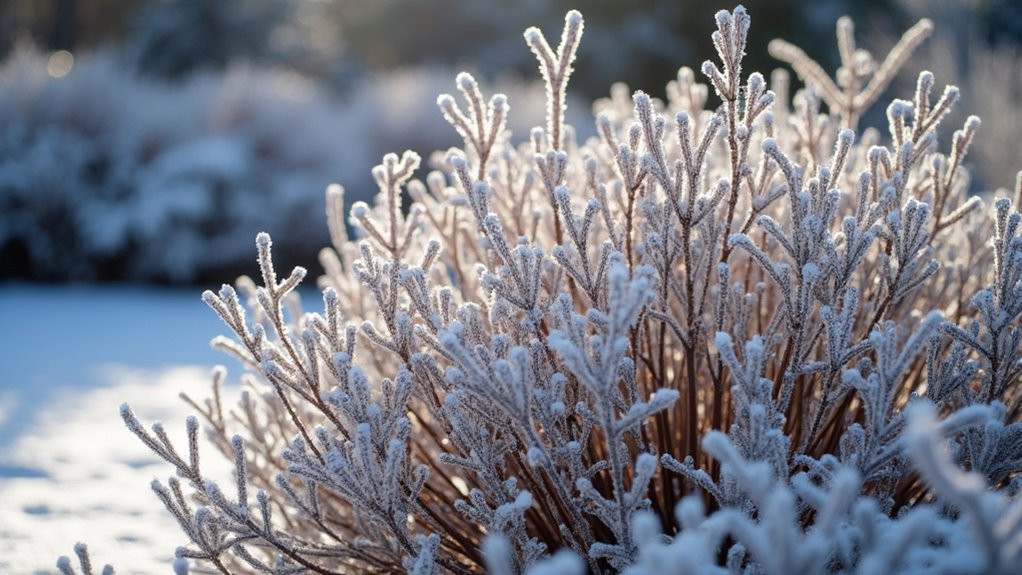
You can prune several plants in winter to enhance their structure. Deciduous trees like maples and oaks benefit from winter pruning, while apple trees should be pruned to shape growth. Ornamental shrubs, including roses, also need attention for proper shape and health. Don’t forget grape vines, which require pruning for productivity, and late-summer clematis, which should be cut back for larger blooms. Discovering the best techniques and timing will further improve your pruning efforts.
Key Takeaways
- Deciduous trees, such as maples and oaks, benefit from winter pruning to enhance their structural integrity.
- Apple trees should be pruned in late winter to shape growth and remove dead branches.
- Ornamental shrubs like roses require winter pruning for better shape management and health.
- Grape vines need pruning during dormancy to improve their structure and productivity.
- Late-summer clematis should be cut back hard in winter for larger blooms on new wood.
Benefits of Winter Pruning for Plant Structure
When you prune your plants in winter, you gain a clearer view of their structural integrity, which is crucial for maintaining their health.
Winter pruning enables you to identify and remove dead branches and diseased wood, promoting healthy growth. This pruning technique minimizes stress, allowing deciduous plants to channel energy into rebuilding their balanced structure come spring.
Additionally, removing crowded branches enhances air circulation and light penetration, important for nutrient distribution.
Essential Plants for Winter Pruning
Choosing the right plants for winter pruning is critical for maximizing your garden’s health and productivity. Focus on deciduous trees like maples and oaks; winter pruning enhances their structure and minimizes stress.
For fruit trees, particularly apple trees, prune in late winter to shape growth and eliminate dead branches, which boosts fruit quality.
Pruning apple trees in late winter shapes growth and removes dead branches, enhancing fruit quality.
Ornamental shrubs, such as roses, benefit from winter pruning to manage their shape and encourage healthy growth in spring.
Additionally, don’t forget to prune grapevines to promote structure and productivity, and cut back late-summer clematis hard to guarantee larger blooms that flower on new wood.
Techniques for Pruning Deciduous Trees and Shrubs
Pruning deciduous trees and shrubs in winter requires specific techniques to guarantee ideal health and growth.
Start by removing dead, diseased branches and damaged wood to enhance the plant’s structure. Focus on maintaining an open center, improving air circulation and light penetration.
Use these effective pruning techniques:
- Cut back crossing or rubbing branches to prevent bark wounds.
- Make precise cuts with sharp, clean tools to minimize stress.
- Prioritize branches that hinder growth to promote vigor.
- Regularly assess the tree’s structure for balanced growth.
This winter prune will lead to healthier plants and a more robust growing season ahead.
Timing Your Winter Pruning
Understanding the best timing for winter pruning is essential for maximizing plant health and ensuring vigorous growth.
Prune your deciduous trees and shrubs during late January and February, while they’re still dormant and leafless. This allows for easier assessment of their structure.
For fruit trees like apples and pears, winter pruning should occur before their spring bud break to minimize stress and boost yields.
Additionally, grapevines should be pruned during dormancy, ideally between early winter and late February.
Tools Needed for Effective Winter Pruning
When it comes to winter pruning, having the right tools on hand is essential for achieving ideal results and ensuring plant health.
You’ll want to keep your pruning tools sharp and clean to facilitate clean cuts that promote efficiency and reduce stress on your plants.
Keeping your pruning tools sharp and clean ensures efficient cuts and minimizes stress on your plants.
Essential tools include:
- Bypass pruners for small branches
- Loppers for medium-sized branches
- Pruning saws for larger limbs
- Safety gear to protect yourself
Prioritize removing dead wood first to maintain overall plant structure.
Investing in high-quality tools not only enhances effectiveness but also makes your pruning tasks smoother and more manageable.





