
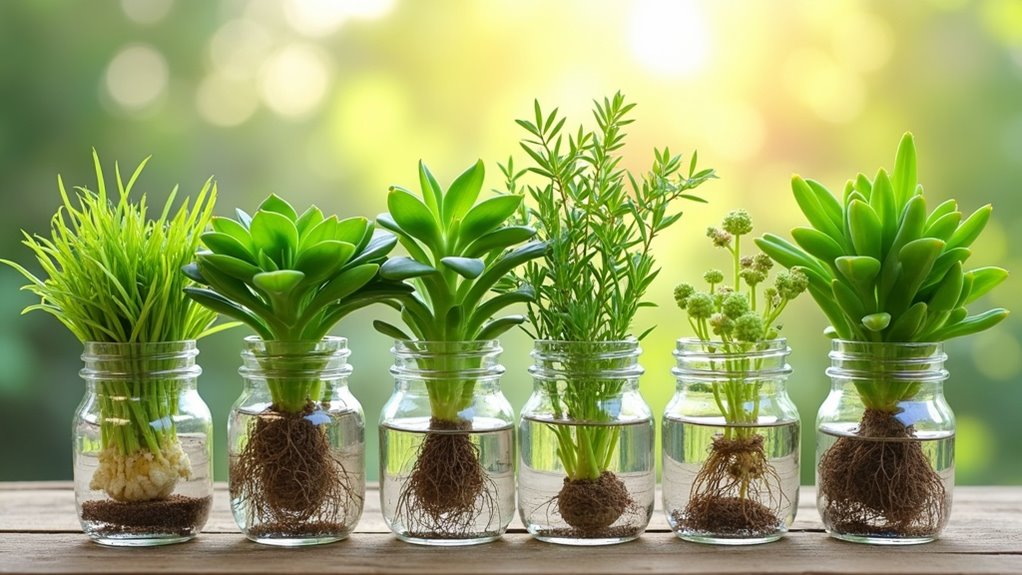
You can successfully propagate several popular plants from cuttings, including lavender, rosemary, hibiscus, hydrangea, and pelargonium geraniums. For the best results, select healthy, non-budding stems about 4-6 inches long, usually taken during the appropriate seasons. Make sure to maintain consistent moisture and use well-draining soil for rooting. By paying attention to these factors, you’ll improve your chances of success. There’s more to learn about the process and techniques for ideal propagation success.
Key Takeaways
- Popular plants that can regrow from cuttings include lavender, rosemary, hibiscus, hydrangea, and pelargonium geraniums.
- Softwood cuttings are best taken from healthy, non-budding stems during late spring to early summer.
- Ensure cuttings are 4-6 inches long and retain some upper leaves for optimal rooting.
- Maintain consistent moisture in the potting medium to support successful root development.
- Use sharp, sterilized pruning shears for clean cuts and select vigorous stems free from disease.
Understanding Plant Cuttings
When you want to propagate plants, understanding plant cuttings is vital.
Softwood cuttings, taken from new growth in spring or early summer, root easily and are perfect for flowering plants like hydrangeas. To guarantee success, select healthy cuttings with two to five leaf nodes.
Place them in well-draining soil to promote root growth. Maintaining moisture levels is essential; too much can lead to rot, while too little can dry out your cuttings.
Types of Cuttings for Propagation
When propagating plants, you’ll encounter four main types of cuttings: softwood, greenwood, semi-hardwood, and hardwood.
Each type is best suited for specific plants and growth stages, so timing is essential for success.
Understanding when to take each cutting can greatly improve your propagation results.
Categories of Plant Cuttings
Understanding the different categories of plant cuttings is essential for successful propagation, as each type caters to specific growth stages and conditions. Here’s a breakdown of the main cutting types:
| Cutting Type | Description |
|---|---|
| Softwood | Taken from new growth in spring, ideal for perennials like hydrangeas. |
| Greenwood | Non-woody stems in spring, suitable for boxwood. |
| Semi-hardwood | Partially mature stems from midsummer to fall, great for azalea. |
| Hardwood | Collected during dormancy, requires patience, perfect for crepe myrtle. |
Selecting the right category guarantees effective propagation and healthy plants.
Timing for Taking Cuttings
To achieve successful propagation, timing is critical for taking cuttings, as the right moment can greatly influence rooting success.
Softwood cuttings are best taken in late spring to early summer during active growth, while semi-hardwood cuttings, such as those from lavender and rosemary, thrive when taken in late summer to fall.
For best results, choose non-budding, non-flowering stems about 4-6 inches long with at least two leaf nodes.
During the rooting process, monitor moisture levels and light exposure, as these environmental conditions considerably impact the establishment of your new plants.
Timing truly makes a difference in propagation success.
Popular Plants for Softwood Cuttings
Five popular plants that thrive from softwood cuttings include lavender, rosemary, hibiscus, hydrangea, and pelargonium geraniums.
To propagate lavender and rosemary, select healthy, non-budding stems about 4-6 inches long, ensuring each cut contains two to three leaf nodes. These plant cuttings root best in well-draining soil, often mixed with perlite for moisture retention.
For hydrangea, use non-flowering stems and remove lower leaves to enhance root development while keeping some upper leaves intact for energy.
Hibiscus and pelargonium geraniums also respond well to softwood cuttings, leading to robust new roots when conditions are most favorable.
Essential Tips for Successful Propagation
To guarantee successful propagation, start by selecting healthy, non-flowering cuttings, as these have a higher chance of rooting effectively.
Maintaining consistent moisture levels in your potting medium is vital; check it regularly to prevent both overwatering and drying out, which can impede root development.
Selecting Healthy Cuttings
Selecting healthy cuttings is crucial for successful plant propagation. Choose vigorous stems free from disease or pests, as they’ve a higher chance of rooting.
Focus on non-budding, non-flowering shoots; these cuttings prioritize root development over flowers. Aim for cuttings with at least two to five leaf nodes, since these nodes contain growth hormones necessary for root formation.
Use sharp, sterilized pruning shears to make clean cuts just below a leaf node, minimizing damage and promoting quicker rooting.
Verify you take cuttings from the current year’s growth, as this softwood roots more effectively than older, woody stems.
Maintaining Moisture Levels
While you might be enthusiastic to see your cuttings thrive, maintaining consistent moisture levels is crucial for their successful propagation.
Start by using well-draining soil to prevent waterlogging and root rot. Regularly check the moisture levels; the potting medium should remain moist but not soggy. Adjust your watering frequency according to the plant type and environmental conditions to enhance rooting.
Additionally, consider misting your cuttings or covering them with plastic to maintain humidity and prevent moisture loss, especially in dry environments.
This careful attention to moisture will support healthy root development and guarantee your cuttings successfully propagate.
Preparing Your Potting Medium
Creating the right potting medium is essential for successfully rooting cuttings. To guarantee ideal conditions, follow these steps:
- Use a seed starting compost or multipurpose potting mix for nutrients and drainage.
- Incorporate horticultural sand or perlite to create a well-draining environment, preventing waterlogging.
- Prepare the medium in clean containers to avoid pathogens that could harm your cuttings.
- Moisten the potting mix before inserting cuttings, as this helps retain moisture and supports the propagation process.
Aftercare for Cuttings
Once you’ve planted your cuttings, maintaining consistent moisture in the potting medium becomes essential for their successful rooting.
To prevent loss of moisture, keep the soil evenly damp but not soggy. Place your cuttings in indirect sunlight to reduce stress and encourage new growth.
Regularly check for signs of development, adjusting care as needed. When roots are established, typically after 4-6 weeks, consider fertilizing with a diluted nutrient solution.
Gradually acclimate rooted cuttings to their new environment before transferring them to a larger pot or outdoors. Confirm the new medium is well-draining to support their continued growth.
Signs of Successful Rooting
Successful rooting can be identified through several key indicators that reveal the health and progress of your cuttings.
Look for these signs:
- New growth: Development of buds or leaf shoots at the top indicates successful rooting.
- Resistance when tugging: After 6-8 weeks, a gentle pull reveals if roots have formed and anchored in the well-draining soil.
- Firmness change: A shift from soft to robust texture suggests the plant’s root system is developing.
- Moisture levels: Monitor carefully; wilting or drooping signals that roots may not be established yet, requiring adjustments to care for ideal growth.





