
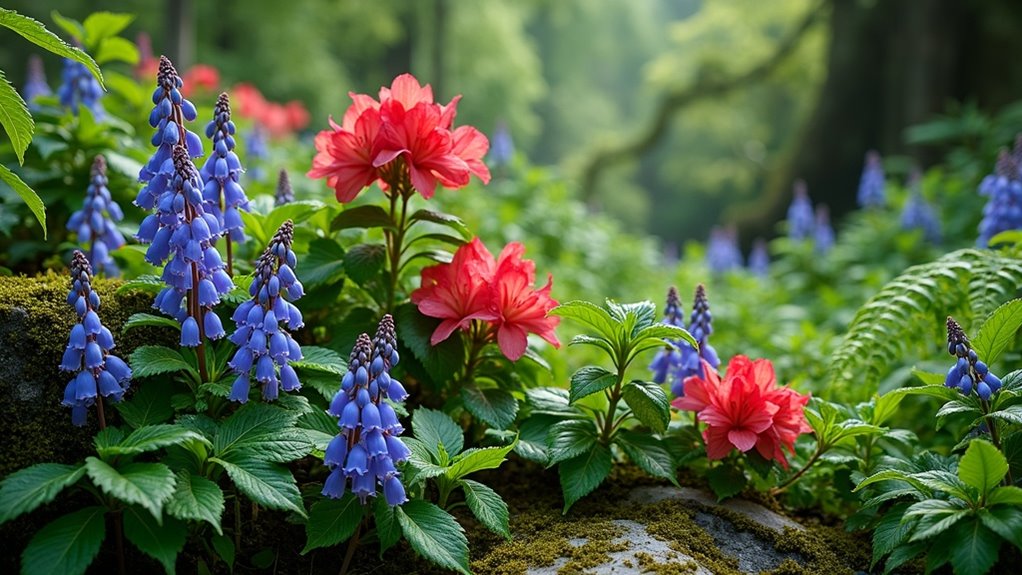
If you’re working with acidic soil, several plants will thrive in these conditions. Blueberries love a pH of 4.5 to 5.5, while azaleas prefer well-drained soil with a pH between 5 and 6. Other excellent choices include bleeding hearts, camellias, and mountain laurel, all of which favor acidic environments. These plants not only flourish but also contribute to a vibrant ecosystem. Discover the advantages of maintaining acidic soil and the best management practices to support your garden.
Key Takeaways
- Blueberries thrive in acidic soil with a preferred pH of 4.5 to 5.5, making them ideal for such conditions.
- Azaleas flourish in well-drained soil with a pH range of 5 to 6, benefiting from acidic environments.
- Bleeding hearts enjoy moisture-retentive, acidic soil, making them suitable for gardens with lower pH levels.
- Camellias require moist, well-drained, acidic soil to thrive and produce beautiful blooms.
- Mountain laurel thrives in acidic, well-drained soil and prefers partial shade, perfect for low pH gardens.
Understanding Acidic Soil
Understanding acidic soil is essential for successful gardening, especially if you’re working with plants that thrive in lower pH conditions.
Acidic soils typically have a soil pH below 6.5, often seen in sandy or loamy types with low phosphorous, magnesium, and calcium. This environment can enhance nutrient availability for acid-loving plants, such as blueberries and azaleas, allowing them to access essential minerals like iron and zinc.
Regular soil testing every 3-5 years helps you monitor pH changes, ensuring you provide ideal conditions for different plants. Knowing these factors will elevate your gardening success with acidophytes.
Importance of Soil Ph
Soil pH plays an essential role in determining which plants will thrive in your garden. It measures the acidity or alkalinity of soil, with acidic soil typically having a pH below 6.0. This level can limit nutrient availability, particularly calcium and magnesium, which are crucial for plant health.
Many acid-loving plants, like blueberries and azaleas, flourish in a pH range of 4.5 to 6.0. Understanding soil acidity helps you select the right plants and apply suitable soil amendments, ensuring peak growth.
Regularly testing soil pH every 3-5 years keeps your garden thriving and healthy.
Testing Soil Acidity
How can you guarantee your garden’s soil supports healthy plant growth? Start by testing soil acidity to determine your soil’s pH. You can use at-home kits or send samples to local extension offices. A simple test for acidic soil involves mixing 2 tablespoons of moistened soil with ½ cup of baking soda; fizzing indicates acidity. Regular soil testing every 3-5 years helps you monitor changes. Here’s a quick guide:
| Test Method | Result Indication | Soil Type |
|---|---|---|
| Baking Soda | Fizzing | Acidic Soil |
| Vinegar | Fizzing | Alkaline Soil |
Best Plants for Acidic Soil
When selecting plants for acidic soil, you’ll find a variety of options that flourish under these conditions.
For vibrant color, consider Bleeding Hearts and Azaleas, both known for their striking blooms, while Blueberries offer not only beauty but antioxidant-rich fruits.
Understanding the specific growing conditions required for each plant, such as sunlight and soil moisture, guarantees a thriving garden in your acidic landscape.
Ideal Acidic Soil Plants
While gardening in acidic soil presents unique challenges, it also opens the door to a variety of stunning plants that thrive in such conditions.
Blueberries prefer acidic soil with a pH of 4.5 to 5.5, allowing them to access essential nutrients.
Azaleas flourish in well-drained amended soil with pH levels of 5 to 6, thriving in shaded areas.
Bleeding hearts enjoy moisture-retentive, acidic environments with pH below 6.5.
Camellias require moist, well-drained soil for their spectacular blooms, while mountain laurel thrives in acidic, well-drained soil and partial shade, making them ideal choices for your garden.
Color Varieties Available
Many stunning color varieties are available for plants that thrive in acidic soil, enhancing the aesthetic appeal of your garden. Here’s a quick overview of some popular options:
| Plant | Color Varieties |
|---|---|
| Bleeding Hearts | Pink, White |
| Camellias | Gold, Pink, Red, White |
| Azaleas | Various Vibrant Colors |
| Rhododendrons | Pink, White, Red, Mauve |
| Mountain Laurel | Multiple Color Variations |
These plants not only grow beautifully in acidic soil but also offer an array of color varieties, including striking white flowers, to elevate your landscape.
Growing Conditions Required
For ideal growth, plants that thrive in acidic soil require specific conditions tailored to their unique needs.
Blueberries flourish in well-drained, loamy soil with a pH of 5.0-6.0, while Bleeding Hearts prefer well-drained, fertile soil.
Azaleas and Rhododendrons enjoy shady areas with amended, well-drained soil, also thriving at pH levels between 5.0 and 6.0.
Camellias, acid-loving shrubs, need moist, well-drained soil and partial shade, preferring pH levels below 6.5.
Mountain Laurel grows best in consistently moist, well-drained acidic soils, thriving in USDA Growing Zones 4 to 9, ensuring the right growing conditions for robust development.
Crops That Prefer Acidic Soil
Acidic soil can be a boon for specific crops that thrive in lower pH environments.
Blueberries flourish in acidic soil with a pH of 4.5 to 5.5, making them perfect for your garden.
Cranberries require even more acidity, thriving in conditions with a pH range of 4.0 to 5.5, often found in wetlands.
Potatoes prefer slightly acidic soil, ideally between 5.0 and 6.0, which helps prevent diseases like scab.
Raspberries do best in well-drained, acidic soil with a pH of 5.5 to 6.5, ensuring ideal nutrient uptake for healthy growth and fruit production.
Advantages of Acidic Soil
Acidic soil offers several advantages that can greatly impact your garden’s success.
With a pH below 6.5, you’ll find essential nutrients like iron and manganese more accessible, fostering the growth of acid-loving plants.
This environment not only supports a diverse selection of flora but also enhances microbial activity, promoting a healthier ecosystem overall.
Nutrient Availability Boost
When managing your garden, understanding the benefits of acidic soil can greatly enhance plant health and productivity.
Acidic soil conditions improve nutrient availability, particularly for essential elements like iron, manganese, and zinc, which are fundamental for acid-loving plants. These plants thrive at pH levels of 4.5 to 6.0, optimizing nutrient uptake.
Additionally, acidic soils often contain higher organic matter, enhancing nutrient retention and supporting beneficial microbial activity.
Certain crops, like cranberries and potatoes, flourish in these conditions, preventing diseases and improving fruit quality.
Diverse Plant Selection
While many gardeners focus on soil pH for its impact on nutrient availability, the diverse plant selection that thrives in acidic conditions offers significant advantages for both aesthetics and biodiversity.
Acidic soil supports a range of acid-loving plants, enhancing both your garden’s beauty and its ecological balance.
Consider the following benefits:
- Vibrant blooms from camellias and bleeding hearts
- Growth of native species like bunchberry and mountain laurel, promoting biodiversity
- Improved nutrient availability for crops like potatoes and cranberries
- Attraction of diverse wildlife and pollinators, enhancing soil health
Embracing these plants can create a thriving, visually enchanting garden ecosystem.
Enhanced Microbial Activity
The diverse plant selection thriving in acidic soil not only enhances aesthetic appeal but also fosters a rich microbial ecosystem essential for healthy plant growth. Enhanced microbial activity in acidic soil supports beneficial bacteria and fungi, which improve nutrient uptake and soil structure. For instance, mycorrhizae form symbiotic relationships with plants, particularly enhancing phosphorus availability. Additionally, soil pH below 6.0 promotes specific microbes that suppress pathogens, contributing to stronger, healthier plants.
| Microbial Activity | Benefits |
|---|---|
| Beneficial Bacteria | Decomposes organic matter |
| Mycorrhizae | Enhances phosphorus uptake |
| Pathogen Suppression | Promotes plant health |
| Improved Soil Structure | Better aeration & retention |





