
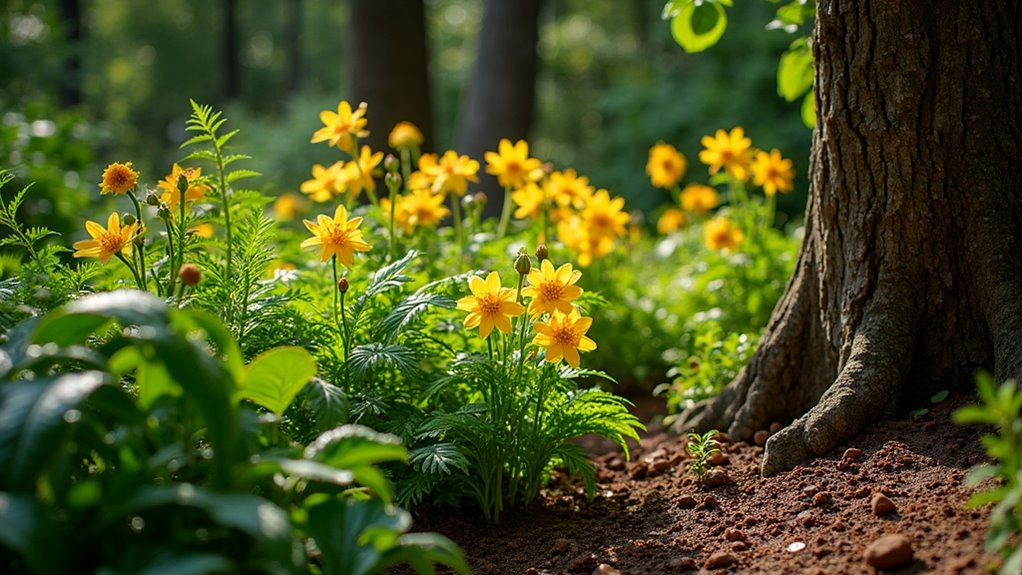
When gardening in clay soil, consider choosing resilient plants such as Aster, Bee Balm, and Black-eyed Susan. These species thrive in the dense texture and offer vibrant blooms while attracting pollinators. Amend your soil with organic compost to enhance aeration and drainage, making it easier for roots to grow. Selecting drought-tolerant varieties will also benefit your garden. Keep exploring to discover more tips on managing your clay soil effectively for a flourishing garden.
Key Takeaways
- Aster (Symphyotrichum spp.) thrives in clay soil and attracts pollinators with its summer to fall blooms.
- Bee Balm (Monarda spp.) flourishes in full sun to partial shade, blooming from late spring to fall.
- Black-eyed Susan (Rudbeckia spp.) produces vibrant yellow flowers and blooms from summer to fall, reaching heights of 1 to 5 feet.
- Choose plants that tolerate the dense texture of clay soil for a resilient garden.
- Regularly amend clay soil with organic matter to enhance plant growth and soil health.
Understanding Clay Soil
Clay soil, often viewed as a gardener’s nemesis, presents unique challenges and opportunities. This soil type consists of fine particles that retain water and nutrients but often leads to poor drainage and aeration.
You’ll notice that the high density can impede root growth, making it difficult for some plants to thrive. When dry, it hardens and cracks; when wet, it becomes sticky and compacted.
To improve your gardening experience, amending clay soil with organic matter is essential. Adding compost not only helps aerate the soil but also enhances its structure, promoting healthier root development and overall plant health.
Benefits of Gardening in Clay Soil
While many gardeners might dread the challenges posed by clay soil, it offers distinct advantages that can enhance your gardening experience.
Clay soil may seem daunting, but it presents unique benefits that can enrich your gardening journey.
Here are three key benefits:
- Nutrient Retention: Clay’s composition allows for excellent nutrient retention, making essential nutrients readily available for plant uptake.
- Water-Holding Capacity: Its tiny pore spaces help retain moisture, reducing the need for frequent watering.
- Diverse Plant Life: Many resilient species grow well in clay, supporting a diverse range of plant life that thrives in dense conditions.
Challenges of Gardening in Clay Soil
Gardening in clay soil presents several challenges that can complicate your efforts. The low air-holding capacity of clay restricts root growth, as plants struggle to access the oxygen they need.
When dry, the soil hardens and cracks, making it difficult for roots to penetrate and absorb moisture and nutrients. Compaction often occurs if you work the soil while it’s wet, damaging its structure and further impeding root development.
To combat these issues, ongoing management is essential. Adding organic matter improves soil quality and drainage, while naturalizing plants with deep root systems can enhance overall soil structure over time.
Best Plants for Clay Soil
When selecting plants for gardens with clay soil, it’s crucial to choose species that not only tolerate the dense texture but also thrive in it.
The best plants for clay soil include:
- Aster (Symphyotrichum spp.) – Blooms from summer to fall, attracting pollinators, growing 1 to 6 feet tall.
- Bee Balm (Monarda spp.) – Flourishes in full sun to partial shade, with vibrant blooms from late spring to fall, reaching 1 to 4 feet.
- Black-eyed Susan (Rudbeckia spp.) – Produces bright yellow flowers throughout summer and fall, growing 1 to 5 feet tall in full sun.
These species will help you create a beautiful, resilient garden.
Tips for Successful Gardening in Clay Soil
Successfully cultivating a garden in clay soil requires specific strategies to enhance its natural properties.
Start by amending clay soil with high-quality organic compost and mineral aerators like coarse perlite to improve drainage and aeration.
Amend clay soil with organic compost and coarse perlite to enhance drainage and aeration effectively.
Choose drought-tolerant plants, such as Black Eyed Susans and Bee Balm, that thrive in moisture-retaining conditions.
Consider planting in raised beds to manage excess water and promote better root development.
Additionally, top-dress with organic matter in the fall to enhance soil structure and nutrient availability.
Regularly incorporating organic materials will greatly improve soil health, ensuring long-term success in your clay soil garden.





