
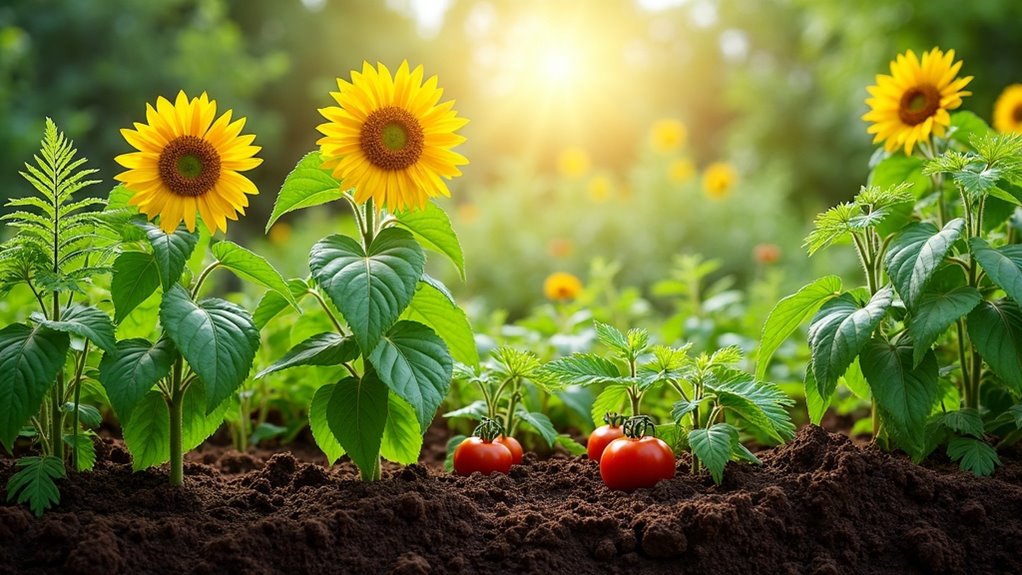
If you’re working with loamy soil, you’ll find that plants like Wisteria, Delphinium, Tomatoes, Carrots, and Beans thrive exceptionally well. This soil type boasts excellent drainage and moisture retention, creating ideal conditions for robust growth. Nutrient-rich loam can enhance the flavor of your harvests and promote flourishing blooms. Plus, your plants will benefit from regular watering and proper sunlight. Discover even more suitable options and tips for your garden that can truly flourish in loamy conditions.
Key Takeaways
- Wisteria thrives in loamy soil, requiring good drainage and full sun for abundant flowering.
- Delphiniums flourish in loamy soil, reaching heights of 3 to 5 feet in sunny, cool conditions.
- Tomatoes grow best in loamy soil, benefiting from regular watering and organic matter for flavor and yield.
- Carrots prefer loamy soil for its loose texture, which aids in harvesting and promotes better flavor.
- Beans flourish in loamy soil, needing good drainage and organic richness for strong growth and nutritional benefits.
Wisteria
Wisteria, a fascinating climbing vine from the pea family, enchants gardens with its striking clusters of blue, purple, or white flowers.
This plant thrives in loam soil, which provides the perfect balance of drainage and moisture retention, vital for healthy growth. To support vigorous development, guarantee the soil contains ample organic matter, enhancing nutrient availability for the plant roots.
Wisteria requires full sun, ideally receiving at least six hours of direct sunlight daily, to promote abundant flowering.
Wisteria thrives in full sun, needing at least six hours of direct sunlight daily for lush blooms.
Frequently used to adorn fences and trellises, it adds vibrant color and delightful fragrance to any garden setting.
Delphinium
Delphinium, also known as Larkspur, captivates gardeners with its stunning array of vibrant blooms, ranging from pink to deep blue.
These perennial plants thrive in sunny locations with loamy soil that provides good drainage and moisture retention. Rich in organic nutrients, loam soil helps keep Delphinium healthy, allowing it to reach impressive heights of 3 to 5 feet.
Ideal for the back of flower beds, they flourish best in cool, moist summer conditions. To guarantee a successful blooming season, regular watering during dry spells is essential for growing plants like Delphinium that require consistent moisture.
Tomatoes
When you choose to grow tomatoes, you’ll find that loamy soil offers the perfect environment for these popular fruits. Loamy soil’s good drainage, moisture retention, and nutrient-rich composition enhance healthy root growth and fruit flavor. Tomatoes thrive best at temperatures between 70°F and 80°F, making loamy soil ideal. Regular watering maintains consistent moisture, preventing blossom drop and promoting fruit set. Incorporating organic matter can boost soil fertility, leading to larger, more flavorful varieties.
| Benefit | Description |
|---|---|
| Good Drainage | Prevents root rot and promotes healthy roots |
| Moisture Retention | Guarantees consistent hydration |
| Nutrients | Supports robust plant growth |
| Fertile Soil | Enhances overall yield |
| Organic Matter | Improves soil structure and fertility |
Lettuce
Lettuce flourishes in loamy soil, where its well-draining structure and moisture retention capabilities create ideal conditions for robust leaf growth.
This vegetable thrives in nutrient-rich loam soil, enhancing the flavor and texture of your harvest, resulting in crisp and tender leaves.
Regular watering is crucial, especially during dry spells, to prevent leaf drying and guarantee a steady summer harvest.
Consistent watering is essential to keep lettuce leaves fresh and ensure a bountiful summer yield.
The loose structure of loamy soil allows for easy root expansion, promoting robust plant health and resilience against pests and diseases.
Varieties such as romaine, butterhead, and leaf lettuce all benefit considerably from the advantages offered by loamy soil.
Carrots
Carrots thrive in loamy soil due to its ideal texture and moisture retention, which foster excellent growing conditions for healthy roots.
When you plant carrots in this nutrient-rich environment, you’ll notice improved flavor and size in your harvest.
Additionally, the loose composition of loam simplifies harvesting, allowing you to pull carrots effortlessly from the ground.
Optimal Growing Conditions
For ideal growth, understanding the specific soil requirements of carrots is essential.
Carrots thrive in loam soil due to its fine texture, which supports the unobstructed growth of their deep taproots. The moisture retention capabilities of loamy soil help keep carrot leaves hydrated, promoting healthy growth.
Additionally, nutrient-rich loam enhances flavor and size, contributing to a bountiful harvest. Excellent drainage prevents waterlogging, reducing the risk of rot and diseases that can affect your crops.
Harvesting Techniques
When it’s time to harvest, aim for carrots that have reached a diameter of about 0.75 to 1 inch, generally around 70 to 80 days after planting.
- Verify sweetness and tenderness.
- Use a garden fork to gently loosen the loamy soil.
- Pull carrots by hand to avoid breaking the roots.
- Harvest in the morning for peak crispness.
- Store in a cool, dark place to maintain moisture.
With good drainage and water retention in loam soil, your carrots will thrive, providing essential nutrients.
Enjoy the rewarding experience of harvesting your carefully nurtured plants!
Beans
Beans thrive in loamy soil because it retains moisture while ensuring proper drainage, vital for healthy root systems.
This soil’s loose texture and organic richness allow beans to access essential nutrients efficiently, promoting strong growth.
Additionally, beans offer significant nutritional benefits, making them a valuable crop in sustainable agricultural practices.
Ideal Growing Conditions
Though beans can adapt to various soil types, they flourish best in loamy soil, which offers a perfect balance of moisture retention and drainage.
To create ideal growing conditions for beans, consider the following:
- Guarantee loam soil has good drainage to prevent waterlogging.
- Incorporate organic material to enhance nutrient availability.
- Maintain a loose texture for effective root expansion.
- Monitor moisture levels, especially in warm conditions.
- Regularly apply fertilizers to boost plant health.
Nutritional Benefits of Beans
Packed with essential nutrients, beans are a powerhouse of plant-based protein and dietary fiber, making them a staple in many diets.
With about 15 grams of protein and 13-16 grams of dietary fiber per cooked cup, they help improve digestion and regulate blood sugar levels.
Beans are rich in vitamins and minerals like folate, iron, and magnesium, supporting overall health and immune function.
Their antioxidants, including flavonoids and phenolic acids, reduce inflammation and lower the risk of chronic diseases.
Low in fat and cholesterol-free, beans are a heart-healthy choice that promotes better cardiovascular health when included in a balanced diet.
Strawberries
Strawberries flourish in loamy soil, as it provides the ideal conditions for robust growth and fruit production.
To guarantee your strawberry plants thrive in loam soil, consider these key factors:
- Add organic material to enrich the soil.
- Ensure good drainage to prevent waterlogging.
- Water consistently for juicy, bright red fruits.
- Utilize the nutrient-rich properties of loamy soil for flavor enhancement.
- Choose various strawberry varieties that benefit from these excellent conditions.
With careful attention to these aspects, your garden can yield a bountiful harvest of delicious strawberries, making your gardening efforts truly rewarding.





