
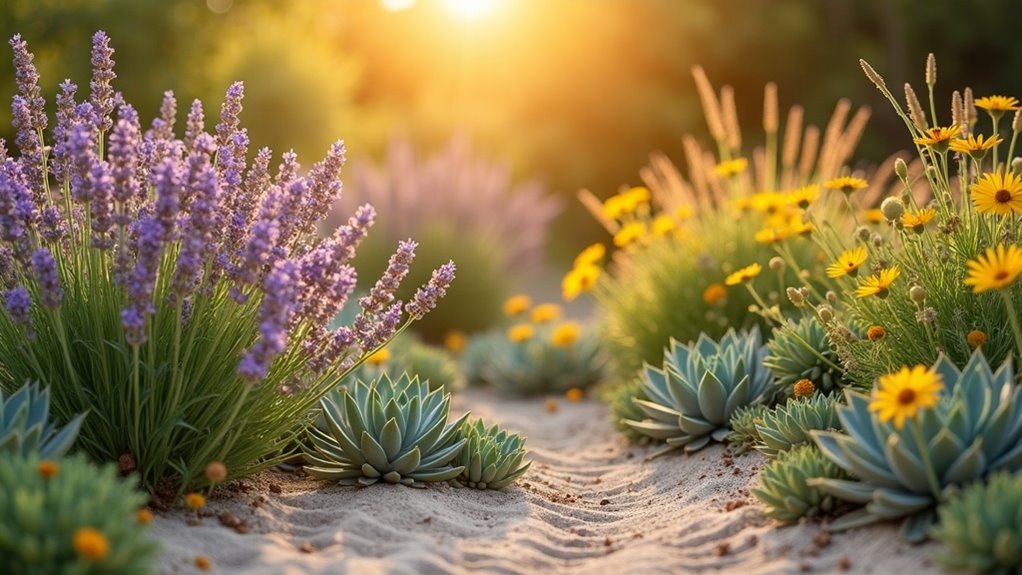
If you’ve got sandy soil, consider planting drought-tolerant options like lavender and black-eyed Susan for a burst of color and pollinator attraction. In sunny areas, butterfly weed and salvia thrive too. For shaded spots, hostas and ferns are excellent choices. Regularly amend your soil with compost and apply mulch to retain moisture. These plants not only beautify your garden but also support local ecosystems. Discover more about their care and other suitable varieties.
Key Takeaways
- Drought-tolerant plants like lavender and yarrow thrive in sandy soil due to its excellent drainage.
- Pollinator-friendly options include Black Eyed Susan and Butterfly Weed, attracting beneficial insects.
- Shade-loving plants such as Hosta and Columbine adapt well to sandy soil conditions.
- Regularly amend sandy soil with compost to improve moisture retention and nutrient levels.
- Apply organic mulch to help retain moisture and support plant growth in sandy gardens.
Characteristics of Sandy Soil
When you dig into sandy soil, you’ll quickly notice its distinct characteristics that set it apart from other soil types.
This soil type features large particle sizes, resulting in excellent drainage but poor moisture retention. Consequently, many plants struggle to thrive due to the rapid leaching of nutrients and organic matter.
Sandy soil often leans towards acidity, which can hinder growth for plants that prefer neutral conditions. However, it provides a perfect environment for drought-tolerant plants like lavender and yarrow, which adapt well to lower nutrient levels.
Understanding these features is vital for successful gardening in sandy soil.
Best Plants for Sandy Soil in Full Sun
If you’re looking to create a vibrant garden in sandy soil with full sun exposure, you’ll find several resilient plant options that not only thrive in these conditions but also add beauty and attract wildlife.
Consider the cheerful Black Eyed Susan, a low-maintenance native perennial that draws pollinators from mid-summer to fall.
Butterfly Weed, with its striking orange flowers, is perfect for attracting butterflies.
Lavender offers fragrant blooms while being drought tolerant, and Salvia provides reliable color with minimal care.
These plants for sandy soil not only enhance your garden but also support local ecosystems, all while thriving in full sun.
Plants for Sandy Soil in Shade
Creating a lush garden in sandy soil with shaded areas is entirely possible with the right plant choices. Here are some plants that have adapted well to these conditions, ensuring healthy growth with minimal effort.
| Plant | USDA Zones |
|---|---|
| Christmas Fern | 3-9 |
| Columbine | 3-8 |
| Larkspur | 4-8 |
| Hosta | 3-9 |
| Daylily | 2-9 |
These hardy plants thrive in well-draining sandy soil, requiring deep watering and organic mulch to retain water and nutrients. They offer low maintenance, making them perfect for shaded gardens.
Plants That Attract Pollinators in Sandy Soil
Shaded gardens can also benefit from incorporating plants that attract pollinators, enhancing your garden’s biodiversity while providing essential resources for local ecosystems.
Incorporating pollinator-attracting plants in shaded gardens boosts biodiversity and supports local ecosystems.
Consider adding Black-eyed Susan, which thrives in sandy soil and attracts bees and butterflies with its vibrant yellow flowers.
Butterfly Weed supports monarchs with its striking orange blooms, while Lavender brings in beneficial insects with its fragrant purple flowers.
Russian Sage offers tall purple spikes that allure pollinators, and Echinacea’s large, daisy-like flowers are a magnet for bees.
To optimize growth, use organic mulch to retain moisture in your well-drained sandy soil.
Tips for Caring for Sandy Soil Gardens
While sandy soil can present certain challenges for gardeners, you can successfully cultivate a thriving garden by following a few essential care tips.
Regularly amend your sandy soil with compost or organic matter to improve nutrient retention and moisture levels. Apply a 2-3 inch layer of organic mulch around plants to help retain moisture and reduce weed growth.
Water deeply but infrequently to encourage deep root growth, adjusting your schedule based on soil moisture. Monitor moisture levels 2-3 inches below the surface to avoid plant stress.
Use slow-release fertilizers to guarantee a steady supply of water-soluble nutrients for your plants.





