
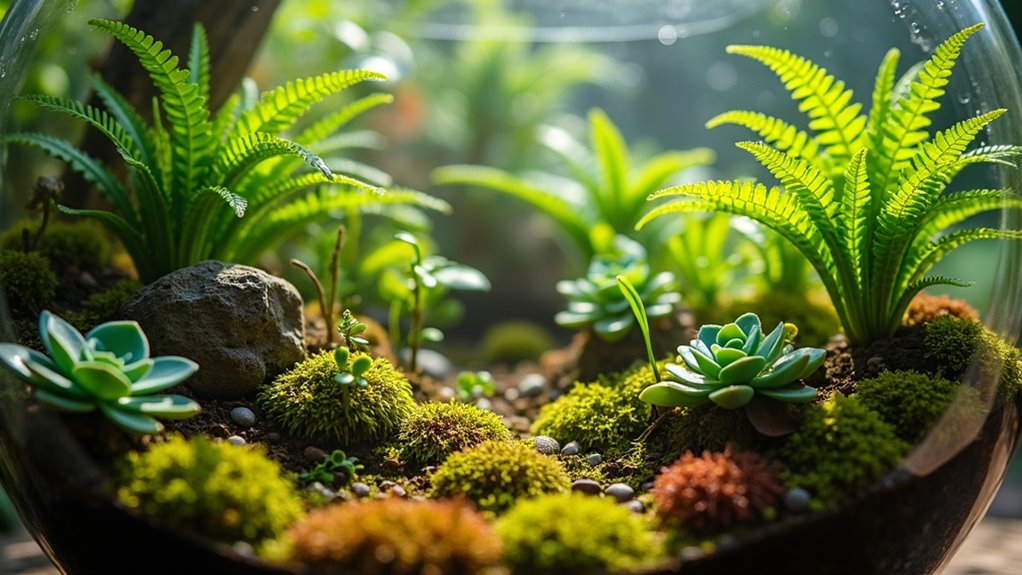
For a thriving long-term terrarium, select humidity-loving plants like Fittonia and Peperomia. Compact ferns, such as the Boston Fern and Lemon Button Fern, add both texture and greenery. Introducing delicate vines like Ficus pumila and Peperomia prostrata enhances the aesthetics while creating depth. Confirm the terrarium receives indirect sunlight, and monitor humidity levels to keep your plants healthy. With the right choices, your terrarium will flourish beautifully—there’s much more to explore for a vibrant setup!
Key Takeaways
- Choose compact plants like Fittonia and Pilea that adapt well to low airflow and humid conditions for longevity.
- Opt for tropical ferns, such as Boston Fern and Lemon Button Fern, as they thrive in closed terrarium environments.
- Include delicate vines like Ficus pumila and Peperomia prostrata for dynamic growth and visual appeal over time.
- Ensure indirect sunlight exposure to prevent leaf burn and maintain healthy plant growth in the terrarium.
- Regular misting and proper drainage are essential to sustain humidity levels and prevent waterlogging for long-term plant health.
Selecting the Right Plants for Your Terrarium
When you’re selecting plants for your terrarium, it’s essential to choose species that not only thrive in humid conditions but also remain manageable in size.
Compact plants like Fittonia, known as Nerve Plant, are excellent choices, as they adapt well to the low airflow of closed terrariums. Consider adding Pilea or Peperomia for diverse textures and colors.
Make sure your terrarium receives indirect sunlight to prevent burns. Monitoring humidity levels is vital; adjust watering to maintain moisture balance, which supports the long-term health of your plants.
Compact and Cute Ferns for Terrariums
Adding compact and cute ferns to your terrarium can elevate its charm while enhancing its ecosystem.
Compact ferns like the Boston Fern (Nephrolepis exaltata) thrive in closed terrarium environments, adapting well to humidity and low light.
Compact ferns such as the Boston Fern flourish in closed terrariums, thriving in humidity and low light conditions.
The Fluffy Ruffles Fern, with its bushy appearance, enhances visual texture and fits perfectly in the foreground.
For layering, consider the Lemon Button Fern (Nephrolepis cordifolia ‘Duffii’).
The Heart Fern (Hemionitis arifolia) brings unique heart-shaped leaves and a manageable height, making it ideal for small spaces.
These tropical plants not only beautify but also create a balanced ecosystem in closed environments.
Delicate Vines That Enhance Terrarium Aesthetics
How can delicate vines transform the aesthetics of your terrarium? Incorporating vines like Ficus pumila, known as creeping fig, adds a lush green layer that thrives in humidity, enhancing your terrarium’s vibrancy.
Peperomia prostrata, or String of Turtles, offers unique texture with its turtle shell-patterned leaves, making it a remarkable ground cover.
Additionally, Selaginella uncinata showcases iridescent blue foliage that boosts visual appeal while contributing to the humid environment.
These delicate vines create dynamic growth, adding depth and movement to your tropical terrarium, beautifully complementing other plants while enriching the overall design.
Showstopper Foliage Plants for Visual Impact
Incorporating delicate vines into your terrarium sets the stage for the introduction of showstopper foliage plants that can truly elevate your botanical display.
Consider these vibrant options that thrive in humid conditions:
- Fittonia – Known for its striking, veined leaves, it adds stunning color and texture.
- Pilea Moon Valley – Compact foliage enhances visual appeal while adapting well to the closed terrarium environment.
- Little Tree Plant – This unique plant provides a tree-like focal point in high-moisture settings.
- Earth Stars – Low-growing plants with vivid foliage that require minimal care, enriching your thriving ecosystem.
These choices will transform your terrarium!
Tips for Maintaining a Healthy Terrarium Environment
To keep your terrarium thriving, it’s essential to maintain ideal conditions for your plants. Regularly mist to maintain humidity levels and guarantee proper drainage to prevent waterlogging. Use a suitable potting mix for tropical plants, as standard soil may not retain moisture effectively in a closed environment. Place your terrarium in a spot with indirect sunlight to support photosynthesis.
| Action | Purpose |
|---|---|
| Trim back foliage | Prevent overcrowding |
| Remove fallen leaves | Maintain a healthy ecosystem |
| Monitor plant growth | Guarantee peak health |
These practices will help sustain your vibrant terrarium.
Engaging With the Terrarium Community for Support and Inspiration
As you explore the enriching world of terrariums, connecting with fellow enthusiasts can greatly elevate your experience.
Engaging with the terrarium community offers invaluable support and inspiration.
Here are some benefits to contemplate:
- Share plant care tips for thriving growth.
- Discover successful combinations tailored to specific environments.
- Gain insights on maintenance and environmental conditions.
- Ignite your creativity through unique design ideas.





