
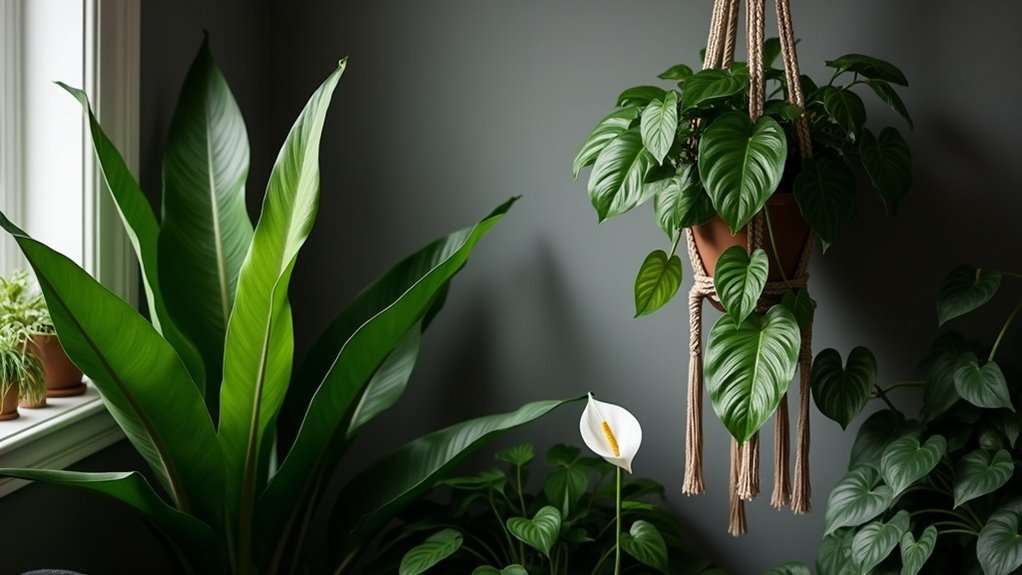
If you’re looking for plants that thrive in low light within your apartment, consider the Snake Plant, ZZ Plant, and Chinese Evergreen. These species require minimal care and can flourish with limited natural light. Make sure to monitor soil moisture, watering only when the top inch is dry. Choosing the right planter can also enhance your indoor aesthetics, creating a beautiful and healthy environment. Explore further to discover more tips for successful low-light plant care.
Key Takeaways
- Snake Plant and ZZ Plant are excellent choices for low light, requiring minimal care and tolerance for neglect.
- Chinese Evergreen offers attractive foliage and thrives well in dim conditions, adding aesthetic appeal to your space.
- Regularly monitor soil moisture, watering only when the top inch of soil is dry to prevent overwatering.
- Utilize LED grow lights during darker months to supplement natural light for optimal plant health.
- Choose decorative planters with drainage to enhance interior design while ensuring proper plant care.
Understanding Low Light Plant Growth
When you consider growing plants in low light conditions, it’s essential to understand how different species respond to such environments.
Some indoor plants merely tolerate low light, requiring additional care, while others are plants that actually thrive without much attention. Selecting the right species is important, as many marketed options fall short of thriving in low light.
Choosing the right indoor plants is crucial; some tolerate low light while others truly thrive with minimal care.
Under these conditions, challenges like slow growth and overwatering risks arise, so monitoring soil moisture is critical.
To enhance growth, consider using supplemental lighting, such as table or floor lamps, especially when natural light is insufficient for your low light plants.
Recommended Low Light Plants
If you’re looking to enhance your apartment with resilient plants that thrive in low light, several species stand out as excellent choices.
Consider these low-light tolerant plants:
- Snake Plant (Sansevieria) – Known for its minimal care and ability to survive in both low and bright light.
- ZZ Plant (Zamioculcas zamiifolia) – Ideal for beginners, this plant features glossy leaves and only needs watering when the soil is nearly dry.
- Chinese Evergreen (Aglaonema) – With its attractive colors and patterns, it performs well in low light conditions.
These plants not only beautify your space but also require minimal maintenance.
Care Tips for Indoor Plants
Caring for indoor plants in low light requires attention to their specific needs, as each species can have unique requirements for ideal growth. Monitor soil moisture regularly; only water low-light plants when the top inch of soil feels dry. Remember, even low-light plants need some natural light to thrive. Here’s a quick reference table to guide you:
| Plant Type | Care Requirements |
|---|---|
| Snake Plant | Indirect light, moderate humidity |
| ZZ Plant | Tolerates low light, infrequent watering |
Incorporating LED grow lights can also boost their health, especially during darker months.
Aesthetic Considerations and Planter Choices
While many might overlook the impact of planters on the overall aesthetic of low light plants, selecting the right containers can greatly enhance your apartment’s interior design.
Consider these planter choices:
- Larger Planters: They create a striking focal point, especially for Dracaena family plants.
- Decorative Baskets: These add texture and visual interest, complementing vibrant foliage.
- Planters with Drainage: They maintain plant health while allowing for creative expression in decor.
Additional Resources and Community Insights
Engaging with local nurseries can greatly enhance your understanding of low light plant care, as they offer tailored advice based on your specific indoor conditions.
Participating in community discussions provides invaluable insights into plant options and care strategies, allowing you to share experiences and learn from others facing similar challenges with low light plants.
Additionally, extension programs deliver researched-based horticulture information, ensuring you access reliable guidance.
Remember, many online resources can mislead you; connecting with fellow enthusiasts can clarify the unique needs of your plants.
Observing how your plants respond will further refine your approach to low light gardening.





