
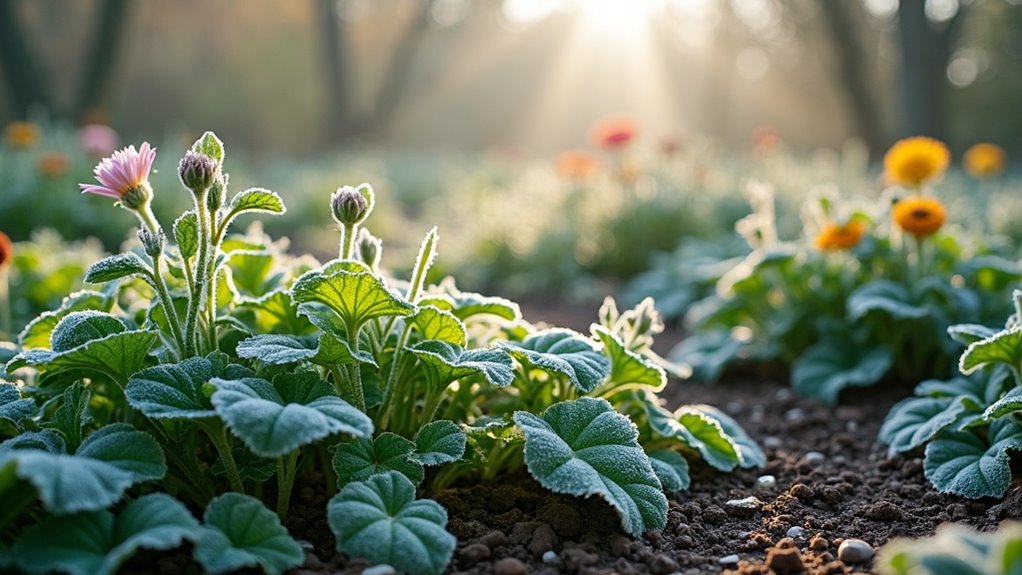
Garden plants can thrive in frost pockets by selecting hardy perennials like Geranium Rozanne and Achillea chrysocoma. Implementing frost protection strategies, such as covering vulnerable plants and using deep mulch, helps reduce frost damage. Furthermore, improving soil drainage with raised beds and organic matter can further enhance resilience. Monitoring your local frost dates is also essential for successful gardening in these areas. You’ll find additional strategies to maximize plant health in challenging cold microclimates.
Key Takeaways
- Hardy perennials like Geranium Rozanne and Hylotelephium spectabile thrive in frost pocket conditions, ensuring garden resilience.
- Cirsium rivulare ‘Atropurpureum’ and Achillea chrysocoma provide visual interest and attract pollinators in frost-prone areas.
- Improving soil drainage with raised beds can mitigate cold air accumulation in frost pockets.
- Applying deep mulch helps insulate plant roots and stabilize soil temperatures during frost events.
- Regular watering before frost nights aids in heat retention, protecting garden plants from frost damage.
Understanding Frost Pockets and Their Impact on Gardening
Frost pockets, those low-lying areas where cold air settles, greatly influence gardening outcomes. In these regions, temperatures drop considerably, leading to extended frost seasons that can harm tender plants.
Understanding the microclimate effects is vital for successful gardening. Improving drainage in frost pockets can help mitigate cold air accumulation, allowing for better plant health.
Additionally, employing frost protection strategies—like close planting and using protective coverings—creates a safer environment for vulnerable species.
Selecting Hardy Perennials for Frost-Prone Areas
When gardening in areas prone to frost, selecting hardy perennials becomes essential for ensuring vibrant and resilient landscapes.
Choose species like Geranium Rozanne and Hylotelephium spectabile, both known for thriving under frost conditions. The Atropurpureum variety of Cirsium rivulare tolerates moist soil while adding visual interest.
Achillea chrysocoma attracts pollinators with its large flower heads, making it a great choice for frost-prone environments. Low-maintenance Calamagrostis Karl Foerster grass provides early spring texture.
Incorporating Campanula lactiflora and Verbascum nigrum enhances biodiversity, offering aesthetic appeal and supporting local wildlife in your frost-affected garden.
Recommended Plants for Frost Pocket Success
Selecting hardy perennials lays the foundation for a successful garden in frost-prone areas, but knowing which specific plants thrive in frost pockets can further enhance your landscape.
Consider Cirsium rivulare ‘Atropurpureum’ for its striking purple-red flowers and height. Achillea chrysocoma attracts pollinators with its creamy blooms, while Geranium Rosemoor offers prolific summer flowers, supporting biodiversity.
For texture, Calamagrostis Karl Foerster emerges in early spring, adding visual interest. Finally, Hakonechloa macra thrives in shaded, moist soil, providing year-round appeal.
These plants for frost pockets guarantee vibrant new growth, making your garden resilient and beautiful.
Strategies for Protecting Plants From Frost Damage
As temperatures dip during the night, protecting your plants from frost damage becomes essential for maintaining a healthy garden.
Monitor local frost dates and cover vulnerable plants with breathable materials like row covers in the evening. Remove these covers by mid-morning to guarantee sun exposure.
To enhance protection, apply a deep mulch of well-rotted organic material around plants in spring; this insulates roots and retains warmth.
Additionally, regularly water your garden beds if dry before a frost night, as moist soil retains heat better.
Create gaps in fences to facilitate cold air drainage, reducing frost accumulation risk.
The Role of Soil and Drainage in Frost Pocket Gardening
In frost pocket gardening, the composition of your soil greatly impacts plant health and survival.
You can enhance drainage by implementing techniques like raised beds and incorporating organic matter, which not only improves structure but also aids in moisture retention.
Monitoring soil moisture levels is essential, as maintaining a slightly damp environment helps your plants better withstand frost conditions.
Soil Composition Importance
Understanding soil composition is critical when gardening in frost pockets, especially since heavy clay can retain moisture and increase the risk of frost damage.
To enhance drainage, incorporate organic matter like compost into your soil, which will prevent waterlogging and protect your plants’ roots. Raised beds are another effective strategy, improving both soil drainage and air circulation.
Additionally, a well-mulched layer of organic material insulates the soil, helping stabilize temperatures.
Finally, choose frost-tolerant plant varieties that thrive in damp, well-drained soils to guarantee your success in these challenging gardening conditions.
Drainage Enhancement Techniques
Improving drainage is essential in frost pocket gardening to safeguard your plants from potential frost damage. Effective drainage techniques can help prevent cold air accumulation and waterlogging.
Consider these methods:
- Implement raised beds for enhanced drainage and air circulation.
- Add organic matter like compost to improve soil structure.
- Apply a deep mulch in spring to insulate roots and retain moisture.
- Utilize plants that enhance drainage, such as specific grasses and ground covers.
These strategies help create a thriving environment for your plants to grow while minimizing frost risks in troublesome frost pocket areas.
Moisture Retention Strategies
Moisture retention is essential for successful gardening in frost pockets, where soil often struggles with drainage issues that can lead to waterlogged conditions.
To combat this, improve soil structure by adding organic matter like compost, enhancing both drainage and moisture retention. Consider using raised beds; they allow excess water to escape while keeping moisture available for roots.
Close planting helps create a microclimate, reducing evaporation and maintaining moisture levels in damp soil. Regularly monitor soil moisture, and implement targeted watering strategies during dry spells to guarantee your plants remain hydrated and resilient against cold air and frost damage.
Gardening Techniques to Enhance Resilience in Cold Microclimates
While gardening in cold microclimates poses unique challenges, employing specific techniques can greatly enhance plant resilience in these frost-prone areas.
- Select frost-tolerant plants, like Geranium Rozanne and Cirsium rivulare.
- Plant close together to create beneficial microclimates.
- Improve drainage with raised beds or soil amendments to avoid waterlogging.
- Apply deep mulch of well-rotted organic matter in spring for insulation and moisture retention.
Additionally, using frost protection strategies, such as breathable covers or tenting, will safeguard your vulnerable plants during unexpected cold snaps.
These methods collectively boost survival rates and foster thriving gardens in frost pockets.





