
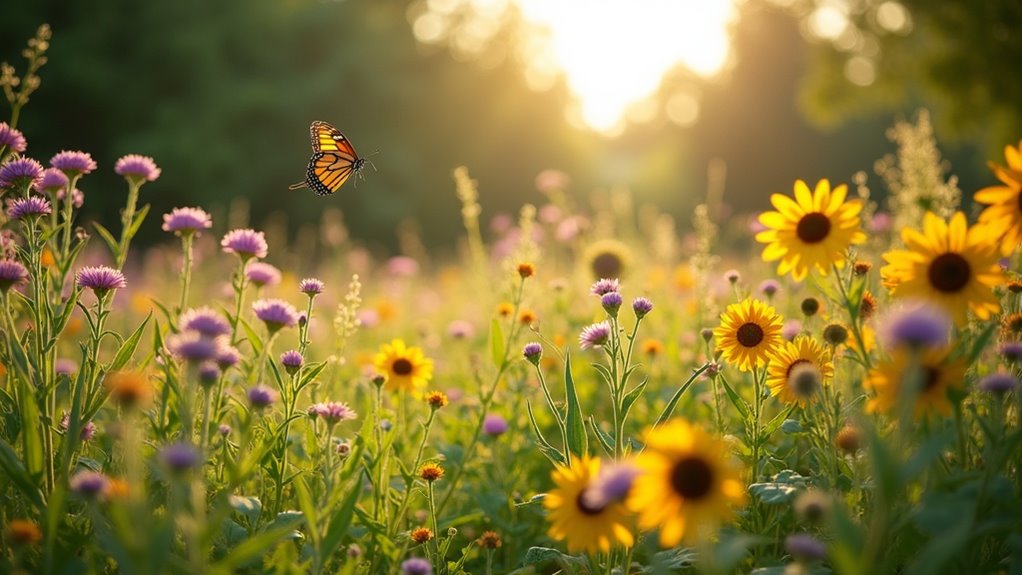
Native plants outcompete invasive species primarily in disturbed habitats, such as abandoned fields and roadsides. These plants establish quickly, thanks to their adaptation to local conditions, and foster biodiversity, making them resilient against invasives. High-density sowing techniques enhance their competitive advantage, optimizing resource use. By improving soil structure and water retention, native plants create an environment that limits invasive establishment. For more insight on effective native plant selections and strategies, continue exploring the topic further.
Key Takeaways
- Native plants can outcompete invasives in disturbed habitats like abandoned fields and roadsides where soil quality allows for better establishment.
- High-density sowing techniques enhance resource competition, enabling native species to dominate over invasives effectively.
- Areas with good soil structure and water retention support native plants’ robust root systems, giving them an advantage over invasive species.
- Monitoring growth in native plantings ensures successful establishment, allowing them to thrive and outcompete invasive plants for resources.
- Planting aggressive native species can limit the spread of invasives by utilizing available resources more efficiently.
The Role of Native Plants in Ecosystem Restoration
Native plants are essential to ecosystem restoration, as they provide vital habitat and food for local wildlife, which in turn supports biodiversity and strengthens ecological resilience.
By adapting to local conditions, native plants require less maintenance, making them more sustainable choices for restoration efforts. Their deep root systems enhance soil structure and water retention, combating erosion.
Furthermore, aggressive native species can outcompete invasive species, effectively limiting their spread. Research published in *Restoration Ecology* highlights that high-density sowing of competitive native species greatly reduces invasive establishment, reinforcing the importance of these plants in maintaining ecological balance and restoring natural habitats.
High-Density Sowing for Competitive Advantage
High-density sowing maximizes plant coverage, allowing native species to dominate the landscape and effectively compete for resources against invasive plants.
Studies indicate that this approach enhances resource competition, which is crucial for the survival of native flora and accelerates ecosystem recovery.
Maximizing Plant Coverage
When considering ways to enhance plant coverage in restoration projects, employing high-density sowing techniques can profoundly bolster the competitive edge of native species over invasive ones.
Research shows that high-density planting of native plants, particularly perennial grasses, optimizes resource utilization, limiting space for invasive species to thrive. Competitive native species establish robust root systems and rapid growth rates, effectively shading out invasives and depleting soil nutrients.
A study in Restoration Ecology highlights that elevated seeding rates considerably reduce invasive establishment, reinforcing the importance of planting density. This approach fosters resilient native plant communities, ultimately promoting ecosystem balance and biodiversity.
Enhancing Resource Competition
Effective strategies for maximizing plant coverage lead directly to enhancing resource competition among native species.
High-density sowing of native plant species greatly boosts their ability to outcompete invasive species. Research shows that increasing seeding rates allows native plants, particularly perennial grasses, to establish dominance.
Since germination timing often aligns between native and invasive species, sowing native seeds densely guarantees they establish first, covering ground quickly. This rapid coverage inhibits invasive growth through resource competition.
Accelerating Ecosystem Recovery
By leveraging high-density sowing techniques, you can considerably accelerate ecosystem recovery in areas affected by invasive species.
Research shows that increasing the density of native plant seeds, particularly perennial grasses, enhances their competitive ability. This strategy effectively reduces the establishment of invasive species, leading to quicker recovery.
Additionally, aligning germination timing between native and invasive species maximizes restoration success, allowing competitive native species to thrive.
Implementing high-density sowing not only provides immediate advantages against invasives but also fosters long-term ecological balance, enhancing biodiversity and decreasing reliance on chemical controls.
Select the right native plants for ideal restoration outcomes.
Identifying Disturbed Habitats for Native Planting
Identifying disturbed habitats for native planting is crucial for restoring ecological integrity, especially in areas like abandoned fields and roadsides.
Restoring ecological integrity in disturbed habitats like abandoned fields and roadsides is essential for enhancing biodiversity.
Focus on these key aspects:
- Evaluate soil quality: Poor soil can guide your choice of native plants that stabilize it.
- Assess erosion: Areas with erosion issues benefit from plants that prevent soil loss.
- Consider adaptability: Native plants thrive and require less maintenance in these environments.
- Utilize aggressive native species: They can quickly outcompete invasive plants.
- Monitor growth: Regular observation guarantees successful establishment and wildlife support while suppressing invasive species.
Resilience of Native Species Against Invasives
Restoring ecological balance in disturbed habitats not only relies on selecting the right native plants but also on understanding their resilience against invasive species.
Native species like Goldenrod and Wild Bergamot exhibit aggressive growth, effectively outcompeting invasives for sunlight, water, and nutrients.
Research highlights that high-density sowing of competitive native plants boosts their ability to establish and suppress invasives.
With deep root systems, these native plants stabilize soil and enhance water quality, adapting well to local conditions.
Key Native Plants to Replace Common Invasives
While invasive species threaten local ecosystems, selecting key native plants can effectively counteract their impact and restore ecological integrity.
Invasive species jeopardize ecosystems, but choosing native plants can restore balance and enhance ecological health.
By replacing common invasives, you can enhance biodiversity and support local wildlife. Consider these substitutions:
- Multiflora Rose: Witch hazel (Hamamelis virginiana) or winterberry holly (Ilex verticillata)
- Wineberry: Maple-leaf viburnum (Viburnum acerifolium) or deer berry (Vaccinium stamineum)
- Japanese Barberry: Deerberry (Vaccinium stamineum) or pinxterbloom azalea (Rhododendron periclymenoides)
- Winged Euonymus: Nannyberry (Viburnum lentago) or highbush blueberry (Vaccinium corymbosum)
- Pachysandra: Partridgeberry (Mitchella repens) or striped wintergreen (Chimaphila maculate)
These native plants restore habitat and improve ecosystem health.
Benefits of Promoting Biodiversity Through Native Plants
Promoting biodiversity through native plants not only enriches local ecosystems but also fosters a healthier environment for both wildlife and humans.
Native plants provide essential food and habitat for pollinators like bees and butterflies, enhancing biodiversity. They require less maintenance, using less water and fewer fertilizers, which is beneficial for our ecosystems.
By establishing native species, you can help combat invasive plants, as they often outcompete them for resources. Additionally, a diverse plant community bolsters soil health, preventing erosion and improving water quality.
Ultimately, these factors contribute to the resilience of ecosystems against stressors, benefiting all life forms.
Community Involvement in Native Plant Initiatives
Engaging your community in native plant initiatives can lead to remarkable improvements in local biodiversity and ecosystem health.
By participating, you can help combat invasive species and promote native plants. Consider these actions:
- Join community planting days to enhance local habitats.
- Attend workshops to learn about invasive species’ impacts.
- Support local nurseries and seed banks for native species access.
- Volunteer for invasive species removal projects.
- Advocate for policies promoting native plants in public landscaping.
Your involvement fosters stewardship, strengthens ecosystems, and influences local regulations, ensuring a healthier environment for wildlife and future generations.





