
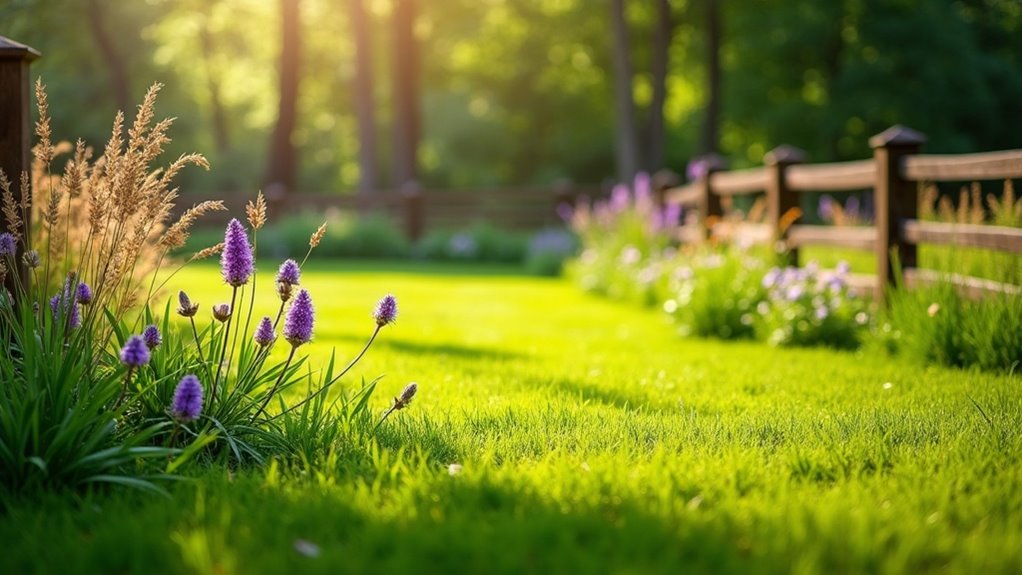
Prairie plants can establish in sunny, well-drained areas of your lawn where the soil is fertile. Aim for a grass-to-wildflower ratio of 30-50% to support biodiversity and structural integrity. Removing aggressive species first is essential for successful growth. Regular maintenance, including weeding in the initial months, guarantees a thriving prairie ecosystem. This approach not only enhances your lawn’s aesthetic appeal, but it also promotes soil health and supports local wildlife. Discover more about establishing and maintaining your prairie garden.
Key Takeaways
- Prairie plants can establish in areas of lawns that receive full or mostly sunny conditions for optimal growth.
- Well-drained, fertile soils in lawns support successful establishment of diverse native prairie species.
- Select sections of the lawn that are free from aggressive species to promote prairie plant growth.
- Aim for a grass-to-wildflower ratio of 30-50% when transitioning sections of your lawn to prairie.
- Regular maintenance, including weeding and mowing, is necessary to support the establishment of prairie plants in lawns.
Ideal Conditions for Prairie Plant Establishment
When establishing prairie plants in your lawn, it’s essential to recognize that these species flourish best under specific conditions.
Prairie plants thrive in full or mostly sunny areas, requiring ample sunlight for ideal growth. The soil type and depth greatly impact their establishment; well-drained, fertile soils support diverse native species.
Prairie plants require full sunlight and well-drained, fertile soils for optimal growth and diversity.
In urban lawns, maintaining a grass-to-wildflower ratio of 30-50% guarantees both structural integrity and wildlife habitat. Removing aggressive species is important, and you can utilize organic herbicides or solarization for this purpose.
Finally, diligent weeding and maintenance during the first 6-8 months are critical to prevent invasive species from overtaking your prairie plants.
Benefits of Integrating Prairie Plants Into Lawns
Integrating prairie plants into your lawn not only enhances its aesthetic appeal but also greatly contributes to ecological health.
These native species boost biodiversity by providing essential habitats for pollinators and wildlife, crucial for ecosystem balance.
With their deep root systems, prairie plants improve soil health through enhanced water infiltration and nutrient cycling, reducing runoff and erosion.
By replacing traditional lawns, you’ll lower maintenance costs, as these resilient plants require less water and fertilizer.
In addition, prairie plants help mitigate the urban heat island effect, cooling your surroundings and improving air quality while decreasing the need for harmful chemical herbicides.
Techniques for Transitioning Your Lawn to Prairie
Shifting your lawn to a prairie requires careful planning and execution to guarantee success. Start by removing existing vegetation using solarization or organic herbicides, ensuring aggressive species don’t hinder the establishment of local prairie species.
Choose an area that receives full sun, as this is essential for growth. When planting, use a mix of native seeds or plugs, maintaining a grass-to-wildflower ratio of 30-50% to enhance biodiversity.
Aim to plant seeds between May 15th and June 30th, or consider fall seeding after November 1st. Regular maintenance, including annual mowing and weeding during the first 6-8 months, is critical for a successful shift.
Selecting the Right Prairie Species
How can you guarantee the successful establishment of a prairie in your lawn? Start by selecting locally-adapted native plants suited to your region’s conditions. Aim for a grass-to-wildflower ratio of 30-50% to support pollinators and wildlife, while promoting biodiversity. Consider beginning with the Nine Natives for a manageable, diverse plant palette. Combine seeds and live plants for better establishment rates, avoiding direct seeding pitfalls. Steer clear of commercial wildflower mixes that may introduce invasive species.
| Strategy | Description |
|---|---|
| Local Native Plants | Choose plants that thrive in your area |
| Grass-to-Wildflower Ratio | Aim for 30-50% grasses |
| Start with Nine Natives | Create a manageable diverse palette |
| Avoid Invasive Species | Skip big box store mixes |
Maintenance and Care for Prairie Gardens
While establishing a prairie garden can be an exciting endeavor, maintaining it requires ongoing care and attention to guarantee its health and vibrancy.
Regular mowing at least once a year promotes healthy growth and prevents invasive species from overtaking native plants. In the first 6-8 months, frequent weeding is essential to allow desired prairie species to thrive.
Deadheading spent flowers enhances aesthetics and supports pollinator activity. Identifying and promptly removing invasive species is critical for maintaining ecological balance.
Utilizing resources like iNaturalist can aid in species identification and provide valuable support from local prairie groups for ongoing maintenance and care.





