
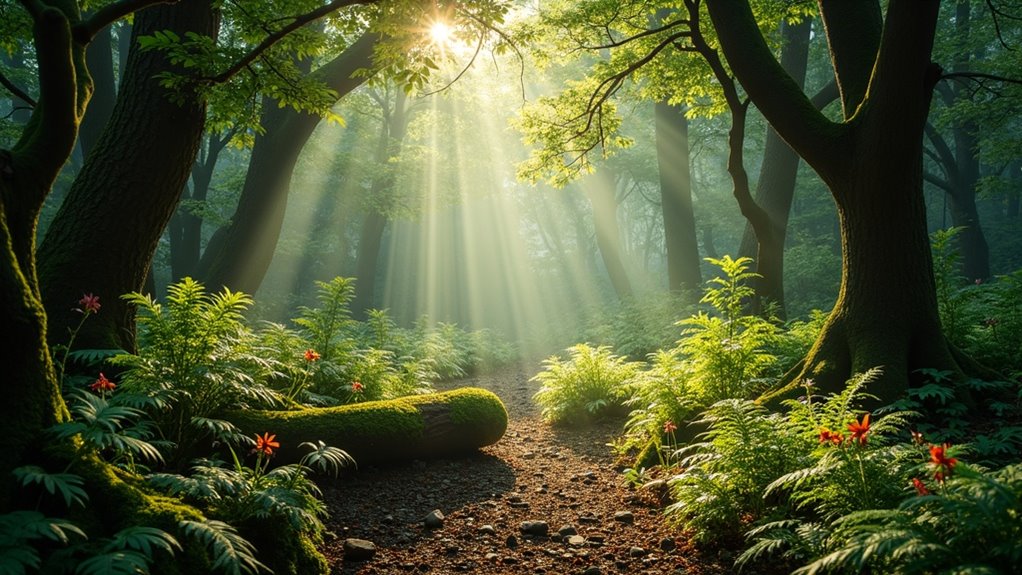
Woodland plants receive dappled light in areas where sunlight filters through the leaves of mature deciduous trees. Ideal locations include the north side of houses, shaded garden corners, and spots near dense forests. Small to medium-sized trees like redbud or serviceberry enhance these conditions by creating specific dappled areas. Incorporating diverse native plants can thrive in this light, contributing to a vibrant ecosystem. If you’re curious about selecting the right plants and trees for your garden, there’s more to discover.
Key Takeaways
- Woodland plants receive dappled light on the north side of houses, providing optimal shaded conditions for growth.
- Shaded corners of gardens create ideal environments for shade-loving woodland species.
- Areas adjacent to dense forests offer the necessary shade for diverse plant growth.
- Structures like fences can create beneficial shaded zones for woodland plants.
- Hidden spots with partial shade can enrich landscape diversity and support various native species.
Characteristics of Dappled Light in Woodland Gardens
Dappled light, which occurs when sunlight filters through the leaves of deciduous trees, creates a unique environment in woodland gardens.
This light, characterized by intermittent sunlight lasting 2 to 4 hours daily, is ideal for many shade-loving plants. Native woodland species, such as Jack in the Pulpit and Solomon’s Seal, thrive in these conditions, benefiting from the balanced exposure to both sunlight and shade.
Dappled light not only supports diverse plant growth but also enhances visual interest, allowing a variety of species to adapt to the fluctuating light.
Establishing gardens beneath mature tree canopies maximizes the benefits of dappled light.
Ideal Locations for Planting Woodland Species
When searching for the ideal locations to plant woodland species, consider areas that benefit from dappled light filtering through the canopy of mature deciduous trees.
The north side of houses or shaded garden corners create perfect conditions where woodland plants thrive. Additionally, spaces backing up to dense forests or tree cover provide the necessary shade and light balance.
Structures like fences can also form beneficial shaded zones for these plants. Hidden spots within your garden that receive partial shade invite delightful surprises, allowing woodland species to flourish and enriching your landscape with natural beauty and diversity.
Types of Trees That Provide Dappled Shade
Creating an inviting environment for woodland plants relies heavily on the types of trees you choose to plant.
To achieve dappled sunlight, consider incorporating:
- Deciduous trees like oaks and maples, which filter light in spring and fall.
- Small to medium-sized trees such as redbud and serviceberry to create specific dappled areas.
- Birch and hickory, whose branching structures enhance light patterns and habitat diversity.
- Understory trees like dogwood and witch-hazel to establish a multi-layered canopy, improving light access for ground-level plants.
These selections foster a rich ecosystem, encouraging a variety of shade-loving species.
Recommended Native Plants for Dappled Light
When selecting native plants for dappled light, consider those that thrive in the filtered sunlight of woodland environments.
Solomon’s Seal, Red Columbine, and Bloodroot are top choices, each offering unique blooms and foliage that enhance your garden’s appeal.
Incorporating ferns and ground covers like Christmas Fern and Canada Anemone won’t only add texture but also help suppress weeds.
Ideal Plant Characteristics
Although many plants struggle in low light, several native species thrive in dappled light, making them perfect for your woodland garden.
Ideal characteristics for these plants include:
- Tolerance for partial shade, ensuring they can absorb filtered sunlight.
- Ability to adapt to varying soil moisture levels, enhancing resilience.
- Lush foliage that contributes to the garden’s texture and visual appeal.
- Seasonal blooms that add color and interest throughout the year.
Top Native Plant Choices
Dappled light areas in your woodland garden are home to a variety of native plants that not only thrive in these conditions but also enhance the ecosystem’s beauty.
Consider Bloodroot (Sanguinaria canadensis) for its striking white flowers and clumping growth.
Solomon’s Seal (Polygonatum spp.) offers elegant arching stems and delicate blooms, perfect for shady areas.
Foam Flower (Tiarella cordifolia) adds attractive foliage and enhances biodiversity.
Don’t forget Violets, like the Common Blue Violet (Viola sororia), which provide vibrant color while serving as a food source for fritillary butterfly larvae.
These plants create a stunning display in your dappled light garden.
Creating a Layered Planting Design
To create a successful layered planting design in woodland gardens, you need to thoughtfully arrange plants at varying heights, from towering trees to low-lying ground covers.
Create a layered woodland garden by thoughtfully arranging plants from tall trees to low ground covers.
Consider these key strategies:
- Incorporate a mix of deciduous and evergreen plants for year-round structure.
- Guarantee taller species don’t overshadow shorter ones, optimizing light access.
- Plant in drifts or clusters to mimic natural growing conditions.
- Choose species that thrive in dappled light, like ferns and woodland perennials.
Benefits of Dappled Light for Woodland Ecosystems
Dappled light plays a vital role in enhancing plant growth within woodland ecosystems by providing varying levels of sunlight and shade.
This unique light condition not only supports a diverse range of plant species but also fosters biodiversity by creating habitats for specialized plants and attracting essential pollinators.
As you explore these benefits, you’ll see how dappled light contributes to a balanced and resilient woodland community.
Enhances Plant Growth
When sunlight filters through the canopy of trees, it creates a unique environment that considerably enhances plant growth in woodland ecosystems.
Dappled light allows woodland plants to thrive, especially on the forest floor, by providing the right amount of light for photosynthesis without overwhelming them.
Key benefits include:
- Encouraging lush foliage and vibrant blooms in species like Solomon’s seal and bloodroot.
- Maintaining soil moisture levels by reducing evaporation.
- Supporting adaptation to seasonal changes in light.
- Promoting ideal growth conditions for shade-loving plants.
This dynamic interplay of light and shade fosters a thriving ecosystem, essential for woodland health.
Supports Biodiversity
The interplay of light and shade in woodland ecosystems not only fosters plant growth but also greatly supports biodiversity.
Dappled light, filtering through deciduous trees, creates ideal conditions for both shade-loving and shade-tolerant species at ground level. This diversity enhances the variety of plant life, providing habitats for various organisms.
Additionally, dappled light helps maintain soil moisture, essential for plant survival and the organisms relying on them.
By promoting multiple layers of vegetation, it facilitates ecological interactions and sustains wildlife.
Ultimately, this intricate balance nurtures a flourishing woodland ecosystem, benefiting all forms of life within it.
Attracts Pollinators
In woodland ecosystems, the interplay of light and shade creates an inviting environment for a variety of pollinator-attracting plants.
Dappled light fosters conditions that enhance both plant diversity and pollinator activity.
Key benefits include:
- Diverse blooming species: Plants like Solomon’s Seal and foam flower thrive in these conditions.
- Easier nectar location: Pollinators navigate the contrasting light and shade to find food sources.
- Continuous food supply: Varied light patterns allow flowers to bloom at different times.
- Increased habitat complexity: Biodiversity supports nesting and shelter for pollinators.
Together, these factors create a thriving ecosystem where pollinators can flourish.





