
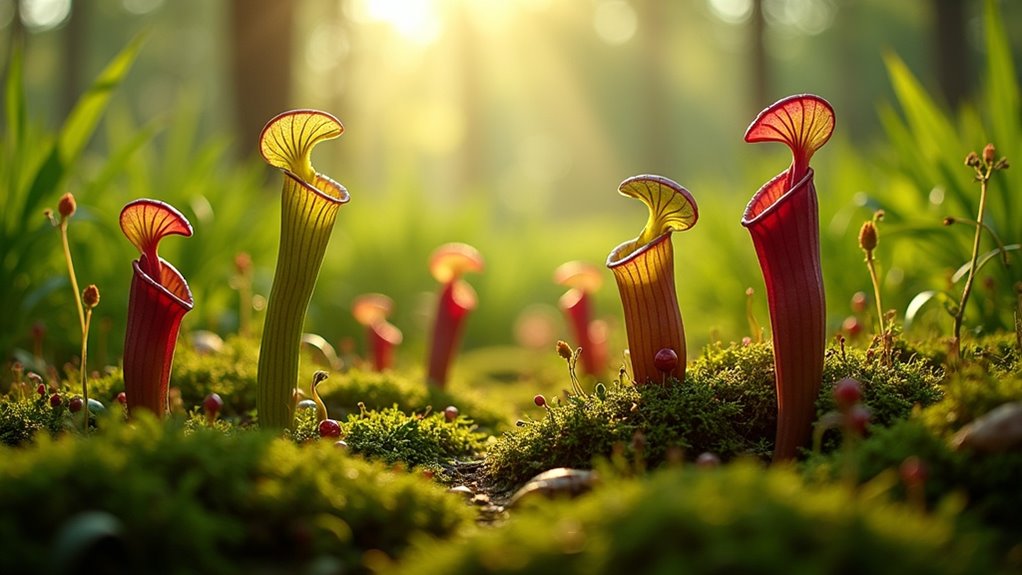
Carnivorous plants naturally grow in nutrient-poor, waterlogged environments like coastal plains, bogs, and wetlands. These habitats offer acidic soils that challenge traditional plant survival. To thrive, carnivorous plants have developed specialized trapping mechanisms to capture prey and acquire essential nutrients. You can find diverse species across the globe, particularly in the southeastern United States and high rainfall regions of South America. Learn about the unique adaptations and conservation efforts that help protect these fascinating plants.
Key Takeaways
- Carnivorous plants thrive in moist swamps and bogs with acidic soils, primarily in nutrient-poor environments.
- They are found in regions like the UK, Southeastern United States, and high rainfall areas of South America.
- Approximately 630 known species exist globally, with about 66 species native to the U.S.
- The Southeastern Coastal Plain, rich in endemic species, is a key habitat for many carnivorous plants.
- Bogs and wetlands provide ideal conditions for species like Venus flytraps and pitcher plants to grow.
Unique Habitats of Carnivorous Plants
Carnivorous plants thrive in unique habitats that often present challenging environmental conditions, which is why they’ve developed fascinating adaptations for survival.
You’ll find these plants in moist swamps and bogs, where acidic soil limits nutrient availability. In these low-nutrient environments, they rely on prey capture to supplement their diet.
Species like pitcher plants and sundews exhibit unique adaptations, such as specialized trapping mechanisms, to attract and digest insects.
These plants aren’t only limited to the UK; they also flourish in the Southeastern United States and even in high rainfall regions of South America, demonstrating their remarkable versatility.
Coastal Plains and Wetlands
Coastal plains and wetlands offer a rich tapestry of nutrient-poor, waterlogged environments that are perfect for various carnivorous plants. Here, species like the Venus flytrap and Sarracenia pitcher plants thrive, benefiting from acidic soils that provide essential nutrients through captured prey.
The Southeastern Coastal Plain stands out for its biodiversity, housing 1,816 endemic species, including many unique carnivorous plants. However, habitat loss and environmental changes threaten these delicate ecosystems.
Effective conservation efforts are important to preserve their unique biodiversity and guarantee the survival of carnivorous plants in these essential habitats, highlighting the need for ongoing awareness and action.
Bogs and Swamps
Bogs and swamps present nutrient-poor conditions that challenge plant survival, yet they uniquely foster the growth of carnivorous plants.
In these waterlogged environments, species like sundews and pitcher plants have adapted by evolving trapping mechanisms to secure essential nutrients from their prey.
Understanding how these habitats shape the lives of carnivorous plants is vital for appreciating their ecological significance and conservation needs.
Nutrient-Poor Conditions
In nutrient-poor environments like wetlands, where soil often lacks essential nitrogen and phosphorus, carnivorous plants have developed remarkable adaptations to survive.
These plants thrive in bogs and swamps, utilizing their unique trapping mechanisms to capture insects, which provide crucial nutrients. The acidic conditions of these habitats further emphasize the challenges these plants face.
Species like sundews and butterworts, native to the UK, exemplify how carnivorous plants extract necessary sustenance from their prey.
Even the critically endangered Attenborough’s pitcher plant showcases the ability to digest small mammals, highlighting the intricate balance of life in nutrient-poor ecosystems and the survival strategies employed by these fascinating organisms.
Waterlogged Environments
Carnivorous plants excel in waterlogged environments, particularly in bogs and swamps, where they find the acidic soil and low nutrient levels that foster their growth.
These habitats’ nutrient-poor soil, rich in decomposed plant material, retains moisture essential for survival. In cooler regions, bogs and swamps cultivate diverse plant species, including sundews, butterworts, and pitcher plants.
The waterlogged conditions limit competition, allowing carnivorous species to thrive and effectively utilize nutrients from captured prey. To maximize nutrient absorption, these plants exhibit specialized adaptations that attract and trap prey, ensuring their survival in these challenging environments.
Nutrient-Poor Soils
Nutrient-poor soils play a critical role in the survival of carnivorous plants, shaping their adaptations for nutrient acquisition.
In environments like wetlands and bogs, these plants have evolved specialized mechanisms, such as traps, to secure essential nutrients from their prey.
Understanding the dynamics of soil composition in these unique habitats reveals how these organisms thrive despite challenging conditions.
Soil Composition Dynamics
While many plants thrive in nutrient-rich environments, those growing in nutrient-poor soils face unique challenges that shape their adaptations.
Carnivorous plants, often found in moist wetlands, are specially adapted to these conditions. The soil composition is typically acidic and low in nitrogen and phosphorus, leading to slow organic matter decomposition and peat accumulation.
This exacerbates nutrient limitations, driving these plants to trap and kill prey for essential nutrients. By evolving specific trapping mechanisms, such as those seen in pitcher plants and sundews, they effectively supplement their nutrient intake, demonstrating remarkable adaptation to their harsh, nutrient-poor soils.
Adaptations for Nutrient Acquisition
In environments where soil lacks essential nutrients, plants must develop innovative strategies for survival.
Carnivorous plants, thriving in moist, nutrient-poor habitats like bogs and swamps, have evolved unique adaptations to acquire nutrients. Their specialized trapping mechanisms capture prey, providing crucial nourishment that their roots and photosynthesis alone can’t supply.
For instance, pitcher plants attract insects with bright colors and sweet nectar, enhancing their nutrient intake from decomposed prey. This carnivorous lifestyle not only guarantees their growth but also supports reproduction in otherwise inhospitable soils, allowing these remarkable plants to flourish where traditional plants struggle.
Habitat Examples and Locations
Carnivorous plants flourish in various nutrient-poor ecosystems across the globe, showcasing their remarkable adaptability.
These unique plants thrive in moist habitats, where poor nutrient availability drives them to capture prey. Key locations include:
- Bogs, characterized by waterlogged conditions and acidic soils
- Swamps, which provide rich humidity and diverse flora
- Coastal savannahs, particularly in regions like North Carolina
- Coastal Plain ecosystems, untouched by ice during glacial periods
In these environments, species such as sundews, butterworts, and the Venus flytrap have evolved to supplement their nutrient intake, demonstrating nature’s ingenuity in survival strategies.
Global Distribution of Carnivorous Plants
Though these fascinating plants thrive across diverse ecosystems, you’ll find carnivorous species on every continent except Antarctica, highlighting their remarkable adaptability to low-nutrient environments.
With approximately 630 known species, carnivorous plants mainly grow in moist ecosystems, particularly tropical regions and wetlands.
Significantly, sundews and pitcher plants are often native to acidic bogs and swamps, where they extract nutrients from trapping prey.
The U.S. boasts about 66 species, especially in the southeastern coastal plain.
Some species, like the endangered Attenborough’s pitcher plant, even digest larger prey, showcasing the diverse ecological niches these remarkable plants occupy.
Endemic Species in North America
North America boasts a remarkable diversity of carnivorous plants, with over 66 species thriving in its ecosystems. Among the most notable are:
- Venus flytraps (Dionaea muscipula), endemic to North and South Carolina
- Purple pitcher plants (Sarracenia purpurea), found from Canada to the southeastern U.S.
- Northern pitcher plants (Sarracenia purpurea), adapted to low-nutrient environments
- Hooded pitcher plants (Sarracenia minor), prevalent in the southeastern U.S.
These carnivorous plants showcase unique adaptations for capturing prey, particularly in nutrient-poor, acidic soils.
This makes them essential components of their habitats and fascinating subjects for study.
Conservation Areas for Carnivorous Plants
While many ecosystems face threats from development and climate change, conservation areas dedicated to carnivorous plants play an important role in their preservation.
Places like Big Thicket National Preserve and Yellow River Marsh Preserve State Park protect diverse habitats, including those of pitcher plants and sundews.
Acadia National Park’s wetlands offer crucial ecosystems for round-leaved sundew and purple pitcher plants, while the Stanley Rehder Carnivorous Plant Garden showcases numerous species, like Venus flytraps.
Additionally, Darlingtonia State Natural Site emphasizes habitat conservation, demonstrating that effective fire management and conservation efforts are essential for sustaining these unique and moist environments for carnivorous plants.
Climate and Environmental Influences on Growth
Understanding how climate and environmental factors influence the growth of carnivorous plants is essential for their conservation and management.
Climate and environmental factors are crucial for the growth and conservation of carnivorous plants.
These plants thrive in wet habitats, adapting to nutrient-poor environments through unique mechanisms. Key influences include:
- Moist soils that retain water and support growth
- Full sunlight essential for efficient photosynthesis
- Rainfall patterns affecting their distribution and survival
- Temperature fluctuations impacting habitat stability
The delicate balance of these climate factors means that shifts can threaten their existence.





