
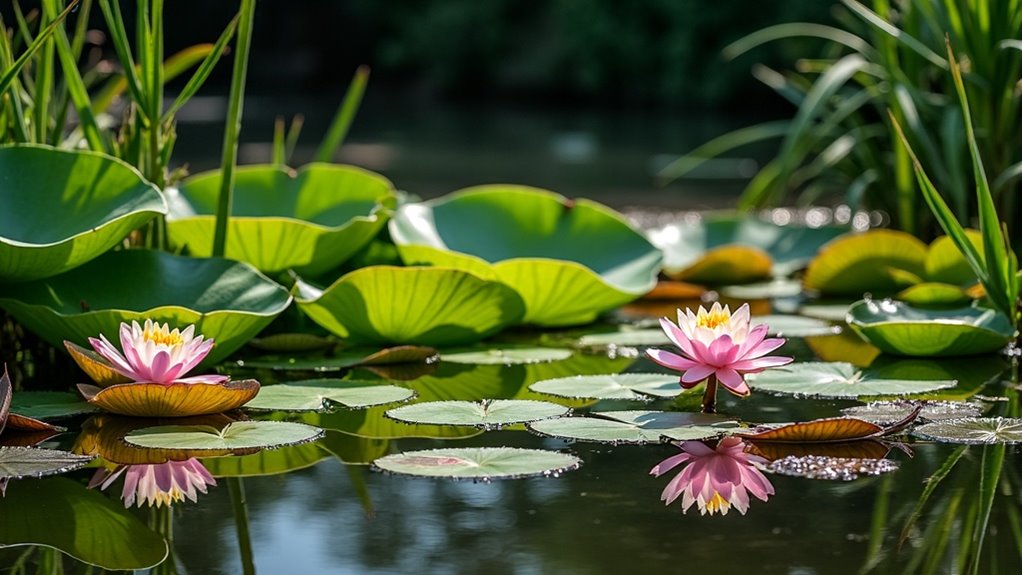
To effectively plant aquatic plants in ponds, consider their types and ideal depths. Floating plants thrive at the water’s surface, while submerged varieties need to be positioned about 12 inches below. Emergent plants flourish in 6-12 inches of water, and marginal plants prefer depths of 0-6 inches. Grouping similar plants not only enhances visual appeal but also supports a healthy ecosystem. Understanding these factors is essential for maintaining your pond’s balance and beauty—there’s more to explore on how to enhance your setup.
Key Takeaways
- Floating plants should be placed at the water surface for optimal nutrient absorption.
- Submerged plants, like Vallisneria, need to be planted 12 inches below the surface.
- Emergent plants thrive in 6-12 inches of water, with blooms above the surface.
- Marginal plants prefer water depths of 0-6 inches, ideal for pond edges.
- Grouping plants with similar sunlight and depth requirements enhances visual impact and ecosystem health.
Types of Aquatic Plants and Their Placement
When designing a pond, understanding the types of aquatic plants and their ideal placement is essential for maintaining a healthy ecosystem.
Floating plants thrive on the water’s surface, absorbing nutrients directly from the water and enhancing water quality.
Floating plants flourish on the water’s surface, enriching water quality by directly absorbing essential nutrients.
Submerged plants, like Vallisneria, should be placed about 12 inches below the surface to support oxygenation.
Emergent plants need moist soil or shallow water, showcasing blooms above the surface, while marginal plants, such as Papyrus, prefer 6-12 inch deep shelves.
Proper plant placement, grouping similar types, enhances your pond’s design and guarantees a flourishing environment for aquatic life.
Optimal Depth for Planting
Determining the ideal depth for planting aquatic plants is crucial for their health and the overall balance of your pond ecosystem. Each type of plant has specific depth requirements to thrive.
| Plant Type | Best Depth | Key Considerations |
|---|---|---|
| Floating Plants | Water surface | Absorb nutrients from water |
| Submerged Plants | 12 inches below | Guarantees best growth |
| Emergent Plants | 6-12 inches | Tops must be above water |
| Marginal Plants | 0-6 inches | Best for pond edges |
Proper planting depth guarantees plants receive adequate sunlight and nutrients for healthy growth.
Grouping Plants for Visual Impact
After establishing the ideal planting depths for aquatic plants, it’s important to think about how their arrangement can enhance the visual appeal of your pond.
Grouping similar plants together fosters a cohesive look, avoiding the scattered appearance of single specimens. For example, planting rows of marsh marigolds can create visual interest and mimic natural ecosystems.
Varying heights within these groups adds depth, making your water garden more engaging from different angles. This strategic organization not only highlights each plant’s unique characteristics but also simplifies maintenance, resulting in a polished appearance that elevates your pond’s overall design.
Sunlight Requirements and Plant Positioning
Understanding the sunlight requirements of aquatic plants is essential for ensuring their health and vigor in your pond.
Full sun plants need at least six hours of direct sunlight daily to thrive.
Position floating plants on the water surface, as they absorb nutrients directly from the water without soil.
Submerged plants should be placed about 12 inches below the water surface for ideal growth.
Emergent plants thrive in shallow areas where their roots are submerged, yet tops grow above the water.
Grouping plants with similar sunlight needs enhances growth and creates a balanced ecosystem, benefiting all aquatic plants in your pond.
Maintaining Water Quality With Aquatic Plants
While you may focus on the aesthetic appeal of aquatic plants in your pond, their role in maintaining water quality is equally vital. Aquatic plants absorb excess nutrients, reducing algae blooms and enhancing water clarity.
Covering 65-80% of the pond surface area with these plants provides shade, regulating temperature and promoting a healthier environment. Submerged plants, like Vallisneria and hornwort, oxygenate the water and filter impurities, essential for aquatic life.
Emergent plants in shallow water create habitats for beneficial organisms, further improving water quality through natural filtration. Regular maintenance guarantees these plants effectively support a balanced and thriving pond ecosystem.





