
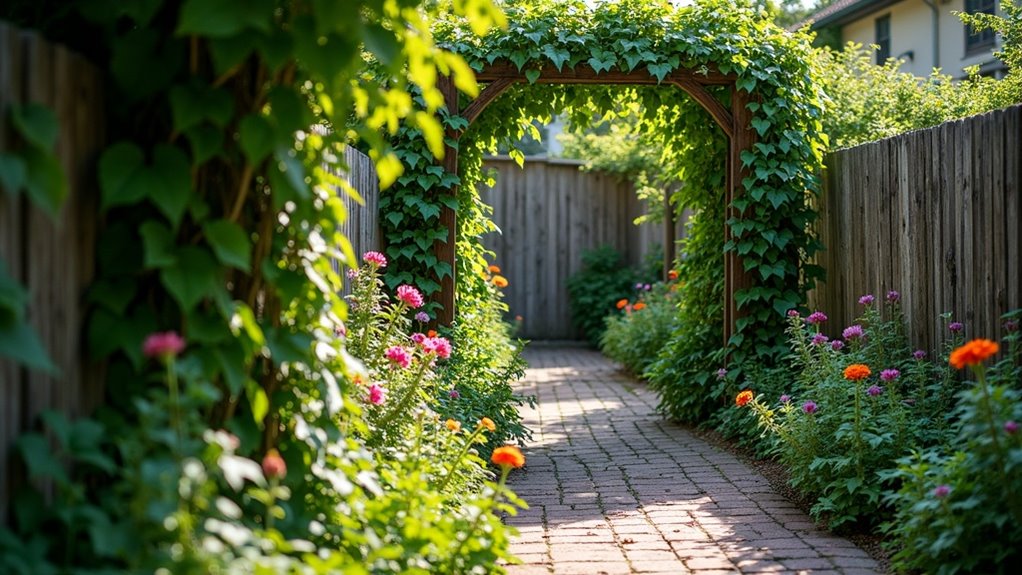
Climbing plants should be trained on sturdy support structures like trellises, arbors, or walls to promote healthy growth and maximize sunlight exposure. Position these supports 5cm away from structures, with horizontal or vertical wires spaced 30-45cm apart and the lowest wire at least 30cm above the soil. Regularly tie in new growth to prevent tangling and guarantee adequate airflow. Proper training is essential for ideal development, and there’s much more to discover about caring for these plants effectively.
Key Takeaways
- Train climbing plants on supports like trellises, arbors, or wires positioned 5cm away from walls or fences for optimal growth.
- Ensure supports are at least 30cm above the soil and spaced 30-45cm apart for healthy air circulation.
- Install support structures before planting to guide climbing plants effectively as they grow.
- Regularly tie in new growth to maintain structure and prevent tangling or overgrowth on walls and fences.
- Choose locations that provide adequate sunlight tailored to the specific climbing plant species for best results.
Support Structures for Climbing Plants
When you’re planting climbing plants, choosing the right support structure is essential for their growth and health.
Install supports like trellises, arbors, or wires before planting to facilitate proper development. Guarantee these structures are positioned 5cm away from walls or fences to allow for free growth and prevent moisture issues.
For effective support, space horizontal or vertical wires 30-45cm apart, with the lowest set at least 30cm above the soil. Heavy climbers require sturdy options like cable systems or strong wooden trellises.
Regularly check and adjust these support structures to accommodate your climbing plants’ growth and withstand weather conditions.
Preparing the Planting Location
To guarantee your climbing plants thrive, it’s essential to choose a well-prepared planting location that meets their specific needs. Follow these steps to ascertain success:
- Select a spot with adequate sunlight, tailored to your plant species.
- Dig a planting hole 6-8 inches from the base of your wall or fence, allowing room for growth.
- Position the root ball 2-3 inches below the soil surface for stability.
Before planting, securely install any support structures and use plant ties to provide immediate support.
Finally, water the plant to settle the soil and encourage initial growth.
Training Climbers on Trellises
Training climbing plants on trellises is essential for their growth and overall health, as it helps direct their development while maximizing space.
Securely install trellises before planting, positioning them 5cm away from walls to enable free growth. Space horizontal or vertical wires 30-45cm apart, with the lowest wire at least 30cm above the soil.
Choose trellis designs based on your space and plant type, like flat structures or obelisks. Regularly tie in new growth with flexible ties to guide stems and prevent overcrowding.
Monitor your plants’ health, ensuring they receive adequate sunlight and moisture for ideal growth.
Utilizing Walls and Fences
When utilizing walls and fences for climbing plants, it’s essential to choose suitable supports like trellises or horizontal wires to encourage healthy growth.
Position these supports at least 30cm above the soil and space them 30-45cm apart to accommodate various climbing varieties.
Regularly training and tying in new growth will help maintain an organized structure, preventing tangling and overgrowth while promoting airflow.
Choosing Suitable Supports
Choosing suitable supports for climbing plants is essential for their health and growth, especially when utilizing walls and fences effectively.
To guarantee your plants are trained to grow efficiently, consider these key factors:
- Install supports, like taut wires or trellises, 5cm away from structures for airflow.
- Space horizontal or vertical wires 30-45cm apart, with the lowest wire at least 30cm above the soil.
- Select robust support types, such as flat trellises for walls or obelisks for compact areas.
Training Techniques for Climbing
To successfully guide climbing plants against walls and fences, it’s essential to implement effective training techniques that promote healthy growth. Start by fixing horizontal wires 30-45cm apart and guaranteeing the lowest wire is at least 30cm above the soil. Tilt the rootball at a 45-degree angle towards the support to encourage natural growth. Tie in new growth regularly with flexible ties, maintaining a gap of 20-45cm between plants and structures. Use the table below for a quick reference:
| Technique | Purpose |
|---|---|
| Wire Spacing | Support and guide growth |
| 45-Degree Tilt | Encourage sunlight access |
| Regular Tying | Promote healthy expansion |
| Maintain Gaps | Assure light and moisture |
Creating Living Walls
Creating living walls offers a fantastic way to transform vertical spaces, especially in urban environments where ground space is scarce.
You can choose modular planting systems for easy maintenance or opt for DIY pallet walls to add an eco-friendly touch.
Regardless of the method, consistent care and proper irrigation are essential for a thriving green display.
Modular Planting Systems
While many urban dwellers yearn for a touch of nature amidst concrete surroundings, modular planting systems for living walls offer an innovative solution that maximizes vertical space.
These systems feature pockets or containers that simplify the maintenance of climbing plants, ensuring they thrive in limited areas.
Consider these benefits:
- Versatility: Perfect for both indoor and outdoor settings.
- Aesthetic Appeal: Transform dull walls into vibrant green backdrops.
- Space Efficiency: Utilize vertical space, ideal for small gardens.
With proper irrigation and regular pruning, you can maintain healthy, beautiful living walls that enhance your environment.
DIY Pallet Walls
When you’re looking to bring a touch of greenery into your outdoor space, DIY pallet walls offer a practical and stylish solution.
By repurposing wooden pallets, you can create vertical gardens for climbing plants that thrive in confined spaces. Verify your pallets are clean and free from chemicals, then secure them to a wall or fence for stability.
Consider using modular systems to create pockets for easy planting. Mixing climbing plants with cascading varieties not only enhances aesthetics but also maximizes vertical space.
With proper planning, your pallet wall can become a vibrant display of life in your garden or urban environment.
Maintenance and Care
Establishing a vibrant living wall requires ongoing maintenance and care to secure your climbing and cascading plants thrive.
To guarantee healthy growth, focus on these essential aspects:
- Irrigation: Regularly check moisture levels; adequate watering is critical for plant health.
- Pruning: Trim back overgrown areas to promote airflow and prevent overcrowding, enhancing both aesthetics and vitality.
- Sunlight: Assess light exposure and adjust plant placement to meet their sunlight needs.
Maintaining Climbing Plants
To maintain climbing plants effectively, you’ll need to regularly tie in new growth to their support structures, guaranteeing that they develop properly and don’t become tangled.
Monitor their health by checking for pests or diseases, and assess soil conditions for ideal growth. Adequate sunlight and moisture are essential; make sure your plants receive both.
Additionally, prune climbing plants to remove weak growth and encourage a fan shape, promoting better flowering and overall vigor.
As your plants mature, adjust support structures and training methods to accommodate their growth patterns while maintaining the desired aesthetics of your garden.





