
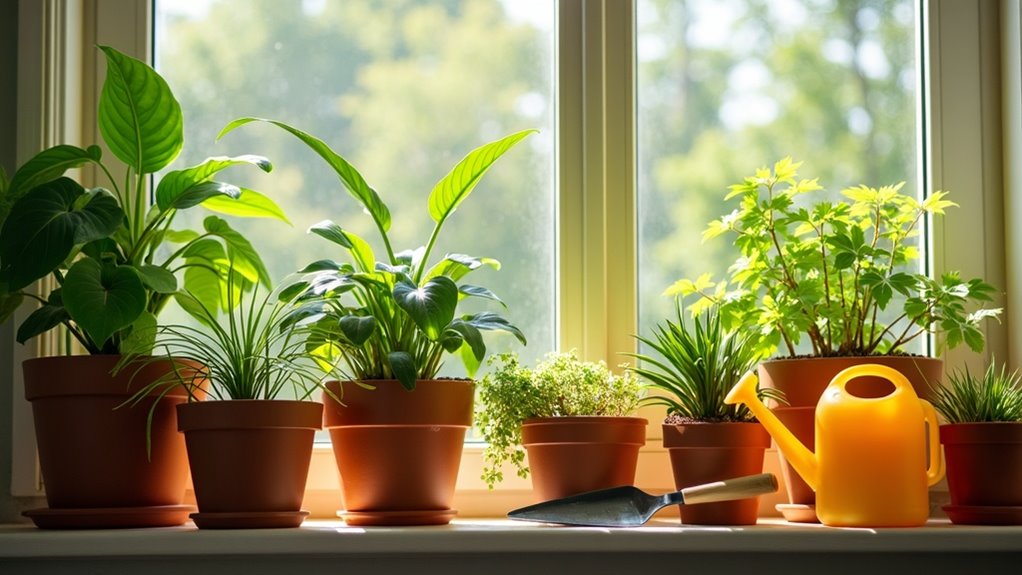
You should repot houseplants mainly in spring when they’re growing actively. This fresh soil boosts nutrients and drainage. Summer repotting can be risky due to heat stress, so if you must, do it in cooler hours. Fall isn’t ideal, but if a plant’s still growing, it’s okay with care. Winter poses the most risks; avoid repotting unless necessary as cold slows growth. Want to know more about ensuring your plants thrive during repotting?
Key Takeaways
- Spring is the best season for repotting as plants are actively growing and can recover quickly from transplant stress.
- Summer can be challenging for repotting due to heat stress; repot during cooler times and provide shade afterward.
- Fall may allow repotting for healthy, actively growing plants, but monitor moisture levels closely.
- Winter is risky for repotting due to cold temperatures and reduced growth; avoid repotting struggling plants.
- Always use fresh soil, ensure proper drainage, and provide stable conditions post-repotting for successful acclimation.
Understanding Seasonal Growth Patterns
When considering the best time to repot your houseplants, it’s vital to recognize their seasonal growth patterns.
Houseplants thrive during their active growing season, primarily in spring and early summer. This is the best time to repot houseplants, as warm temperatures and longer daylight hours stimulate growth, helping them recover from transplanting stress.
Houseplants flourish in spring and early summer, making it the ideal time for repotting to support healthy growth.
Fresh soil replenishes essential nutrients and improves drainage, supporting a healthy root system.
Avoid repotting in fall and winter when plants slow down, as this can lead to stress and complications.
Timing your repotting with their growth cycle guarantees your plants flourish and thrive.
Optimal Times for Repotting in Spring
Spring’s the perfect time to repot your houseplants since they’re in their active growth phase, ready to thrive in fresh soil.
By repotting now, you not only help them recover quickly but also replenish essential nutrients that may have been used up.
Keep an eye out for roots peeking through drainage holes as a sign that it’s time to give your plants a new home.
Active Growth Phase
As temperatures rise and daylight hours lengthen, houseplants enter their active growth phase, making this the ideal time for repotting.
In spring, your plants can recover quickly and establish roots in fresh soil, promoting healthier growth. Look for signs like roots emerging from drainage holes or rapid soil drying between waterings to know it’s time to repot.
Fresh soil not only nourishes but also improves drainage, which is essential for vigorous growth. By repotting during this period, your plants can better manage moisture needs, reducing the risk of overwatering and ensuring they thrive throughout the season.
Fresh Soil Benefits
Repotting your houseplants in early spring brings a host of benefits, primarily due to the fresh soil you introduce. Fresh potting mix replenishes essential nutrients that may have been depleted, promoting healthier growth and vibrant foliage.
The warmer temperatures and longer daylight hours of spring stimulate root growth, helping your plants recover faster from the stress of repotting. Additionally, using fresh soil improves drainage, reducing the risk of root rot and moisture-related issues during the growing season.
Challenges of Summer Repotting
Repotting your houseplants in summer can be tricky due to the heat, which increases stress levels and can lead to wilting or leaf drop.
With higher temperatures, your plants may need more water, making it easy to overwater and potentially drown their roots.
It’s essential to carefully monitor their condition after repotting to guarantee they recover from the shift smoothly.
Heat Stress Issues
When the summer heat sets in, repotting houseplants can become a delicate balancing act, as the increased temperatures often lead to heat stress. During this time, you might face challenges like transplant shock, making root recovery tougher. To manage moisture levels, check your plants frequently, as the combination of repotting and heat can dry the soil quickly. Be cautious of overwatering, as stressed plants may not absorb water effectively, risking root rot. To mitigate these issues, repot during cooler hours and keep your plants in shaded areas afterward.
| Challenge | Solution |
|---|---|
| Heat Stress | Repot in cooler hours |
| Transplant Shock | Monitor root recovery |
| Moisture Levels | Check soil frequently |
| Overwatering | Adjust watering methods |
| Shaded Environment | Provide protective shade |
Increased Watering Needs
As summer heat intensifies, your houseplants’ watering needs increase considerably. Monitor your plants closely to prevent dehydration and stress.
Here are some key tips:
- Choose pots with adequate drainage holes.
- Use high-quality potting soil that retains moisture.
- Consider self-watering pots for consistent hydration.
- Add moisture-retentive materials like coconut coir to your mix.
- Watch for signs of overwatering, especially after repotting.
With higher temperatures, soil dries out quickly. Stay vigilant about moisture levels to avoid wilting.
Repotting during summer requires careful attention to watering routines to keep your plants healthy and thriving.
Fall Repotting: A Moderate Approach
Although fall isn’t the most favorable season for repotting houseplants, you can still successfully refresh your plants if you choose wisely. Focus on those that are actively growing and free from stress. Use pots that are slightly larger to prevent excess water and potential root rot. Monitor moisture levels carefully, as lower light decreases evaporation. You might consider using grow lights to boost their recovery.
| Plant Type | Signs of Stress | Pot Size |
|---|---|---|
| Ferns | Yellowing leaves | Slightly larger |
| Succulents | Wilting | Slightly larger |
| Peace Lilies | Brown tips | Slightly larger |
| Spider Plants | Stunted growth | Slightly larger |
Winter Repotting: Risks and Considerations
Repotting in winter poses significant challenges that can impact your houseplants’ health.
- Cold temperatures slow growth, stressing roots and stems.
- Excess moisture during winter repotting can lead to root rot.
- Signs of stress include wilting, leaf drop, and disease susceptibility.
- Avoid repotting struggling plants, especially those with pests or diseases.
- Using grow lights can help provide warmth and adequate light for recovery.
Understanding these risks can help you decide whether winter repotting is the right choice.
Prioritizing your plant’s health guarantees they thrive despite the season’s challenges.
Signs That Indicate a Need for Repotting
Recognizing the signs that indicate a need for repotting can greatly enhance your houseplants’ health and longevity.
If you see roots poking out of the drainage holes or circling the pot, your plant is likely a rootbound plant. Additionally, if the soil dries out quickly despite watering, it suggests the roots have filled the available space.
Roots emerging from drainage holes or circling the pot indicate a rootbound plant, often needing more space to thrive.
A top-heavy appearance or stunted growth indicates it’s time for a new pot. White mineral buildup on the soil surface signals depleted nutrients.
Finally, wilting leaves or a lack of new growth are clear signs that repotting is necessary.
Follow these best tips to guarantee success!
Factors Influencing the Repotting Process
When considering the timing and method of repotting your houseplants, several important factors come into play to secure a successful change.
- Ideal timing is early spring or summer.
- Assess root health and plant size in relation to the pot.
- Look for signs of slowed growth or nutrient deficiencies.
- Choose a pot with a drainage hole that’s 1-2 inches larger.
- Confirm proper soil moisture to avoid overwatering issues.
Best Practices for Successful Repotting
Successful repotting hinges on a few best practices that can make all the difference for your houseplants.
Start by repotting during their active growing season, typically in spring or early summer, to help them recover quickly.
Choose new pots that are 1-2 inches larger in diameter to allow for proper root growth and prevent overwatering.
Inspect the root ball, trimming any unhealthy roots before placing it in fresh, lightly damp potting mix.
After repotting, water gently and hold off on fertilizing for at least two weeks, allowing your plant to acclimate to its new environment without added stress.





