
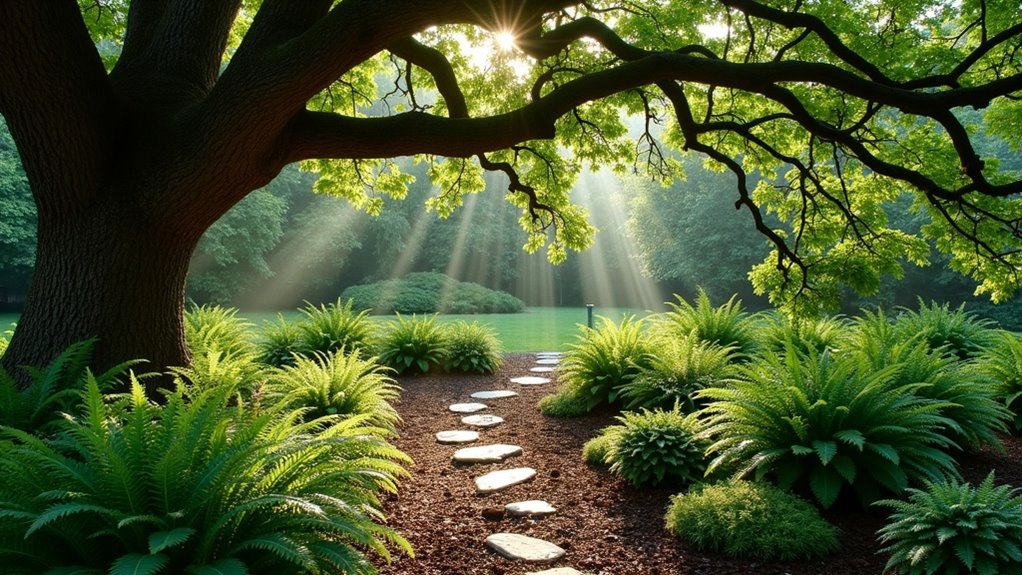
To position shade plants effectively in your garden, assess the light conditions first. Position shade-tolerant plants under mature trees or between buildings, ensuring they receive the right amount of filtered light. Group plants according to their moisture needs, with moisture-lovers in damp areas. Incorporate containers in dappled shade for flexibility and enhanced aesthetics. Arrange taller plants at the back and groundcovers in front for visual interest. By understanding these principles, you’ll boost your garden’s overall health and beauty.
Key Takeaways
- Position shade plants under mature trees or between buildings to optimize light exposure and growth conditions.
- Group plants by light requirements; place full shade plants in darker areas and part shade plants in brighter spots.
- Use lower-growing plants like ferns in the front to enhance visual interest and create depth in the garden.
- Incorporate containers in shaded areas to reduce root competition and allow for flexibility in plant arrangements.
- Observe microclimates to effectively group plants by their moisture needs and ensure healthier growth.
Understanding Different Types of Shade
When you’re planning a garden, understanding the different types of shade is crucial to selecting the right plants for your space.
Part shade allows 4-6 hours of sunlight, making it ideal for shade-tolerant plants.
Dappled shade, with 2-4 hours of filtered light, supports species like rhododendrons.
Summer shade, characterized by limited winter sun exposure, nurtures early bloomers such as bluebells.
Bright shade offers consistent filtered light throughout the day, while full shade presents a challenge with dense cover and minimal light.
Careful selection of shade-tolerant plants guarantees your shade gardens thrive, creating vibrant, lush environments despite limited sunlight.
Assessing Light Conditions in Your Garden
Evaluating light conditions in your garden involves careful observation and categorization of sunlight exposure throughout the day.
Set an alarm to note light patterns hourly, allowing you to accurately assess sunlight exposure.
Categorize shady spaces into five types: Full Shade, Part Shade, Dappled Shade, Bright Shade, and Summer Shade.
Part Shade areas receive 4-6 hours of sunlight, while Dappled Shade allows 2-4 hours of filtered light.
Recognize that Full Shade limits your options, making it essential to select shade-tolerant plants.
Understanding these conditions helps you make informed decisions for a thriving garden, even in less sunny areas.
Ideal Plant Placement for Dense Shade
Although dense shade presents challenges, it also offers unique opportunities for creating a lush garden. To maximize your planting area in these conditions, consider the following:
- Position shade plants under mature trees or between buildings for ideal growth.
- Use lower-growing plants like ferns and groundcovers in the front to enhance visual interest.
- Incorporate containers to reduce root competition and maintain flexibility.
- Choose shade-tolerant species that thrive in low light levels, ensuring they receive adequate moisture and nutrients.
- Add decorative elements such as seating or artwork to enrich your shade garden, as grass often struggles in dense shade.
Grouping Plants by Light and Moisture Needs
Creating a thriving shade garden requires careful consideration of plant placement based on their light and moisture needs.
Begin by grouping plants according to their light requirements; position full shade plants like leopard plant and royal fern in darker areas, while part shade plants like bleeding heart thrive in brighter spots.
Consider moisture needs by placing moisture-loving plants, such as cinnamon fern and lungwort, in consistently damp areas.
Use layering techniques to position taller plants at the back and groundcovers in front, and observe microclimates to guarantee effective grouping.
This thoughtful positioning promotes healthier growth and simplifies maintenance efforts.
Using Containers to Maximize Shade Areas
To optimize your shade areas, select containers that not only complement your garden’s aesthetic but also suit the plants you want to grow.
Consider pairing plants with similar moisture and light requirements, as this will enhance growth and visual appeal.
Remember to guarantee proper drainage and regularly refresh your plant selections to keep your shade garden vibrant.
Container Selection Tips
When selecting containers for shade plants, it’s essential to choose sizes that accommodate their root systems while guaranteeing adequate drainage to prevent waterlogging.
Here are some tips for effective container selection:
- Opt for containers with drainage holes to promote healthy roots.
- Use materials like ceramic or concrete for better insulation and consistent moisture.
- Position containers in dappled shade or under trees for protection from direct sunlight.
- Incorporate various heights and shapes to create visual interest.
- Consider self-watering containers to maintain moisture levels in shaded garden areas.
These strategies will enhance your shade planting experience and guarantee healthy growth.
Plant Pairing Strategies
While maximizing shade areas in your garden, effective plant pairing strategies can greatly enhance both aesthetics and plant health.
Position your containers with shade plants in dappled shade under trees, allowing some light exposure. Use taller plants, like ornamental grasses or vines, to create vertical interest and shade smaller plants below them.
Arranging containers in clusters can help create a microclimate, retaining moisture and reducing watering needs. Don’t hesitate to utilize unique items, such as pails or old wagons, to add character.
Regularly rotate and rearrange containers to experiment with pairings, optimizing the use of available light in shady spaces.
Enhancing Growth With Mulch and Soil Considerations
To enhance growth in your shade garden, mulching is essential for maintaining soil moisture and improving fertility.
Conducting a soil quality assessment helps identify any nutrient deficiencies, ensuring your shade plants receive the proper care they need.
Importance of Mulching
Mulching plays an essential role in enhancing the growth of shade plants by optimizing soil conditions and moisture retention.
In shade gardens, mulching offers several benefits:
- Retains soil moisture, vital for hydration
- Improves soil fertility with organic mulches like wood chips
- Suppresses weed growth, minimizing competition for nutrients
- Regulates soil temperature, protecting roots from extremes
- Enhances garden aesthetics while promoting health
Soil Quality Assessment
Evaluating soil quality is essential for the success of shade plants, especially after implementing effective mulching strategies. Conduct soil tests every 3-5 years to check nutrient levels, pH, and texture.
Incorporating organic matter, like compost or well-rotted manure, enhances fertility and moisture retention. A layer of mulch helps suppress weeds and regulates soil temperature, promoting a healthy root environment.
Confirm proper soil drainage; overly compacted or waterlogged soil can stress shade plants. Regularly monitor moisture levels, particularly in dry conditions, to determine if supplemental watering or additional amendments are needed for peak plant health.





