
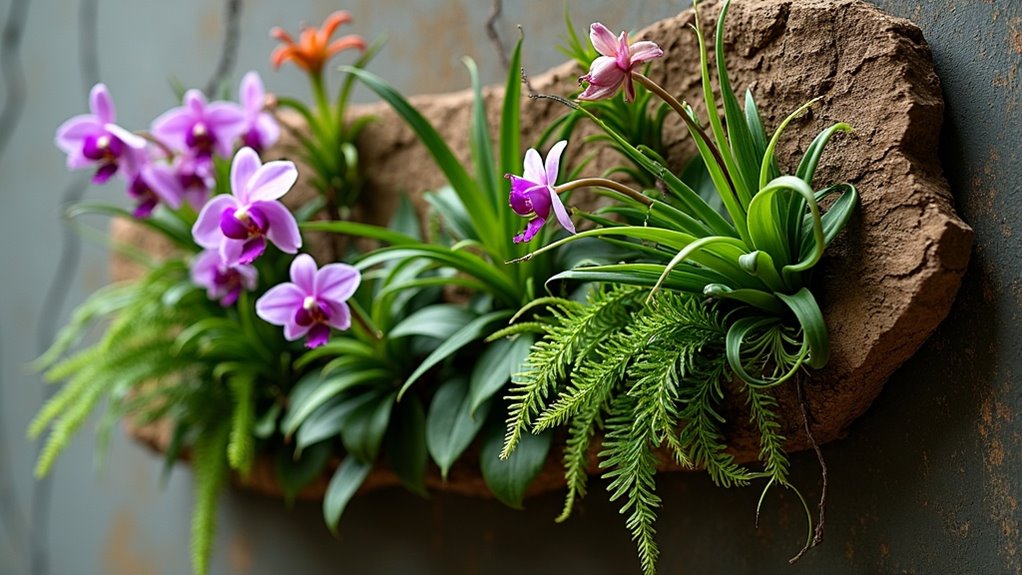
Epiphytes like orchids, staghorn ferns, bromeliads, and Tillandsia are excellent choices for mounted displays. These plants thrive on surfaces, extracting moisture and nutrients from their surroundings without soil. Orchids, with their stunning flowers, use aerial roots for hydration, while staghorn ferns prefer bright, humid environments. Bromeliads add vibrant colors and unique forms to your arrangement. By understanding these plants’ specific care needs and growth habits, you can create breathtaking vertical gardens that bring the beauty of nature indoors.
Key Takeaways
- Popular epiphytes for mounted displays include orchids, staghorn ferns, hoyas, and bromeliads, known for their unique beauty and adaptability.
- Orchids, especially Phalaenopsis, thrive with aerial roots that absorb moisture and nutrients from the environment.
- Staghorn ferns require bright, filtered light and benefit from regular misting to maintain humidity.
- Tillandsia xerographica, or air plants, are low-maintenance and can thrive in various light conditions without soil.
- Mistletoe cactus and ferns add lush greenery and texture, enhancing the aesthetic appeal of mounted arrangements.
Understanding Epiphytes and Their Growth Habits
While you might think all plants need soil to thrive, epiphytes defy this norm by growing on other plants or surfaces solely for support.
These epiphytic plants extract nutrients and moisture from the air, rain, and surrounding debris, allowing them to flourish in diverse natural environments. They’ve adapted specialized structures, like aerial roots and trichomes, to efficiently absorb these essentials.
This unique growth habit enables epiphytes to compete for sunlight amid dense vegetation.
Popular Epiphytic Plants for Mounting
When selecting popular epiphytic plants for mounting, consider their unique growth characteristics and care requirements.
For instance, the Staghorn Fern thrives in bright, filtered light and necessitates regular misting, while the Hoya’s waxy leaves and fragrant flowers create an elegant display with minimal care.
Understanding these traits will help you choose ideal candidates that flourish in mounted environments.
Ideal Mounting Candidates
If you’re looking to enhance your mounted displays with enthralling epiphytes, several plants stand out as ideal candidates.
Tillandsia xerographica, known for its striking rosette shape, thrives in various light conditions and efficiently absorbs moisture from the air, making it a versatile choice.
The Staghorn Fern (Platycerium bifurcatum), with its antler-like fronds, prefers bright filtered light and serves as a stunning focal point.
Orchids, especially epiphytic types like Phalaenopsis, utilize aerial roots to cling to surfaces, efficiently absorbing moisture and nutrients.
Additionally, Hoya species and Mistletoe Cactus (Rhipsalis baccifera) add lush aesthetics and thrive in humid environments, enhancing your mounted plant collection.
Unique Growth Characteristics
Epiphytic plants exhibit unique growth characteristics that make them particularly suited for mounted displays. These epiphytic houseplants thrive by absorbing moisture and nutrients from the air, enhancing their suitability for vertical arrangements.
Key features include:
- Moisture absorption: Plants like Staghorn Fern capture ambient humidity, benefiting from high humidity environments.
- Nutrient acquisition: Air plants, such as Tillandsia xerographica, draw essential nutrients directly from their surroundings, eliminating the need for traditional root systems.
- Aesthetic growth habits: Species like Mistletoe Cactus and Hare’s Foot Fern offer distinctive textures and forms, adding visual interest to mounted displays.
Care Requirements for Success
Successfully caring for popular epiphytic plants in mounted displays requires a keen understanding of their specific needs.
These epiphytes thrive in well-draining soil and benefit from moss around their roots to retain moisture. Guarantee adequate air circulation, especially for orchids, to prevent rot.
Place them in bright light, avoiding direct sun, while maintaining ideal humidity levels through regular misting.
Water once a week, soaking for about 30 minutes, particularly during dry spells.
Hoya species, Staghorn Ferns, and Bromeliads all appreciate these conditions, guaranteeing vibrant growth and health in your mounted displays.
Advantages of Mounting Epiphytic Plants
Mounting epiphytic plants offers several distinct advantages that enhance both their aesthetic value and overall health.
With this method, you can enjoy:
- Improved air circulation around roots, markedly reducing the risk of root rot.
- A space-saving solution, perfect for small living areas as mounted epiphytes can be hung or displayed creatively.
- Enhanced control over light and humidity, fostering conditions that promote improved growth.
These benefits not only create stunning living art pieces but also cater to the unique needs of your plants, ensuring they thrive in an environment that mimics their natural habitats.
Care Requirements for Mounted Epiphytes
Creating a mounted display not only enhances the aesthetic appeal of your space but also necessitates a thoughtful approach to care for the plants involved.
Mounted epiphytes, such as orchids and bromeliads, thrive in orchid bark or sphagnum moss, which provide excellent drainage and moisture retention.
Water when the top layer feels dry, typically soaking them for about 30 minutes weekly.
Make sure they receive bright, indirect light to prevent leaf scorch and support healthy growth.
Maintain humidity levels between 50-70% through misting, and during the growing season, use a diluted liquid fertilizer to promote ideal growth and flowering.
Step-by-Step Guide to Mounting Epiphytic Plants
When you’re ready to mount epiphytic plants, selecting the right materials and preparing them properly is essential for guaranteeing their long-term health and stability.
Follow these steps:
- Choose durable mount material, like hardwood or cork.
- Remove excess soil from the plant’s roots for better contact.
- Secure the plant by wrapping fishing line around the base.
After mounting, water sparingly, soak weekly, and maintain humidity levels.
Verify your epiphytic plant receives bright, indirect light for ideal growth.
Creative Display Ideas for Mounted Epiphytes
When you’re considering creative display ideas for mounted epiphytes, think about various mounting techniques that mimic their natural habitats, like cork bark or hardwood.
Aesthetic arrangement styles, such as vertical gardens or suspended mounts, allow you to showcase these plants in dynamic ways, enhancing both visual appeal and space efficiency.
Incorporating elements like moss can’t only improve moisture retention but also unify the overall look of your mounted displays.
Mounting Techniques for Epiphytes
Mounting epiphytes effectively requires careful selection of materials and techniques to guarantee their health and aesthetic appeal.
To achieve this, consider the following:
- Use durable materials like hardwood or cork to mimic their natural environment.
- Secure the plant by tightly wrapping fishing line or twine around the root ball, ensuring it won’t shift while allowing for growth.
- Incorporate moss around the roots to retain moisture.
Position your mounted epiphytes in bright, indirect light to promote ideal growth.
For creative displays, think about arranging multiple mounts on a wall or suspending them for a fascinating floating garden effect.
Aesthetic Arrangement Styles
Creating visually appealing arrangements for mounted epiphytes enhances their natural beauty and contributes to your indoor environment. Suspend these epiphytes from ceilings or walls to introduce a striking vertical element, simulating a floating garden.
Stagger or cluster multiple mounted displays to form a fascinating living art piece, showcasing diverse shapes, colors, and textures. Use smaller mounts as centerpieces, maximizing aesthetic appeal while conserving floor space.
Incorporate natural materials like driftwood and cork for support and visual interest. Additionally, adjust their positions to varying light conditions, allowing your arrangements to evolve with the seasons and your personal preferences.
Floating Garden Inspirations
To transform your indoor space into a vibrant floating garden, consider integrating a variety of mounted epiphytes that reflect their natural habitats.
Using durable materials like cork or hardwood for mounts enhances aesthetic appeal while accommodating staghorn ferns and orchids.
- Cluster various epiphytic plants, like Tillandsia xerographica and Hoya, to create diverse textures.
- Arrange them alongside decorative elements to evoke a natural forest environment.
- Maintain their health with regular misting and soaking, ensuring they thrive in your floating garden display.
These creative arrangements bring a unique visual interest, enriching your indoor spaces with nature’s beauty.





