
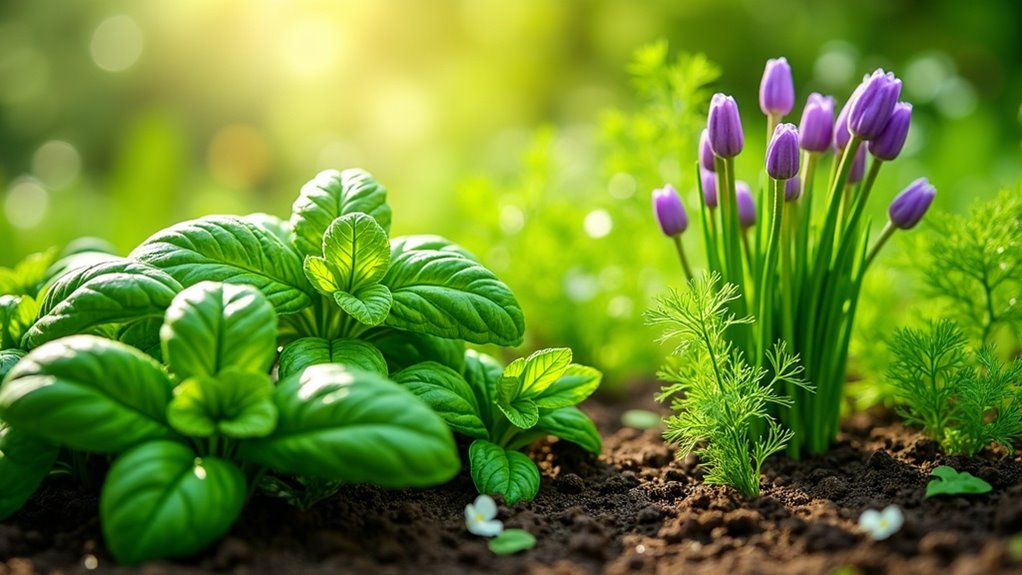
Herbs are non-woody plants valued for their culinary, aromatic, and medicinal properties. They fall into two main categories: annuals, like basil and cilantro, which complete their life cycle in one season, and perennials, such as rosemary and sage, which return year after year. Most herbs require well-draining soil and specific growing conditions to thrive. They not only enhance dishes but also offer various health benefits. There’s so much more to uncover about herbs and their varieties.
Key Takeaways
- Herbs are non-woody plants valued for their aromatic, culinary, and medicinal properties.
- Common culinary herbs include basil, oregano, cilantro, rosemary, and mint.
- Herbs can be classified as annuals, completing their lifecycle in one growing season, or perennials, thriving for multiple years.
- Most herbs prefer well-drained soil and adequate sunlight for optimal growth.
- Medicinal herbs, such as sage and lavender, offer health benefits like anti-inflammatory and anxiety-reducing properties.
Defining Herbs and Their Characteristics
Herbs, defined as plants prized for their aromatic, culinary, and medicinal properties, typically feature non-woody stems that distinguish them from shrubs and trees.
You’ll find culinary herbs, such as basil and oregano, enhance dishes with unique flavors, while others serve aromatic or medicinal purposes.
Most herbs thrive in well-draining soil, essential for preventing root rot and ensuring robust growth. They often possess essential oils, contributing to their distinctive scents and tastes.
Whether you’re planting in garden beds, containers, or indoors, understanding these characteristics helps you cultivate herbs successfully, maximizing their benefits in your cooking and wellness routines.
The Classification of Herbs: Annuals vs. Perennials
Understanding the growth habits of herbs is essential for effective gardening, particularly when distinguishing between annuals and perennials.
Annual herbs, such as basil and cilantro, complete their lifecycle in one growing season, requiring you to replant them each year. In contrast, perennials like rosemary and sage can thrive for multiple years, returning season after season.
Annual herbs like basil and cilantro complete their lifecycle in one season, while perennials like rosemary and sage return year after year.
This classification affects their care; annuals typically demand more frequent watering and nutrients compared to established perennials. Additionally, some culinary herbs may be treated as annuals in colder climates, despite being botanically classified as perennials.
Knowing this helps you plan how to grow herbs effectively.
Common Culinary Herbs and Their Uses
When you’re cooking, understanding common culinary herbs can enhance your dishes considerably.
Each herb, like basil or cilantro, has specific growing conditions that influence its flavor and aroma. Knowing how to use these herbs not only elevates your culinary creations but also harnesses their unique benefits.
Popular Culinary Herbs
Culinary herbs play an essential role in enhancing flavors in a variety of dishes, and five of the most popular ones include basil, oregano, cilantro, rosemary, and mint. These versatile herbs not only elevate meals but also thrive in specific conditions.
| Herb | Flavor Profile | Growing Conditions |
|---|---|---|
| Basil | Sweet, peppery | Warm climates, well-drained |
| Oregano | Robust, earthy | Full sun, well-drained |
| Cilantro | Fresh, citrusy | Well-drained, moderate sun |
| Rosemary | Pine-like, aromatic | Full sun, drought-tolerant |
| Mint | Cool, invigorating | Moist, well-drained soil |
Understanding these plants helps you utilize them effectively in your culinary ventures.
Growing Conditions Explained
Growing conditions for common culinary herbs can greatly impact their flavor and health. Herbs like basil and parsley thrive in well-drained soil under full sun, while basil is sensitive to temperatures below 40°F.
Mediterranean herbs such as rosemary prefer arid soil and sunny environments, making them drought-tolerant. On the other hand, moisture-loving herbs like cilantro require slightly moist soil and higher humidity.
Mint spreads rapidly, so consider growing it in containers. Chives are hardy perennials that tolerate partial shade.
Understanding these specific needs guarantees your herbs enhance dishes, especially when used in salads, bringing vibrant flavors to your meals.
Culinary Uses and Benefits
Herbs enhance your cooking not just through their flavors but also by offering a range of health benefits. Common culinary herbs like basil, cilantro, and parsley are frequently used to elevate dishes.
Basil thrives in Italian cuisine, while cilantro shines in Mexican and Thai recipes. Easy to grow, mint adds a revitalizing flavor to beverages and desserts.
Rosemary and thyme, known for their robust tastes, are perfect for Mediterranean and hearty meat dishes. Oregano, a Mediterranean staple, works well fresh or dried, and dill is ideal for pickling and fish.
These herbs not only taste great, they’re beneficial too!
Medicinal Properties of Herbs
While many people appreciate herbs for their flavors in cooking, their medicinal properties are equally significant and deserve attention.
Herbs like sage and rosemary possess anti-inflammatory and antioxidant effects that promote overall health. Basil’s essential oils offer antibacterial benefits and reduce stress due to eugenol.
Lavender’s calming aroma aids in anxiety reduction and enhances sleep quality, making it popular in aromatherapy. Peppermint, rich in menthol, soothes digestive issues and headaches.
Additionally, herbs like echinacea and garlic may boost your immune system, showing that these plants aren’t just culinary delights but also powerful allies in your health regimen.
Aromatic Herbs and Their Benefits
Aromatic herbs like basil, mint, and rosemary not only elevate the flavor of your dishes but also offer a range of health benefits.
When you incorporate these herbs into your life, you can enjoy:
- Medicinal properties: Peppermint aids digestion, while rosemary provides antioxidant support.
- Emotional well-being: Their calming scents are used in aromatherapy, promoting relaxation and reducing stress.
- Companion planting: These herbs improve pest control and boost the growth of neighboring plants, thriving in full sun and well-drained soil.
Utilizing aromatic herbs can transform your cooking and enhance your overall health and garden importance.
Growing Herbs: Conditions and Requirements
To successfully grow herbs, it’s essential to understand their specific conditions and requirements. Most herbs thrive in well-drained soil, with Mediterranean varieties like basil preferring full sun.
On the other hand, moisture-loving herbs can flourish in partial sun. If you’re short on space, consider container gardening, ensuring your pots have drainage holes to prevent waterlogging.
Regularly harvesting your herbs encourages growth, so don’t forget to prune them timely. Starting with established herb plants can simplify your gardening journey, as they’re ready to be transplanted, unlike seeds that require more attention and care for germination.
Popular Herb Varieties for Home Gardens
When you’re planning your home garden, incorporating popular herb varieties can greatly enhance both your culinary experiences and garden aesthetics.
Here are three excellent plants to grow in your herb garden:
- Basil: Thrives in warm climates and adds versatility to dishes.
- Chives: A hardy perennial with a mild onion flavor and attractive edible flowers.
- Thyme: Drought-tolerant, it flourishes in full sun and well-drained soil, perfect for various culinary uses.
Including these herbs not only enriches your cooking but also brings beauty to your garden space.





