
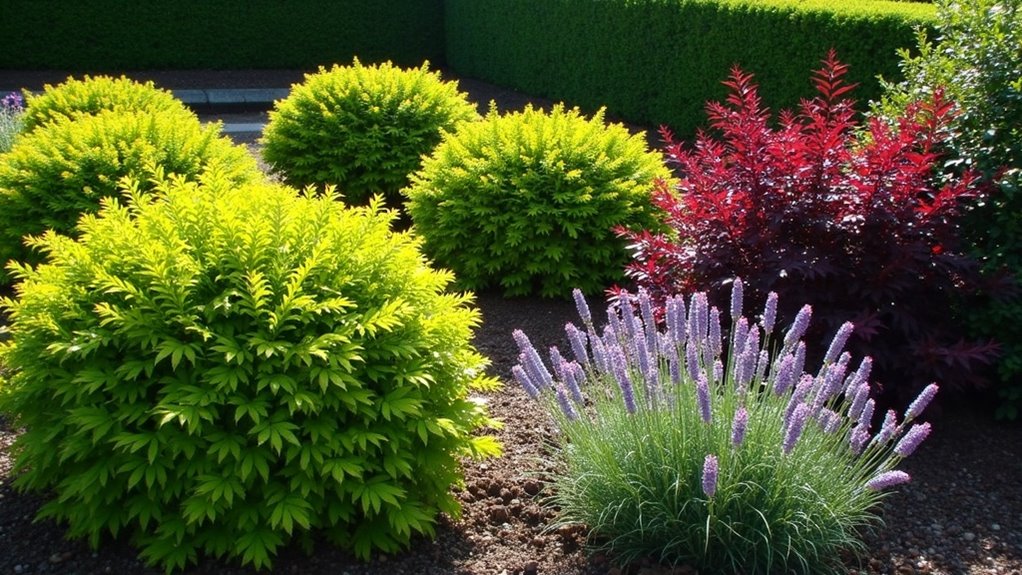
Shrubs are perennial woody plants with a height of less than 6-10 meters. They can be evergreen, like juniper and holly, or deciduous, shedding leaves in fall. Shrubs provide dense foliage, which is essential for soil stabilization and wildlife habitat. They also enhance outdoor aesthetics with varied shapes and seasonal colors. When selecting shrubs, consider factors like sunlight, height, drainage, and maintenance needs to guarantee they thrive in your space. Discover more about their benefits and care techniques.
Key Takeaways
- Shrubs are perennial woody plants typically less than 6-10 meters in height, including both evergreen and deciduous varieties.
- Common examples of shrubs include juniper, holly, hydrangea, lilac, and boxwood.
- They can be categorized by their foliage type: evergreen shrubs retain leaves year-round, while deciduous shrubs shed leaves in fall.
- Shrubs play ecological roles, supporting wildlife habitats, stabilizing soil, and promoting biodiversity.
- Many shrubs are suitable for landscaping, providing aesthetic appeal, privacy screens, and seasonal interest.
Definition and Characteristics of Shrubs
Shrubs are essential components of many landscapes and ecosystems, defined as perennial woody plants that generally grow to a height of less than 6-10 meters.
You’ll find shrubs categorized by their foliage type: evergreen shrubs retain leaves year-round, while deciduous shrubs shed their leaves in the fall.
Their dense foliage can create varied cover types, such as closed-shrubs with 70-100% coverage and open-shrubs with 30-70%.
Dense shrub foliage offers diverse cover types, ranging from closed-shrubs with total coverage to open-shrubs with partial exposure.
Beyond aesthetics in landscaping, shrubs play crucial ecological roles by stabilizing soil, providing wildlife habitat, and supporting biodiversity.
Their diverse shapes and seasonal interest, including blooms and berries, enhance any outdoor space.
Common Types of Shrubs
In the diverse world of landscaping, various types of shrubs play essential roles in enhancing both aesthetics and functionality.
Evergreen shrubs like juniper and holly provide year-round interest with their lush green foliage, while flowering shrubs such as hydrangea and lilac deliver seasonal beauty.
For smaller spaces, dwarf evergreens like Tater Tot arborvitae offer compact growth, requiring minimal maintenance.
Deciduous shrubs, shedding leaves in fall, add visual interest as well.
Additionally, deer-resistant shrubs such as boxwood and specific viburnum safeguard your garden from browsing wildlife, ensuring these woody plants thrive without disruption, contributing considerably to a well-rounded landscape design.
Importance of Shrubs in Landscaping
While many people may overlook shrubs in their landscaping plans, these versatile plants are vital for creating a balanced and dynamic outdoor environment.
Shrubs provide structural diversity, offering various heights, textures, and colors that enhance visual interest throughout the seasons. They play a key role in soil stabilization, preventing erosion and maintaining garden integrity.
Additionally, shrubs serve as effective privacy screens, defining boundaries while enhancing aesthetics. Their evergreen varieties guarantee year-round greenery, keeping landscapes vibrant in winter.
Finally, by attracting wildlife, shrubs promote biodiversity, providing essential habitats for birds and insects, enriching your garden’s ecosystem and appeal.
Pruning and Maintenance Practices
When properly pruned and maintained, shrubs can flourish, enhancing the overall beauty and function of your landscape.
Regular pruning helps maintain shape, promotes healthy growth, and enhances flowering.
- Prune dead branches first to prevent disease spread.
- Late winter is ideal for pruning many shrubs.
- Flowering shrubs should be pruned post-bloom to preserve next year’s buds.
- Conduct soil testing to determine nutrient needs for peak growth.
For non-flowering evergreen shrubs, prune before spring growth begins.
Tips for Choosing the Right Shrubs
Selecting the right shrubs for your landscape requires careful consideration of several key factors that affect their growth and integration into your garden.
Pay attention to sunlight requirements; while some shrubs thrive in full sun, others prefer partial shade.
Evaluate the mature height and space requirements to prevent overcrowding.
Soil drainage is essential; make sure you choose shrubs suited for your soil type.
Research their adaptability to local climate conditions, focusing on hardiness zones.
Finally, assess the maintenance needs, including watering and pruning, to align with your lifestyle.
Consider evergreen shrubs for year-round greenery in your design.





