
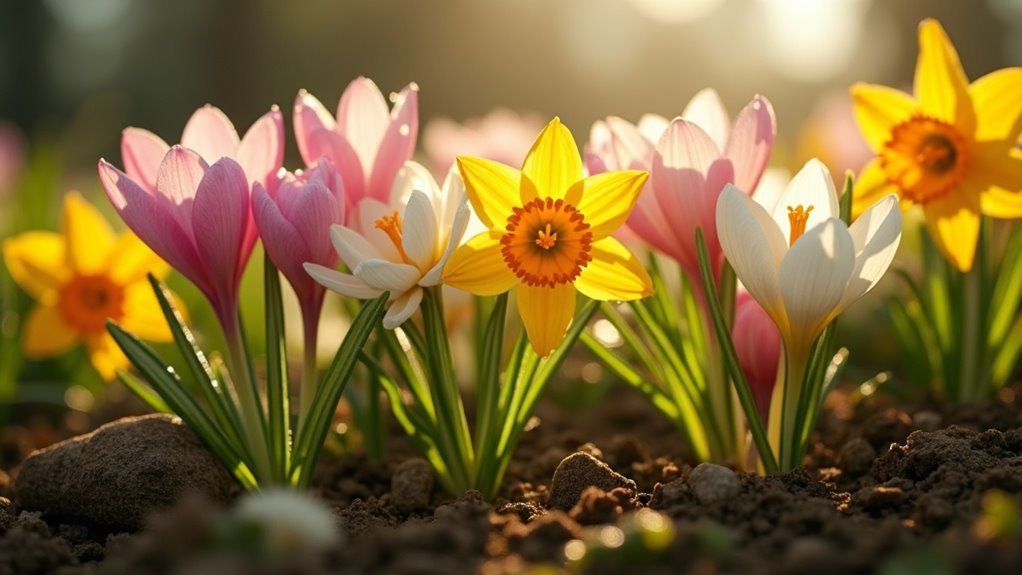
For stunning spring displays, consider planting pansies, hellebores, crocuses, daffodils, and snowdrops. Pansies thrive in full sun or part shade, while hellebores produce blooms early in the season. Crocuses and daffodils offer vibrant colors and attract pollinators. Snowdrops push through winter’s remnants, showcasing delicate flowers. Each of these plants brings life and color back to your garden as winter fades. There’s more to discover about their care and companions waiting for you.
Key Takeaways
- Pansies showcase vibrant blooms in spring, thriving in full sun or part shade with moist, well-drained soil.
- Hellebores, blooming as early as January, offer bowl-shaped flowers in various colors, thriving in light shade.
- Crocuses emerge early in spring, often through snow, attracting pollinators with their bright colors and low growth.
- Daffodils provide a vibrant display with deer-resistant flowers, thriving in full sun and well-drained soil.
- Snowdrops bloom early, featuring delicate white flowers, and are best planted in fall for optimal spring displays.
Pansy
Pansies are vibrant, short-lived perennials that many gardeners treat as annuals due to their colorful blooms and ability to thrive in cool spring weather.
As early spring bloomers, they flourish in full sun or part shade, requiring moist, well-drained soil for ideal growth.
As vibrant early spring bloomers, pansies thrive in full sun or part shade with moist, well-drained soil.
Growing 6-12 inches tall and spreading 4-12 inches wide, pansies are perfect for borders and containers.
Hardy in USDA Zones 3-11, they adapt well to diverse climates.
Their ability to tolerate light frost allows them to showcase vibrant blooms even when other flowers are still dormant, making them a favorite for spring displays.
Hellebore
If you’re looking for early bloomers that can withstand the chill of winter, hellebores are an excellent choice. These hardy perennials, also known as Lenten or Christmas roses, begin blooming as early as January, offering essential nectar for pollinators. Their bowl-shaped flowers come in various colors, including white, pink, yellow, and maroon. Hellebores thrive in light shade and require moist, well-drained soil, making them perfect for woodland gardens. With evergreen foliage that remains attractive year-round, these plants provide aesthetic value even after flowering.
| Feature | Description |
|---|---|
| Bloom Time | January to early spring |
| Flower Shape | Bowl-shaped or saucer-shaped |
| Soil Requirements | Moist, well-drained soil |
| Growth Height | 1-3 feet |
Crocus
As one of the first flowers to emerge in spring, crocus are a delightful sight, often pushing through the remnants of snow with their vibrant petals.
Crocus are a joyful herald of spring, emerging through snow with their bright, colorful petals.
These early blooming flowers thrive in full sun and well-drained soil, making them easy to care for once established.
- Crocus come in various colors, including bright yellow, purple, and white.
- They typically grow 3-6 inches tall and spread 1-3 inches wide, perfect for borders.
- Plant from corms in the fall to attract early pollinators, providing essential nectar in spring.
Crocus truly herald the arrival of spring!
Daffodil
Daffodils are some of the most vibrant flowers you can add to your spring garden, boasting bright, cheerful blooms in various shapes and sizes.
They thrive in full sun and well-drained soil, making them perfect for garden beds and borders.
With their resilience against deer and their impressive blooming period, these flowers are an excellent choice for any gardener looking to signal the arrival of spring.
Bright and Cheerful Blooms
With their vibrant yellow hues, daffodils usher in the spring season, enchanting gardeners and nature lovers alike.
These bright and cheerful blooms typically emerge early, signaling warmer days ahead. Daffodils are available in various forms, from single to double flowers, standing 6 to 12 inches tall. Remarkably, they’re deer-resistant, making them a reliable choice for gardens facing wildlife challenges.
- Classic varieties like ‘Dutch Master’ and ‘Fortissimo’ add striking appearances.
- They thrive in well-drained soil.
- Daffodils prefer full sun for ideal growth.
Plant these delightful flowers to enjoy a brilliant spring display year after year.
Ideal Growing Conditions
To achieve stunning blooms, ensuring ideal growing conditions for daffodils is essential.
These hardy perennials thrive in full sun, needing at least six hours of sunlight daily for peak growth. When planting daffodil bulbs in the fall, you allow them to establish roots before winter, leading to vibrant early spring flowers.
Choose well-drained soil to prevent bulb rot and promote healthy root development; daffodils adapt well to various soil types as long as drainage is adequate.
Additionally, their deer-resistant nature makes them an excellent choice for gardens where deer may pose a threat, ensuring your blooms flourish beautifully.
Varieties and Sizes Available
When exploring the diverse world of daffodils, you’ll find an impressive array of shapes and sizes that can elevate your garden’s aesthetic.
Daffodils come in popular varieties such as Trumpet, Double, Small Cupped, and Cyclamineus, offering various bloom colors primarily in vibrant yellows, complemented by white or orange accents.
Heights range from 6 to 18 inches, providing flexibility for layering in garden settings.
- Reliable performance with varieties like Dutch Master and Fortissimo
- Thrives in full sun and well-drained soil
- Perfect for enhancing spring gardens with striking displays
Snowdrop
Snowdrops, scientifically known as Galanthus, herald the arrival of spring as some of the first flowers to emerge, often pushing through the remnants of winter’s snow.
These hardy bulbs feature delicate white flowers with green markings, typically growing 3-12 inches tall.
To thrive, plant them in well-drained soil under full sun or partial shade, ideally in early to late fall.
Snowdrops are easy to care for and can naturalize in gardens, spreading over time to create stunning displays.
Additionally, they attract early pollinators, making them a valuable addition to your spring garden landscape.
Virginia Bluebells
As winter gives way to warmer days, Virginia Bluebells (Mertensia virginica) emerge as striking harbingers of spring.
These native plants bloom in early spring, showcasing beautiful bell-shaped flowers that shift from pink to light blue. Virginia bluebells thrive in rich, well-drained soils, flourishing in part shade to full sun conditions.
- They attract pollinators, especially female Bumblebees, keen for their nectar.
- Virginia bluebells are easy to grow and can create large colonies over time.
- Their foliage dies back by early summer, making room for summer annuals in your garden.
Celandine Poppy
Celandine Poppy (Stylophorum diphyllum) bursts onto the spring scene with its vibrant yellow and orange flowers, one of the earliest blooms to grace the landscape.
As a native plant, it thrives in shaded or part-shaded areas with moist, well-drained soil, making it ideal for woodland gardens. Growing to a height of 12-14 inches and spreading 9-12 inches wide, it fits perfectly into your garden’s design.
The attractive foliage and vibrant flowers not only enhance early displays but also attract pollinators like bees and butterflies.
After several weeks of blooming, the foliage dies back in the summer, completing its lifecycle.





