
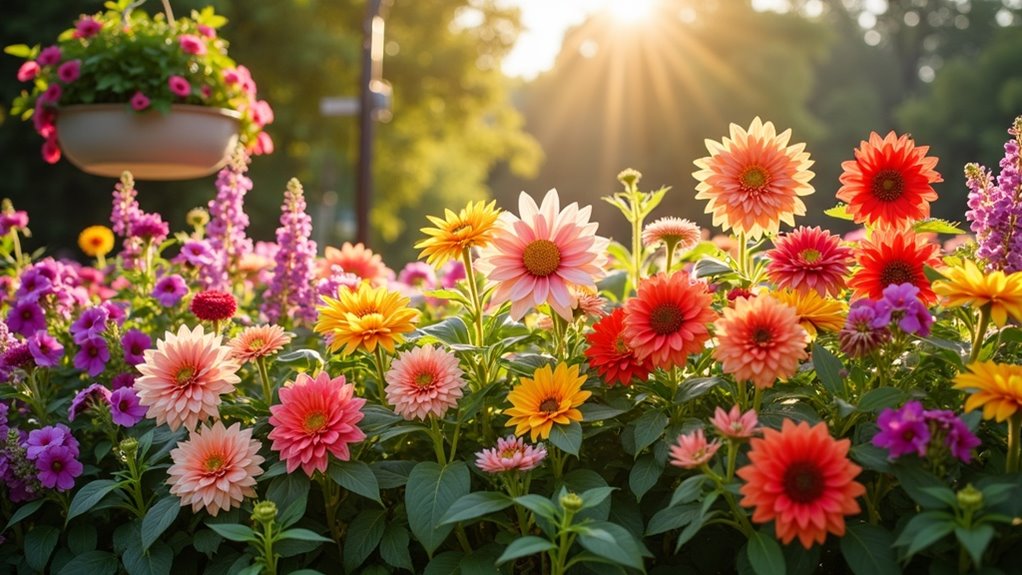
For continuous summer color, consider planting Moody Blues™ Veronica, Brazilian Dwarf Morning-glory, and Beebalm. These plants thrive in full sun, offering vibrant blooms that attract pollinators. Dear Dolores™ Hydrangea adds beauty in partial shade, while Garden Jewels™ Gerbera Daisy provides a dazzling array of colors. Pincushion Flower and Ladybird® Sunglow Texas Primrose are excellent for borders or containers. Each thrives under specific conditions, ensuring your garden remains lively and stunning throughout the season. More options await!
Key Takeaways
- Moody Blues™ Veronica and Brazilian Dwarf Morning-glory thrive in full sun, providing vibrant blue blooms throughout summer.
- Dear Dolores™ Hydrangea offers stunning floral displays in partial to full shade, blooming all summer long.
- Beebalm attracts pollinators and blooms from late spring through early fall, enhancing garden biodiversity.
- Garden Jewels™ Gerbera Daisy produces continuous flowering in full sun, brightening landscapes with a variety of colors.
- Pincushion Flower provides delicate lavender-blue flowers, blooming consistently from April to the first autumn frost.
Moody Blues™ Veronica
Moody Blues™ Veronica (Veronica spicata) is a standout perennial that thrives in full sun, making it perfect for adding a splash of vibrant blue to your summer garden.
This hardy plant flourishes in USDA Hardiness Zones 6 to 9 and adapts well to various soil types, as long as they’re medium, well-draining, and average in nutrients.
With a preferred soil pH between 5.6 and 7.8, it remains resilient across diverse garden settings.
Expect long-lasting blooms throughout the summer, as this perennial not only enhances your landscape but also attracts butterflies and pollinators, enriching your garden’s ecology.
Brazilian Dwarf Morning-glory
To successfully cultivate Brazilian Dwarf Morning-glory, you need to provide full sun exposure, ensuring the plant receives at least six hours of direct sunlight daily.
This species thrives in well-draining, rich soil with a pH between 6.0 and 7.2, which promotes ideal growth.
Understanding these requirements will help you maintain the plant’s vibrant blooms throughout the growing season.
Sun Exposure Requirements
As the Brazilian Dwarf Morning-glory (Evolvulus glomeratus) flourishes in full sun, it’s vital to confirm that this plant receives at least 6 to 8 hours of direct sunlight each day for peak growth and blooming.
While it can tolerate some part shade, ideal flowering occurs under full sun conditions. These drought-tolerant plants thrive in warm climates, making them perfect for USDA Hardiness Zones.
Proper sun exposure is important for maintaining their vibrant blue flowers, which attract beneficial pollinators, enhancing biodiversity in your garden.
Confirm consistent light exposure to enjoy a continuous display of color throughout the summer.
Soil Preferences and Care
While ensuring the Brazilian Dwarf Morning-glory gets adequate sunlight is important, the right soil conditions play a significant role in its overall health and blooming potential.
This plant thrives in well-draining, rich soil with a pH level between 6.0 and 7.2. It requires consistent moisture, particularly during hot weather, to promote vibrant blooms.
However, be cautious about drainage; the Brazilian Dwarf Morning-glory prefers dry to medium soil conditions to prevent root rot.
Regularly check the soil’s drainage and consider fertilizing with a balanced fertilizer to enhance blooming without overwatering, which can lead to waterlogged conditions.
Dear Dolores™ Hydrangea
If you’re looking to enhance shaded areas of your garden, the Dear Dolores™ Hydrangea (Hydrangea macrophylla Wyatt LeFever) is an excellent choice. This variety thrives in partial to full shade and blooms throughout the summer, providing continuous visual interest.
It prefers moist, well-draining, rich soil with a pH between 5.0 and 6.5, making it adaptable to various garden settings. Hardy in USDA Zones 5 to 9, it suits both cooler and warmer climates.
Regular watering is essential, especially during hot months, to maintain its moisture needs. With Dear Dolores™, you’ll enjoy stunning floral displays all season long.
Beebalm
Beebalm, or Monarda spp., thrives in full sun to part shade, making it versatile for various garden settings.
It prefers medium to moist, rich soil with a slightly acidic to neutral pH, ensuring ideal growth and vibrant blooms.
Additionally, its aromatic foliage and colorful flowers attract a wide range of pollinators, enhancing your garden’s wildlife appeal.
Sunlight Requirements
To guarantee ideal growth and vibrant blooms, planting Beebalm in full sun to part shade is essential.
This flexibility in sunlight requirements allows you to position Beebalm effectively within your garden. Ideally, aim for at least six hours of direct sunlight daily for peak flowering.
Although Beebalm can tolerate some shade, too little light may hinder its ability to produce continuous color throughout the growing season.
By ensuring adequate sunlight exposure, you’ll foster robust plants that not only thrive but also attract pollinators, enhancing your garden’s ecological balance and visual appeal.
Choose your planting site wisely for the best results.
Soil Preferences
For ideal growth and blooming, Beebalm thrives in medium to moist, rich soil that supports its vigorous nature.
Its soil preferences include a pH range of 6.0 to 7.2, leaning towards slightly acidic to neutral. To prevent root rot, well-draining soil is vital; this guarantees that moisture levels remain balanced without waterlogging.
Beebalm is adaptable and can flourish in various soil types as long as you maintain adequate moisture. Regularly enriching the soil with organic matter will further enhance its growth and flower production throughout the summer, allowing you to enjoy continuous color in your garden.
Attracts Pollinators
Vibrant tubular flowers of Beebalm not only brighten your garden but also play a significant role in attracting pollinators.
Blooming from late spring through early fall, these flowers provide continuous color throughout summer, drawing in hummingbirds and butterflies.
Beebalm thrives in full sun to part shade, adapting well to various garden settings. Its aromatic foliage enhances your garden’s sensory experience while deterring some pests, making it beneficial for companion planting.
With USDA Hardiness Zones ranging from 4 to 9, Beebalm suits a variety of climates, ensuring its appeal to gardeners looking to support biodiversity and attract essential pollinators.
Garden Jewels™ Gerbera Daisy
The Garden Jewels™ Gerbera Daisy (Gerbera jamesonii hybrids) stands out as a remarkable choice for summer gardens, showcasing a stunning array of colors that can brighten any landscape.
This plant thrives in full sun and offers continuous flowering, making it perfect for vibrant displays.
Thriving in full sun, this plant delivers continuous blooms for stunning summer displays.
To guarantee peak growth, consider these key factors:
- Requires rich, moist, well-draining soil with a slightly acidic pH of 5.5 to 6.5.
- Grows well in USDA Hardiness Zones 7 to 10, accommodating various climates.
- Regular deadheading promotes more blooms, enhancing your garden’s beauty.
Embrace the splendor of Gerbera Daisies this summer!
Black-eyed Susan
If you’re looking to add a burst of color to your summer garden, consider the Black-eyed Susan (Rudbeckia spp.), which showcases striking golden yellow flowers that bloom from summer into fall.
This perennial thrives in USDA Hardiness Zones 3 to 9 and adapts well to various soil types, preferring medium, well-draining conditions.
Black-eyed Susans require full sun exposure and can tolerate drought once established, making them a low-maintenance option.
They often self-sow, creating beautiful stands that attract finches and butterflies.
The dark central cone surrounded by bright yellow rays enhances their appeal, drawing essential pollinators to your garden.
Ladybird® Sunglow Texas Primrose
One standout option for summer gardens is the Ladybird® Sunglow Texas Primrose (Calylophus hybrid WNCYLASUN), known for its continuous display of large, bright yellow blooms that require no deadheading.
This drought-tolerant perennial thrives in full sun, making it perfect for your outdoor spaces.
- Ideal for hanging baskets and containers
- Prefers dry to medium, well-draining soil
- Attracts pollinators, enhancing garden beauty
Hardy in USDA zones 8 to 10, it can also be grown as an annual in cooler regions.
Incorporate this vibrant plant for a striking touch in your summer garden!
Pincushion Flower
Pincushion Flower (Scabiosa columbaria) stands out in summer gardens with its delicate, airy lavender-blue blooms that not only add color but also attract butterflies and other pollinators.
This perennial thrives in full sun and needs moist, well-draining soil to flourish. Expect it to bloom continuously from April until the first autumn frost, providing a vibrant display throughout the season.
Its compact growth habit makes it ideal for edging sunny garden beds or containers. To guarantee ongoing blooms, remember to regularly deadhead spent flowers.
The Pincushion Flower is a charming addition to any summer landscape.





