
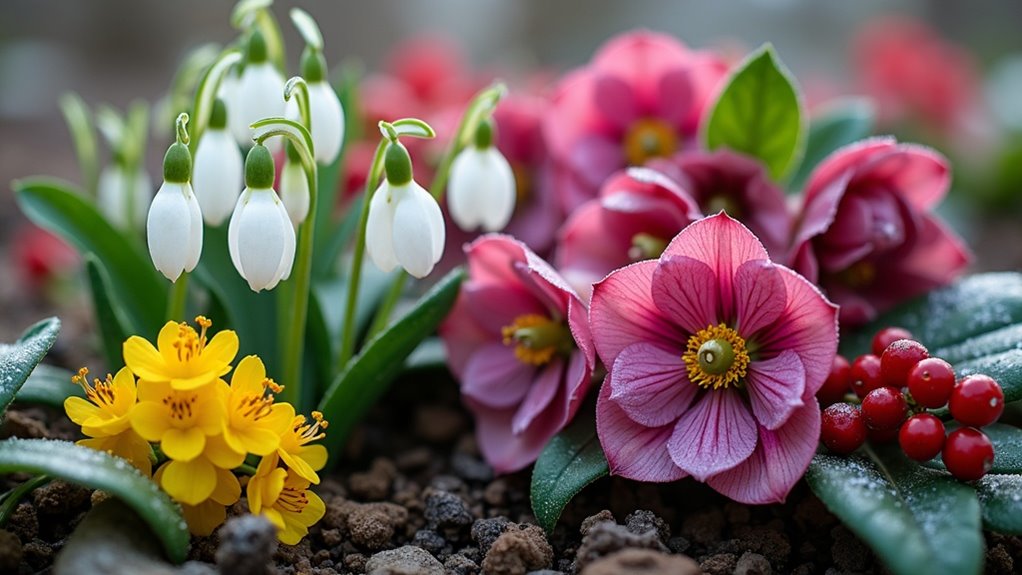
To add seasonal color to your winter garden, consider planting Hellebores, Winter Jasmine, Snowdrops, and Crocus. These frost-resistant species thrive in cold conditions, brightening up the landscape with vibrant blooms. Hellebores produce stunning rose-like flowers in mid-winter, while Winter Jasmine showcases yellow blooms late in the season. Snowdrops emerge even through snow, and Crocus offers early blooms in various colors. Incorporating these plants enhances your garden’s appeal, and you’ll discover even more options as you explore further.
Key Takeaways
- Hellebores produce vibrant, rose-like flowers from mid to late winter, adding significant color to gardens.
- Winter Jasmine features cheerful yellow blooms that brighten landscapes in late winter.
- Snowdrops emerge through snow, offering delicate white flowers from late January to March.
- Winter Aconite carpets gardens with buttercup-like yellow flowers from February to March, enhancing seasonal color.
- Crocus blooms in early spring with purple, yellow, and white flowers, providing an early burst of color after winter.
Understanding Winter Flowering Plants
Understanding winter flowering plants is vital if you want to add color to your garden during the colder months. These winter-blooming plants often develop frost resistance, allowing them to thrive despite cold temperatures.
Species like Hellebores and Camellias showcase vibrant flowers even in harsh winters, while others, such as Snowdrops and Winter Aconite, require a chill period to bloom in late winter.
Proper care, including appropriate fertilization and pruning, supports their health. It’s also essential to know the hardiness zones for each plant, as not all can withstand extreme frost, ensuring successful winter gardens.
Benefits of Winter Blooms
Winter blooms greatly enhance the visual appeal of your landscape, bringing vibrant colors to otherwise stark environments.
They also provide essential ecological benefits, serving as critical nectar sources for pollinators during the late winter months.
Plus, with many species extending their flowering into early spring, you can enjoy an extended gardening season that enriches biodiversity.
Visual Appeal Enhancement
Incorporating winter-blooming plants into your garden transforms the typically stark landscape into a vibrant display of color and life.
Varieties like Hellebores and Winter Jasmine provide striking contrasts against snow, while early bloomers such as Snowdrops and Crocus add delicate beauty.
The bright yellow flowers of Winter Aconite and the diverse hues of Camellia enhance visual interest, making winter gardens more inviting.
Additionally, plants like Winter Heath and Pansies guarantee enduring color, keeping your garden visually appealing even in the coldest months.
Ultimately, these winter-blooming species enhance curb appeal, providing seasonal color when other plants remain dormant.
Ecological Benefits
The vibrant colors of winter-blooming plants do more than enhance your garden’s aesthetics; they also play a significant role in supporting local ecosystems.
Winter bloomers like Hellebores and Snowdrops provide essential nectar for early pollinators, ensuring their survival. Additionally, plants such as Winter Jasmine and Camellia attract diverse wildlife, boosting biodiversity in winter landscapes.
Species like Winter Heath contribute to soil health by preventing erosion and maintaining structure. By incorporating these blooms, you foster ecological stability, creating hospitable microclimates for beneficial insects and soil organisms, thereby promoting a continuous cycle of growth and resource availability throughout the year.
Extended Gardening Season
While many gardeners might think of spring and summer as the prime seasons for vibrant blooms, embracing winter-blooming plants can greatly extend your gardening season.
Cold hardy varieties like Hellebores and Winter Jasmine offer winter flowers that bloom all winter long, adding color to your winter garden. These resilient plants thrive in colder climates, providing blooms from late winter to early spring.
By selecting these species, you’ll not only enjoy stunning visuals but also minimal seasonal maintenance, as many can naturalize and return annually.
Winter blooms encourage year-round gardening activities, enhancing your enjoyment during typically dormant months.
Key Winter Flowering Species
As winter settles in, you can bring life to your garden with a selection of hardy, winter-blooming plants that thrive in colder conditions.
Hellebores offer rose-like flowers from mid to late winter, while Winter Jasmine casts vibrant yellow blooms in late winter, reaching up to 15 feet.
Snowdrops emerge through snow from late January to March, showcasing their resilience.
Crocus adds early seasonal color with purple, yellow, and white flowers in late winter to early spring.
Finally, Winter Aconite carpets your garden with buttercup-like yellow flowers from February to March, ensuring your landscape remains lively with winter interest.
Planting Techniques for Winter Flowers
To successfully plant winter-blooming flowers, start with proper soil preparation, ensuring it’s well-draining and nutrient-rich.
You’ll want to plant bulbs at the correct depth, typically two to three times their height, to promote healthy growth.
Regular watering and maintenance during the growing season will also help your plants establish and thrive in colder conditions.
Soil Preparation Tips
Preparing your soil properly is essential for the success of winter-blooming plants, and it should ideally begin in late fall.
Follow these soil preparation tips for ideal results:
- Conduct a soil test to assess pH and nutrient levels.
- Mix in organic matter, like compost, to improve drainage and support root development.
- Mulch around your plants to retain moisture and protect roots from freeze-thaw cycles.
- Plant winter-blooming bulbs, such as snowdrops and crocuses, six to eight weeks before your area’s expected frost date for the best chance of successful growth.
These steps guarantee your flowers thrive through winter.
Optimal Planting Depth
When selecting the ideal planting depth for winter-blooming plants, understanding the specific requirements of each type is crucial for their successful establishment and growth.
For bulbs like snowdrops and crocuses, plant them 2 to 3 times their height. Small bulbs, such as winter aconite, thrive at a depth of 3 to 4 inches.
Perennial plants, like hellebores, should be set at the same depth as in their nursery containers to avoid crown rot. For shrubs like winter jasmine, verify the root ball is level with the soil surface.
Always amend the soil with organic matter to enhance drainage and support healthy growth.
Watering and Maintenance Guidelines
Although winter-blooming plants require less water than their summer counterparts, maintaining appropriate moisture levels is essential for their health.
Follow these guidelines for ideal watering and maintenance:
- Water sparingly, ensuring soil moisture remains consistent but not waterlogged.
- Apply mulch around the base to retain moisture and insulate roots.
- Establish a regular watering schedule for newly planted winter flowers before the ground freezes.
- Fertilize with slow-release fertilizers high in potassium in late fall, boosting frost resistance.
Regularly check for pests or disease, as milder winters can lead to infestations.
Address any issues promptly for ideal plant health.
Caring for Winter Blooming Plants
Caring for winter blooming plants requires attention to their unique needs, especially as temperatures drop. Start by fertilizing winter blooming plants with a slow-release, potassium-rich fertilizer to enhance frost resistance.
Understand their watering needs; they generally require less water in colder weather but still need adequate moisture. Mulching around your plants helps insulate roots, retains soil moisture, and suppresses weeds.
Pruning should be done in late spring or early summer to maintain health and encourage blooms by removing diseased wood. Regularly check for pests and diseases, as winter bloomers can still be susceptible, necessitating timely plant care interventions.
Designing a Winter Garden
Designing a winter garden can be a rewarding endeavor, as it allows you to showcase vibrant colors and textures even in the coldest months.
Here are some key considerations:
- Select winter-blooming plants like Hellebores, Winter Jasmine, and Snowdrops for seasonal color.
- Incorporate diverse heights using low-growing bulbs and taller shrubs like Camellia for visual interest.
- Use evergreen plants such as Winter Heath and Boxwood to maintain structure and greenery.
- Reference your USDA Hardiness Zone to guarantee plant survival and thriving in your local climate.
With these tips, your winter garden will flourish beautifully all season long.
Enhancing Seasonal Color With Foliage
To enhance the seasonal color in your winter garden, incorporating a variety of foliage is essential. Evergreen plants like Boxwood and Junipers provide structure and vibrant hues throughout the bleak winter months.
Varieties of Coralbells, such as Dolce and Primo Heuchera, showcase unique colors like purple and silver, adding visual interest even when other blooms are dormant.
The bright red stems of Red Twig Dogwood create striking contrasts against snow, while Winter Heath offers attractive evergreen foliage and long-lasting blooms in pink, cream, or white.
Ornamental grasses like Switch Grass contribute texture, enriching your winter landscape with enchanting visuals.
Tips for Choosing the Right Winter Plants
Selecting the right winter-blooming plants involves understanding your local climate and choosing species that not only survive but thrive in your USDA hardiness zone.
Here are some tips to help you make informed decisions:
- Know Your Hardiness Zone: Choose plants suited for your specific zone to guarantee survival.
- Look for Evergreen Foliage: Select varieties that maintain vibrant colors and textures, enhancing visual interest.
- Consider Bloom Times: Opt for species like Winter Jasmine that bloom as early as January for continuous interest.
- Mix Annuals and Perennials: Incorporate both to create a dynamic winter garden, showcasing various colors and textures.





