
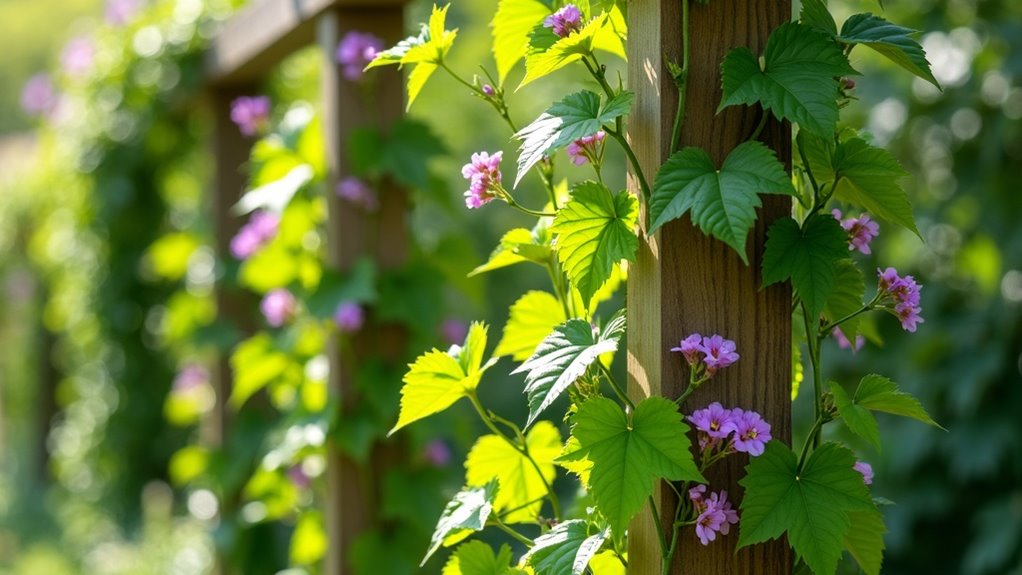
For your vertical garden, opt for climbing plants that thrive on trellises like indeterminate climbing tomatoes, pole beans, and cucumbers. These plants grow upwards, saving space while enhancing air circulation and reducing pests. You might also consider sweet peas and grapevines for vibrant displays and substantial yields. By selecting a mix of annual and perennial climbers, you can maximize productivity and aesthetics. Discover more about supporting your plants and creating an eye-catching vertical garden setup.
Key Takeaways
- Indeterminate climbing tomatoes grow vigorously on trellises, offering high yields and disease resistance for vertical gardens.
- Cucumbers thrive on trellises, producing straighter fruits and simplifying the harvesting process.
- Fast-growing pole beans effectively utilize vertical space, enhancing productivity in limited garden areas.
- Sweet peas provide fragrant flowers and impressive heights when grown on trellises, adding beauty to vertical gardens.
- Grapevines are excellent for trellising, yielding substantial crops with proper care and support structures.
Benefits of Vertical Gardening
When you choose vertical gardening, you’re not just saving space; you’re optimizing your gardening experience. This method allows for efficient space utilization, making it perfect for small areas.
Climbing plants on trellises enhance air circulation, reducing the risk of fungal diseases and pests. Additionally, trellising makes maintenance and harvesting easier, minimizing bending and allowing you to organize garden layouts effectively.
Climbing plants on trellises improve air circulation, ease maintenance, and streamline garden organization while minimizing bending.
The structured shapes of climbing plants also add diverse visual interest to your landscape, while providing shade for lower-growing crops, creating beneficial microclimates.
Embracing vertical gardening can transform your gardening approach and yield impressive results.
Types of Climbing Plants
Selecting the right climbing plants for your vertical garden can greatly enhance both productivity and aesthetics. Contemplate incorporating a mix of edible and ornamental options to maximize your space.
Here are some types of climbing plants to contemplate:
- Pole beans: Quick-growing and highly productive edible climbing vines.
- Passion flower: Stunning flowering vines that attract pollinators and add beauty.
- Clematis: Elegant ornamental climbers that bloom multiple times.
- Ruby Moon Hyacinth Bean: Offers vibrant blooms and edible foliage, perfect for small gardens.
Annual Vs Perennial Climbers
Understanding the differences between annual and perennial climbers is essential for maximizing your vertical garden’s potential.
Annual climbers, like cucumbers and climbing tomatoes, complete their life cycle in one growing season, allowing you to experiment with different crops in your outdoor spaces. They establish quickly and often attract pollinators, enhancing biodiversity.
Annual climbers offer quick growth and diverse crop options, attracting pollinators and boosting biodiversity in your garden.
In contrast, perennial climbers, such as grapevines and kiwis, provide continuous harvests year after year with minimal maintenance. They contribute to a stable ecosystem, enriching your vertical gardens with ongoing blooms and fruits.
Choosing the right climbers can greatly enhance both productivity and sustainability in your gardening practices.
Supporting Your Climbing Plants
To guarantee your climbing plants thrive, it’s crucial to provide them with the right support from the outset. Installing trellises before planting guarantees immediate access for your climbing plants.
Consider the following options for effective support:
- Wood, metal, or bamboo trellises for sturdy structures
- A-frames or arch trellises for heavier climbers like tomatoes
- Chicken wire for lightweight plants such as peas
- Regular maintenance including pruning and adjusting ties
Properly training your plants early on promotes healthy growth and airflow, reducing disease risks and guaranteeing they flourish in their vertical spaces.
Recommended Climbing Plants for Vertical Gardens
When you’re planning a vertical garden, choosing the right climbing plants is essential for maximizing space and ensuring a bountiful harvest.
Consider indeterminate varieties of climbing tomatoes for their productivity and disease resistance. Cucumbers thrive on trellises, yielding straighter fruits and easier harvesting.
Fast-growing pole beans utilize vertical structures effectively, extending your harvest season. Sweet peas, with their fragrant flowers, can reach impressive heights, adding visual appeal.
Finally, grapevines are excellent for trellising, producing substantial yields with proper sunlight and pruning.
These plants not only save space but enhance the beauty and productivity of your vertical garden.
Creating an Aesthetic Vertical Garden
To create an aesthetic vertical garden, you’ll want to select colorful climbing flower varieties that provide vibrant visual interest.
Implementing vertical layering techniques with varied trellis structures can enhance depth and dimension while maximizing your space.
This strategic arrangement not only beautifies your garden but also supports a diverse ecosystem.
Colorful Climbing Flower Varieties
Creating an aesthetic vertical garden is easy with a selection of colorful climbing flowers that not only enhance visual appeal but also bring life to your outdoor space.
Consider incorporating these vibrant varieties:
- Honeysuckle varieties: Fragrant flowers that attract pollinators.
- Mandevilla plant: Striking trumpet-shaped blooms in pink, red, and white.
- Climbing roses: Such as the David Austin Zephirine Drouhin, known for their romantic, fragrant blooms.
- Passion Flower: Exotic blooms that create stunning focal points.
These colorful climbing flower varieties thrive on trellises, offering both beauty and fragrance to your vertical garden design.
Designing Vertical Layering Techniques
While designing an aesthetic vertical garden, layering techniques play a crucial role in maximizing both space and visual impact. Incorporate a mix of climbing plants, like sweet peas and clematis, to create visual interest through varied colors and textures.
Use trellises of different heights to enhance the three-dimensional design. Position taller climbers at the back and shorter plants at the front to guarantee adequate sunlight and visibility.
Pair flowering vines like honeysuckle with edible plants such as cucumbers for a functional, harmonious balance. Regular pruning and training will promote healthy growth, maintaining the desired shapes in your vertical garden.
Trellis Structures for Aesthetics
Trellis structures play a pivotal role in enhancing the aesthetics of vertical gardens, offering both support for climbing plants and visual interest.
By incorporating aesthetic trellises, you can create stunning focal points that captivate the eye. Consider these elements:
- Defined shapes and dimensions that organize your landscape
- Obelisk and arch designs that add architectural charm
- Vibrant blooms from climbing plants like Clematis and Honeysuckle
- Natural materials like wood or bamboo for a rustic appeal
Strategically placing these trellises not only beautifies your garden but also creates intimate spaces, privacy, and shade, enhancing overall enjoyment.





