
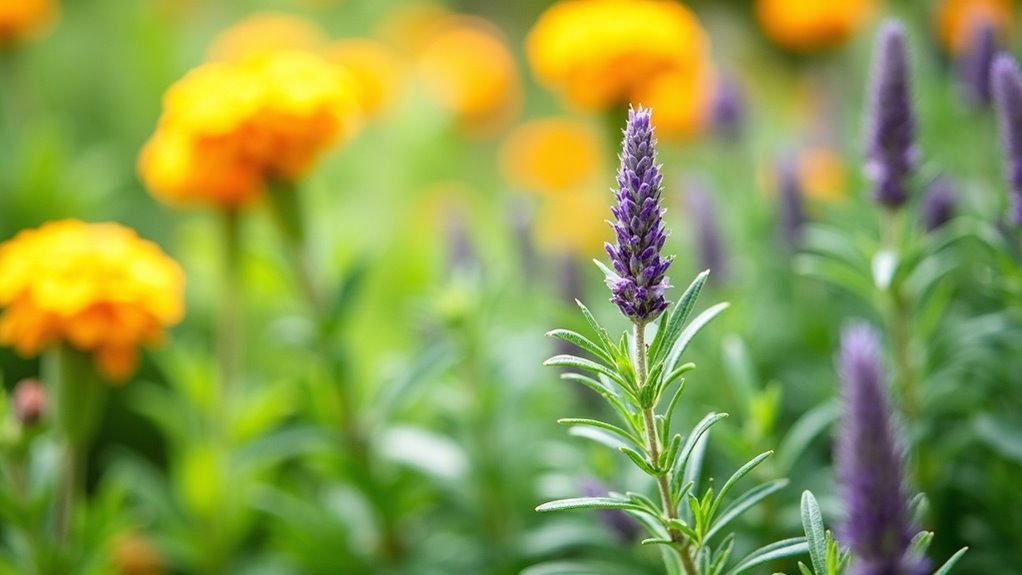
Plants like basil, lavender, marigolds, and mint can effectively deter pests with their natural compounds. For example, basil emits a strong aroma that repels mosquitoes and flies, while marigolds release thiophene to ward off aphids. Lavender attracts pollinators and keeps moths away. These plants not only reduce the need for harmful chemicals but also enhance ecosystem health. If you want to explore more about specific plants and strategies, there’s plenty to discover on natural pest control methods.
Key Takeaways
- Basil emits a strong scent that repels mosquitoes and flies, making it an effective natural pest deterrent.
- Lavender contains aromatic oils that deter moths and fleas while attracting beneficial pollinators.
- Mint’s powerful aroma keeps ants and mosquitoes at bay; it is best grown in containers to control its spread.
- Chrysanthemums contain pyrethrin, a natural insecticide that effectively deters roaches and ants from infesting gardens.
- Marigolds release thiophene, which repels nematodes and aphids, enhancing the health of nearby plants.
Why Use Plants to Keep Bugs Away?
When you consider pest control options, using plants to deter bugs stands out as a safe and effective strategy.
Plants that repel insects, like basil and lavender, emit potent scents and oils that discourage pests while safeguarding beneficial species vital for ecosystem health. They serve as a natural insecticide, reducing reliance on harmful chemicals that can contaminate soil and water.
Additionally, incorporating these plants is cost-effective—typically costing $3-8 each compared to annual pesticide expenses exceeding $100-300.
How Plants Naturally Repel Insects
Plants naturally repel insects by emitting intense scents that many pests find unappealing, like the strong aromas of basil and mint.
Additionally, some plants, such as chrysanthemums, contain natural insecticides like pyrethrin, which effectively deter various pests.
Intense Scents Deter Pests
Intense scents from certain plants serve as a natural barrier against pests, effectively protecting your garden.
These pest-repelling plants not only enhance your garden’s aroma but also deter harmful insects.
Here are three effective options:
- Basil and Lavender – Their strong fragrances repel a variety of pests.
- Mint and Rosemary – Natural oils in these herbs keep mosquitoes and flies at bay.
- Garlic and Onions – Sulfur compounds in these plants ward off aphids and other garden nuisances.
Utilizing these intense scents in your garden promotes a balanced ecosystem while safeguarding your plants from pests.
Natural Insecticides in Plants
By incorporating natural insecticides found in various plants, you can effectively reduce pest populations in your garden without the need for synthetic chemicals.
Plants like chrysanthemums release pyrethrin, which repels pests such as roaches and ticks. Herbs like basil, mint, and rosemary emit oils that deter mosquitoes and flies. Garlic’s sulfur compounds help protect against aphids and cabbage worms.
Additionally, lavender and marigolds attract beneficial insects while repelling harmful ones. Consider using companion plants like nasturtiums that lure pests away from your valuable crops, enhancing your garden’s natural defenses and promoting a healthier ecosystem.
The Best Plants That Repel Insects
When it comes to keeping insects at bay, certain herbs and flowers stand out for their effectiveness.
For instance, basil and lavender not only repel common pests but also enhance your garden’s aesthetic appeal.
Incorporating colorful pest-deterrent flowers like marigolds and chrysanthemums can further boost your garden’s defenses while attracting beneficial pollinators.
Effective Insect-Repelling Herbs
Have you ever wondered how certain herbs can naturally keep pests at bay?
Effective insect-repelling herbs offer a natural way to protect your garden and home. Here are three top choices to take into account:
- Basil – Its strong scent repels mosquitoes and flies, making it perfect for outdoor seating areas.
- Lavender – Not only does it deter moths and fleas, but it also attracts beneficial pollinators.
- Mint – This potent aroma keeps ants and mosquitoes away, but should be grown in containers to manage its spread.
Using these herbs can greatly help repel pests while enhancing your garden’s appeal.
Colorful Pest-Deterrent Flowers
In addition to effective insect-repelling herbs, colorful pest-deterrent flowers can play a significant role in safeguarding your garden from unwanted pests.
Marigolds release thiophene, repelling nematodes and aphids, while chrysanthemums contain pyrethrin, deterring roaches and ants.
Petunias, known as nature’s pesticide, effectively keep the pests away with their scent.
Nasturtiums act as trap crops, luring damaging pests away from valuable plants.
Lavender’s aromatic oils repel moths and fleas, thriving in sunny spots.
Herbs That Deter Insects
Utilizing specific herbs in your garden can greatly reduce insect populations, providing a natural pest deterrent.
Here are three effective herbs that repel pests:
- Basil: Its strong scent keeps mosquitoes and flies away, making it ideal for outdoor seating areas.
- Lavender: Not only does it deter moths and mosquitoes, but it also attracts beneficial pollinators, enhancing biodiversity.
- Chives: Their pungent smell protects against Japanese beetles and aphids, while also deterring deer.
Flowers That Keep Bugs Away
Incorporating flowers into your garden not only enhances its aesthetic appeal but also provides a natural defense against pests.
Marigolds release thiophene, which helps keep bugs like nematodes and aphids at bay, making them ideal companion plants for vegetable gardens.
Chrysanthemums contain pyrethrin, a natural insecticide that deters roaches and ants.
Petunias act as nature’s pesticide, repelling aphids and tomato hornworms.
Nasturtiums attract aphids away from valuable crops while offering vibrant, edible flowers.
Finally, lavender’s aromatic oils repel moths and fleas, thriving in sunny spots while attracting beneficial pollinators.
These flowers collectively bolster pest resistance in your garden.
Vegetables That Naturally Deter Pests
When you plant certain vegetables in your garden, you’ll not only enjoy their harvest but also benefit from their pest-repelling properties.
Here are three key options:
- Garlic: Plant garlic near your vegetables, as it releases sulfur compounds that repel aphids and other pests.
- Onions: Their strong scent deters carrot flies and protects crops like carrots and lettuce.
- Chives: These aromatic plants repel Japanese beetles and aphids, making them excellent companion plants for vegetables, especially near leafy greens.
Incorporating these vegetables can greatly enhance your garden’s natural defenses against pests.
Companion Planting for Pest Control
Planting vegetables with pest-repelling properties is just one strategy to enhance your garden’s defenses.
Companion planting involves strategically pairing plants to boost growth and provide natural pest control. For instance, marigolds deter pests while attracting beneficial insects. Trap crops like nasturtiums lure pests away from your main crops, minimizing damage.
Additionally, herbs such as basil and rosemary not only repel specific insects but also enhance the flavor and growth of nearby vegetables.
Cost-Effective Natural Pest Control
Employing pest-repelling plants not only enhances your garden’s defenses but also offers a cost-effective alternative to traditional chemical pesticides. Here’s how you can benefit:
- Budget-friendly investments: Bug-deterrent plants cost between $3 and $8 each, considerably less than annual pesticide expenses, which can soar over $300.
- Seed propagation: Many plants, like basil and marigolds, can be grown from seeds or cuttings, minimizing costs.
- Perennial advantages: Investing in perennial pest-repelling plants provides ongoing benefits, further reducing the need for repeated purchases.





