
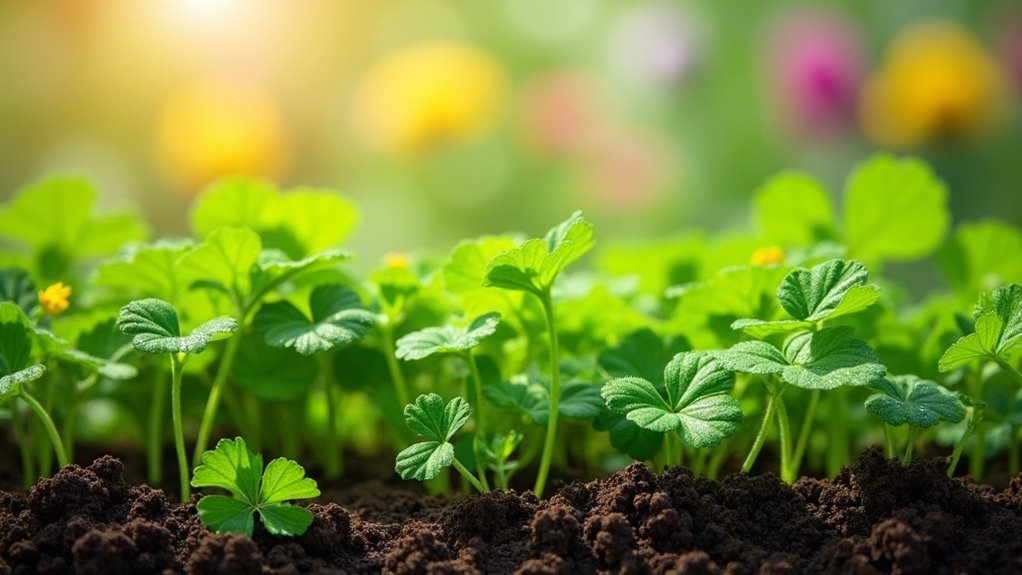
Nitrogen-fixing plants like legumes (e.g., clover, alfalfa, and fava beans) convert atmospheric nitrogen into usable forms, boosting soil fertility and health. These plants form symbiotic relationships with bacteria, enriching the soil with essential nutrients. Some trees and shrubs, such as Gleditsia triacanthos and Cercocarpus betuloides, also enhance soil quality while preventing erosion. By incorporating these plants in your garden, you can improve yields sustainably. There’s more to discover about optimizing your garden with nitrogen-fixers.
Key Takeaways
- Alfalfa is a powerful nitrogen-fixing plant, converting 250 to 500 pounds of nitrogen per acre, enriching soil health significantly.
- Red and White Clover can fix up to 150 pounds of nitrogen per acre, improving nutrient availability for surrounding crops.
- Fava Beans thrive in cooler climates and contribute approximately 250 pounds of nitrogen per acre, supporting soil fertility.
- Rhizobia bacteria form symbiotic relationships with legumes, converting atmospheric nitrogen into ammonia, crucial for plant nutrition.
- Incorporating cover crops like Hairy Vetch enhances organic matter, boosts nitrogen levels, and suppresses weeds for healthier soil.
What Is Nitrogen Fixation?
Nitrogen fixation is an essential biological process that converts atmospheric nitrogen (N2) into reactive compounds vital for plant growth, such as ammonia (NH3) and nitrates (NO3).
Approximately 90% of natural nitrogen fixation occurs through biological means, primarily facilitated by nitrogen-fixing bacteria, like Rhizobium and Frankia. These microorganisms break the strong triple bond of N2, enabling plants to access nitrogen in a usable form.
Remarkably, plants fix nitrogen by forming symbiotic relationships with these bacteria, creating nodules on their roots where the conversion takes place. This process greatly boosts soil fertility, supporting sustainable agricultural practices.
Benefits of Nitrogen-Fixing Plants
Nitrogen-fixing plants greatly enrich soil nutrients, making them essential for sustainable agriculture.
By converting atmospheric nitrogen into usable forms, they enhance soil fertility and reduce reliance on synthetic fertilizers.
Incorporating these plants into your farming practices not only boosts crop yields but also promotes healthier ecosystems.
Soil Nutrient Enrichment
While many plants struggle to access adequate nitrogen in the soil, legumes like clover and alfalfa thrive by converting atmospheric nitrogen into a usable form through symbiotic relationships with bacteria in their root nodules.
These nitrogen-fixing plants can fix between 150 to 500 pounds of nitrogen per acre, considerably enhancing soil nutrient enrichment. As they decay, their organic matter releases nitrogen, benefiting subsequent crops.
Incorporating nitrogen-fixing cover crops, such as hairy vetch, improves soil structure and nutrient availability while suppressing weeds.
Utilizing these plants in crop rotation promotes biodiversity and resilience, ultimately fostering healthier agricultural ecosystems.
Sustainable Agriculture Practices
Incorporating nitrogen-fixing plants into agricultural practices offers significant benefits for sustainable farming.
These plants, such as clover and soybeans, can fix 80 to 500 pounds of nitrogen per acre, naturally enhancing soil fertility. By utilizing nitrogen-fixing cover crops like hairy vetch, you improve soil structure and nutrient availability, promoting healthier crops.
Additionally, the decay of these plants enriches the soil with organic matter, improving moisture retention and aeration. This approach reduces reliance on synthetic fertilizers, yielding cost savings and minimizing environmental risks.
Furthermore, nitrogen-fixing plants foster biodiversity, essential for effective sustainable agriculture practices.
Best Nitrogen-Fixing Cover Crops
How can cover crops enhance soil fertility and promote sustainable agriculture? Utilizing nitrogen-fixing cover crops is essential for improving soil health.
Alfalfa stands out, fixing 250 to 500 pounds of nitrogen per acre. Red and White Clover provide versatility, fixing up to 150 pounds, while Fava Beans thrive in cool climates, contributing around 250 pounds.
Hairy Vetch not only boosts nitrogen levels but also suppresses weeds and enhances organic matter. Ultimately, Peas fix approximately 80% of their nitrogen needs, making them a dual-purpose crop.
Key Leguminous Plants for Nitrogen Fixation
Cover crops like alfalfa and clover play a significant role in enhancing soil fertility, but the importance of key leguminous plants for nitrogen fixation extends beyond their use as cover crops.
Here are some essential legumes you should consider:
- Alfalfa (Medicago sativa): Fixes up to 300 pounds of nitrogen per acre, greatly improving soil quality.
- Fava Beans (Vicia faba): Thrives in cooler climates, providing around 250 pounds of nitrogen per acre.
- Soybeans (Glycine max): Not only a food source, but also fixes about 200 pounds of nitrogen per acre, benefiting future crops with nitrogen fixing bacteria.
The Role of Rhizobia in Nitrogen Fixation
While many may overlook the microscopic players in agriculture, the role of Rhizobia in nitrogen fixation is essential for enriching soil fertility. These rhizobia bacteria form symbiotic relationships with leguminous plants, converting atmospheric nitrogen (N2) into ammonia (NH3). This process not only provides essential nutrients but also enhances soil health considerably.
| Rhizobia Species | Host Legumes | Nitrogen Contribution (lbs/acre) |
|---|---|---|
| Rhizobium | Peas, Beans | 150-200 |
| Bradyrhizobium | Soybeans | 100-200 |
| Mesorhizobium | Clover | 50-150 |
| Rhizobium etli | Common Bean | 100-175 |
The presence of these bacteria is vital for sustainable agriculture, reducing reliance on synthetic fertilizers.
Incorporating Nitrogen-Fixing Plants in Your Garden
To effectively incorporate nitrogen-fixing plants in your garden, start by choosing suitable species that thrive in your climate and soil conditions.
Consider companion planting strategies to maximize their benefits and enhance overall biodiversity.
Additionally, pay attention to seasonal planting considerations to guarantee ideal growth and nitrogen fixation throughout the year.
Choosing Suitable Species
How can you effectively enhance your garden’s soil health with nitrogen-fixing plants? Choosing the right species is essential for maximizing their benefits. Consider these factors:
- Local Climate: Select legumes that thrive in your area, like red clover for temperate zones or cowpeas for warmer climates.
- Cover Crops: Incorporate cover crops like hairy vetch and fava beans, which enrich soil when tilled under after flowering.
- Rotation: Regularly rotate nitrogen-fixing crops to maintain soil fertility, reduce pests, and promote ecosystem balance.
Companion Planting Strategies
Incorporating nitrogen-fixing plants into your garden’s companion planting strategies greatly boosts soil health and crop productivity. By intercropping legumes like clover, peas, and beans with main crops, you enrich nitrogen levels, essential for subsequent growth.
Legumes can fix substantial amounts of nitrogen, enhancing soil fertility greatly. Additionally, companion planting helps suppress weeds and attracts beneficial insects, creating a balanced ecosystem.
Utilizing cover crops such as hairy vetch or crimson clover not only optimizes nutrient availability but also improves soil structure and moisture retention. This strategic approach fosters a thriving garden, ensuring robust yields and healthier plants.
Seasonal Planting Considerations
While planning your garden, it’s essential to take into account the seasonal placement of nitrogen-fixing plants, as their timing can greatly affect overall soil health and crop productivity.
Consider these tips for effective seasonal planting:
- Choose legumes like fava beans and lentils in cooler months; they thrive at low temperatures and enrich soil before warm crops.
- Incorporate cover crops during the off-season to prevent erosion, suppress weeds, and improve soil structure.
- Implement crop rotation with nitrogen-fixing species to reduce synthetic fertilizer dependency and enhance long-term soil health.
Nitrogen-Fixing Trees and Shrubs
Nitrogen-fixing trees and shrubs play an essential role in enhancing soil fertility and ecosystem health. Species like Alnus rhombifolia and Amorpha fruticosa establish symbiotic relationships with nitrogen-fixing bacteria in their root nodules, markedly boosting soil nitrogen levels. For instance, some can fix up to 100 pounds of nitrogen per acre, improving soil health.
Additionally, trees such as Cercis canadensis prevent soil erosion while supporting ecosystem stability. Incorporating shrubs like Cercocarpus betuloides enriches soil and provides habitats for wildlife.
Fast-growing options like Gleditsia triacanthos enhance sustainable agricultural practices, demonstrating the multifaceted benefits of nitrogen-fixing trees and shrubs.
Companion Planting With Nitrogen Fixers
Companion planting with nitrogen-fixing plants offers a strategic approach to enhancing soil fertility and supporting crop health.
By incorporating these plants into your garden, you can achieve several benefits:
- Improved Soil Structure: Legumes like peas and beans enhance nutrient availability, promoting healthier crops.
- Reduced Chemical Use: Planting alongside heavy feeders, such as corn or tomatoes, can minimize reliance on synthetic fertilizers.
- Increased Biodiversity: Nitrogen-fixing species attract beneficial insects and contribute to overall soil health.
Using nitrogen-fixing plants in companion planting not only enriches your garden but also fosters a sustainable ecosystem for future growth.





