
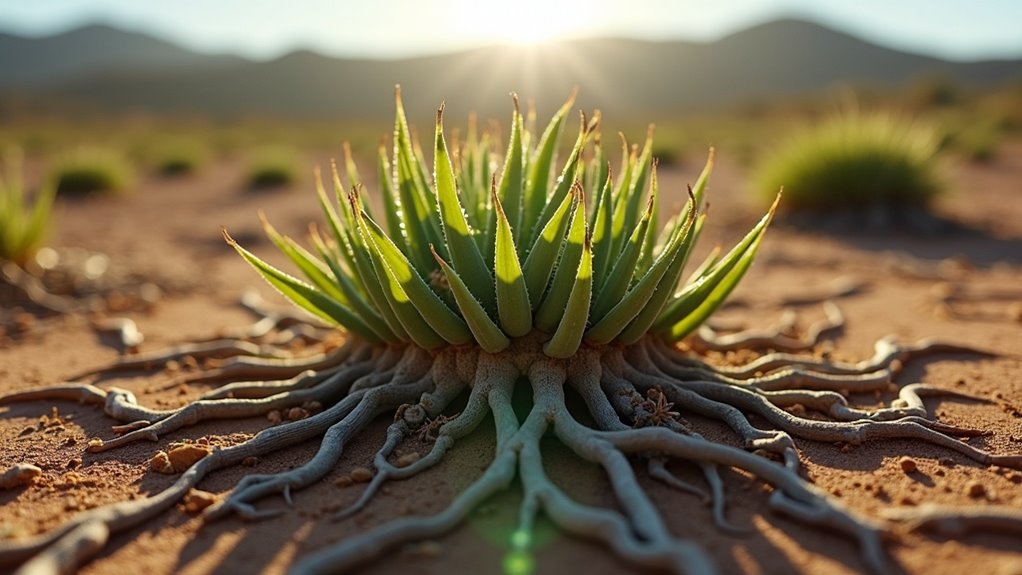
If you’re looking for plants with deep roots that enhance drought resilience, consider native grasses like Little Bluestem, Big Bluestem, and Switchgrass. Resilient shrubs such as Eastern Juniper, Manzanita, and Sagebrush also thrive in dry conditions thanks to their extensive root systems. These plants not only access deep soil moisture but also improve soil health and stability. You might find even more insights into selecting the right plants for your garden as you explore further.
Key Takeaways
- Little Bluestem and Prairie Dropseed have roots extending 4 to 6 feet, promoting drought resilience and soil stabilization.
- Big Bluestem reaches depths of 10 feet, enhancing moisture access and soil structure.
- Indiangrass features a robust root system that supports survival during dry conditions.
- Eastern Juniper and Manzanita develop deep roots, allowing them to thrive in arid environments.
- Mesquite Trees can penetrate over 50 feet, making them highly effective for drought resilience.
Understanding Drought Resilience in Plants
Drought resilience in plants is primarily achieved through the development of deep root systems, which allow them to tap into moisture stored deep underground. These roots can reach impressive depths, enabling plants to survive drought conditions that shallower-rooted species cannot.
Drought-tolerant plants, like native grasses such as Little Bluestem, illustrate this well, as they establish strong roots that access essential moisture. Additionally, deep root systems improve soil structure and prevent erosion, stabilizing the environment around them.
To maximize these benefits, it’s important to provide initial care and adequate watering during the establishment phase, ensuring roots develop effectively over time.
The Importance of Deep Root Systems
Deep root systems play a significant role in a plant’s ability to thrive in challenging environments.
These extensive networks allow plants to access moisture stored deep in the soil, enhancing drought resilience during prolonged drought conditions. By stabilizing the soil, deep roots reduce surface runoff and erosion, promoting soil stability.
Additionally, they can tap into groundwater reserves, supporting plant health even in arid regions. Deep roots also improve nutrient uptake from lower soil layers, contributing to overall vigor.
Research shows that plants with deep roots recover more quickly from drought stress, ensuring sustained growth and reproductive success.
Native Grasses With Deep Roots
When considering native grasses with deep roots, you’ll find species like Little Bluestem and Switchgrass that excel in drought resilience.
Their extensive root systems not only access moisture deep in the soil but also enhance soil health and prevent erosion.
Benefits of Deep Roots
Although many plants struggle during dry spells, native grasses with deep roots, like Big Bluestem and Switchgrass, thrive where others falter.
Their extensive root systems, reaching depths of up to 8 feet, enable access to moisture during drought conditions, showcasing impressive drought resilience.
These deep roots enhance soil health by improving structure and aeration, which promotes water retention.
Additionally, they play a crucial role in preventing soil erosion, stabilizing the ground in vulnerable areas.
With minimal maintenance required once established, these drought-tolerant species are perfect for sustainable landscaping, benefiting both the environment and local wildlife.
Notable Native Grasses
Numerous native grasses exhibit remarkable adaptations that enable them to thrive in arid conditions, primarily due to their deep root systems.
Here are some notable examples:
- Little Bluestem (Schizachyrium scoparium) – Roots extend up to 6 feet for moisture access.
- Big Bluestem (Andropogon gerardii) – Reaches depths of 10 feet, enhancing soil stabilization and drought resilience.
- Indiangrass (Sorghastrum nutans) – Features a robust root structure for survival during dry spells.
- Switchgrass (Panicum virgatum) – Grows up to 8 feet deep, supporting sustainable landscaping and drought resistance.
These grasses are key for maintaining healthy ecosystems in challenging environments.
Resilient Shrubs for Arid Conditions
Resilient shrubs play an essential role in arid ecosystems, as they possess unique adaptations that enable survival in challenging conditions.
Species like Eastern Juniper and Manzanita develop deep root systems that access moisture during drought periods.
Desert Willow thrives in dry conditions, attracting pollinators with its blooms while benefiting from its deep roots.
Sagebrush showcases exceptional drought resistance with roots extending several feet deep, ideal for harsh climates.
Creosote Bush withstands extreme drought thanks to its extensive root network, proving its resilience in desert ecosystems.
These drought-tolerant shrubs exemplify how deep roots contribute to drought resilience in arid environments.
Trees With Extensive Root Systems
While resilient shrubs in arid environments showcase the importance of deep roots, trees with extensive root systems play an equally essential role in drought resilience.
These trees can withstand dry spells and access moisture from deeper soil layers, enhancing their survival.
Here are four key species with impressive root systems:
- Eastern Red Cedar (Juniperus virginiana) – Reaches depths of 20 feet.
- Mesquite tree (Prosopis spp.) – Taproot can grow as deep as 50 feet.
- Ponderosa Pine (Pinus ponderosa) – Roots extend over 30 feet for soil stabilization.
- Honey Mesquite (Prosopis glandulosa) – Accesses underground water sources effectively.
Benefits of Deep-Rooted Plants for Soil Health
Deep-rooted plants offer significant benefits for soil health, especially in environments prone to drought. Their extensive roots improve soil structure by stabilizing topsoil and reducing erosion. Additionally, they create channels that enhance water infiltration, allowing moisture to reach deeper layers and minimizing runoff. This is essential for maintaining groundwater levels. Their ability to sequester carbon boosts soil health and helps combat climate change. By accessing moisture from lower layers, they reduce competition, promoting ecosystem resilience. Furthermore, they contribute organic matter through root decay, supporting nutrient cycling and fostering a vibrant microbial community essential for soil fertility.
| Benefit | Description | Impact on Soil Health |
|---|---|---|
| Improved Soil Structure | Stabilizes topsoil and reduces erosion | Enhances soil stability |
| Enhanced Water Infiltration | Channels allow moisture to reach deeper layers | Maintains groundwater levels |
| Carbon Sequestration | Captures carbon in the soil | Mitigates climate change |
| Organic Matter Contribution | Supports nutrient cycling and microbial activity | Promotes soil fertility |
Selecting the Right Deep-Rooted Plants for Your Garden
When selecting deep-rooted plants for your garden, consider those that not only withstand drought but also enhance soil health.
Native grasses like Little Bluestem and perennials such as Yarrow are excellent choices, as their roots access moisture from deeper soil layers.
Additionally, incorporating shrubs and trees with extensive root systems can improve biodiversity while ensuring your garden thrives in low-water conditions.
Benefits of Deep Roots
Selecting the right plants for your garden can greatly impact its resilience to drought, especially when you choose species with deep root systems.
Here are some benefits of deep-rooted plants:
- Access Moisture: They reach deeper soil layers, enhancing drought resilience.
- Lower Irrigation Requirements: Once established, they need less supplemental watering.
- Improve Soil Structure: Extensive roots stabilize soil, reducing erosion and promoting healthier ecosystems.
- Enhance Biodiversity: Native species support pollinators and beneficial insects, enriching your sustainable garden.
Recommended Deep-Rooted Plants
Choosing the right plants can greatly enhance your garden’s ability to withstand drought.
Consider deep-rooted plants like Eastern Red Cedar, which can reach depths of 30 feet for groundwater access. Sagebrush and Buffalo Grass are also excellent choices, with root systems extending 10 to 15 feet and 5 feet, respectively, allowing them to thrive in dry conditions with minimal rainfall.
Prairie Dropseed’s 4 to 6-foot roots help it survive in sandy soils, while Mesquite Trees can penetrate over 50 feet, demonstrating remarkable drought resilience.
Tips for Encouraging Deep Root Growth in Your Plants
To encourage deep root growth in your plants, it’s essential to implement a few key strategies that promote healthier, more resilient root systems.
Consider the following tips:
- Water deeply and infrequently to encourage roots to search for moisture, fostering deep root systems.
- Incorporate organic matter into your soil, enhancing its structure and drainage for better root development.
- Use mulching to retain soil moisture and regulate temperature, allowing roots to extend deeper.
- Choose native and drought-tolerant species, as they’re adapted for minimal watering and thrive in local conditions, enhancing drought resilience.





