
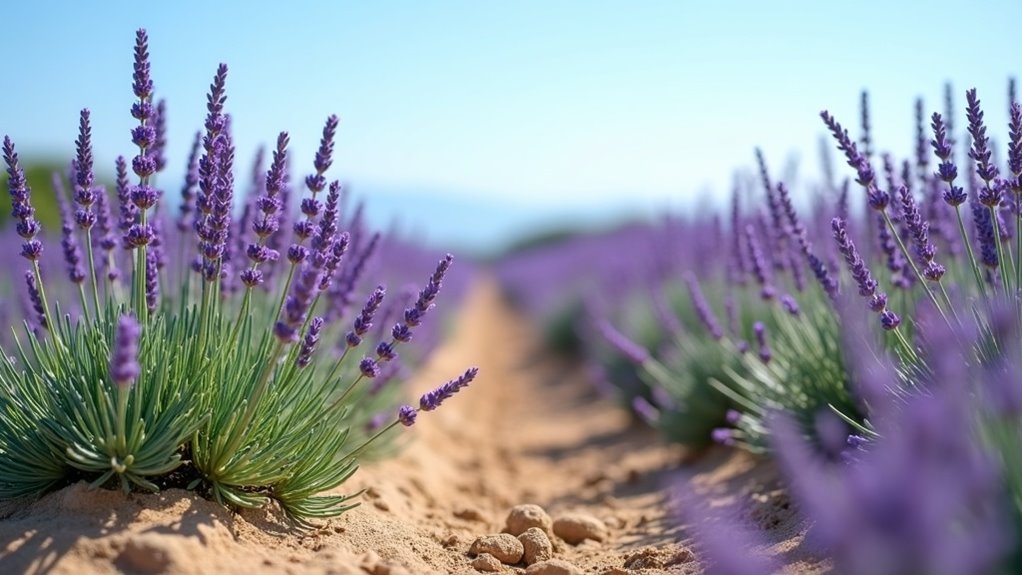
If you’re looking for plants that thrive in alkaline soil like lavender, consider options such as wild marjoram and clematis, both of which excel in pH levels between 7.1 and 8.0. Other excellent choices include lily of the valley, phacelia, and hardy shrubs like forsythia and lilac. These plants not only adapt well to alkaline conditions but also offer vibrant colors and attract pollinators. Discovering more about soil amendments and plant selection can further enhance your gardening success.
Key Takeaways
- Wild marjoram thrives in sunny, well-drained alkaline soils, similar to lavender’s preferred conditions.
- Ornamental clovers, such as Trifolium rubens, improve soil health and tolerate alkaline environments.
- Hardy shrubs like lilac and forsythia flourish in alkaline soil, adding vibrant color to gardens.
- Buddleia, known for attracting pollinators, also tolerates alkaline soils and complements lavender well.
- Conducting soil tests ensures optimal conditions for growing lavender and other alkaline-tolerant plants.
Best Plants for Alkaline Soils
When you’re looking to cultivate a garden in alkaline soil, it’s vital to choose plants that thrive in such conditions. The best plants to grow include Lily of the Valley and Phacelia, which provide both beauty and ecological benefits.
Ornamental clovers like Trifolium rubens improve soil health, while Wild Marjoram flourishes in sunny, well-drained alkaline soils, attracting butterflies. Hardy shrubs such as Forsythia and Lilac add vibrant spring color.
Additionally, Buddleia tolerates alkaline soils and draws in pollinators. Prioritize good drainage and select these plants to guarantee a thriving and visually appealing garden in alkaline environments.
Understanding Alkaline Soil Conditions
Understanding the importance of soil pH is essential for successful gardening in alkaline conditions.
You’ll face challenges with nutrient availability, particularly when it comes to phosphorus, iron, and manganese, which can affect plant health.
Soil Ph Importance
Soil pH plays a crucial role in determining which plants thrive in alkaline conditions, as it directly influences nutrient availability and overall plant health.
Alkaline soil, typically ranging from 7.1 to 8.0, favors specific plants for alkaline environments, such as lavender. Many of these plants struggle in acidic soils, where essential nutrients like phosphorus and iron are less accessible.
Conducting soil tests helps you ascertain pH levels, revealing high lime content indicative of alkalinity.
Additionally, amending alkaline soils with organic matter can enhance structure and nutrient retention, ultimately supporting healthier growth for your chosen plants for alkaline gardens.
Nutrient Availability Challenges
While alkaline soil can support a unique array of plants, it also presents significant nutrient availability challenges that can hinder growth.
In soils with pH levels between 7.1 and 8.0, nutrients like phosphorus, iron, and manganese become less available, leading to deficiencies such as chlorosis in acid-loving plants. These nutrient lockout issues can adversely affect plant health.
To counteract this, consider adding organic matter, which improves soil structure and nutrient retention.
Regular soil testing is essential for monitoring pH and nutrient levels, ensuring you apply appropriate amendments to support ideal plant growth in alkaline conditions.
Plant Selection Strategies
Selecting the right plants for alkaline soil is essential for ensuring a flourishing garden. Alkaline soils, with a pH of 7.1 to 8.0, support specific plant selection. Choose varieties like lavender, wild marjoram, and clematis, which thrive in these conditions.
Incorporating organic matter can enhance soil structure, benefiting plants like buddleia and lilac. Consider ornamental clovers and phacelia, as they not only tolerate alkaline soils but attract pollinators too.
Regular soil testing will help you monitor pH and nutrient levels, ensuring ideal growth for plants such as caryopteris and honeysuckle in your alkaline garden.
Key Characteristics of Alkaline Soil Plants
Plants that thrive in alkaline conditions exhibit several key characteristics that enable them to flourish in higher pH environments. They typically prefer a pH range of 7.1 to 8.0, enhancing nutrient availability. Many, like lavender, require well-drained conditions to prevent waterlogging. These plants often develop deeper root systems, allowing them to access nutrients in less acidic soil. Additionally, they tolerate nutrient deficiencies due to low microbial activity, giving them an advantage where other species fail.
| Characteristic | Description | Example Plants |
|---|---|---|
| pH Preference | 7.1 to 8.0 | Lavender, Wild Marjoram |
| Soil Requirements | Well-drained conditions | Clematis |
| Adaptations | Deeper root systems | Many herbs |
Popular Alternatives to Lavender
If you’re looking for drought-resistant plants that thrive in alkaline soil, consider alternatives to lavender like Nepeta and Euphorbia.
These options not only provide visual appeal but also attract pollinators and offer vibrant colors.
Additionally, herbs like Satureja montana and Thymus can enhance your garden’s aesthetic while serving culinary purposes.
Drought-Resistant Plant Options
For those seeking drought-resistant plants that flourish in alkaline soil, several compelling alternatives to lavender exist.
Here are three options that grow best in these conditions:
- Nepeta (Catmint) – Thrives in alkaline soils, boasting blue-purple flowers and aromatic foliage.
- Thyme (Thymus spp.) – Requires well-drained, alkaline soils, ideal for culinary uses and ornamental displays.
- Sage (Salvia officinalis) – Prefers alkaline environments, offering attractive foliage and flowers while drawing in pollinators.
These plants not only tolerate dry conditions but also enhance your garden’s aesthetic and functional appeal.
Choose wisely for a thriving, low-maintenance landscape!
Aesthetic Alternatives to Lavender
While lavender is a beloved choice for many gardens, several aesthetically pleasing alternatives can also thrive in alkaline soil.
Consider catmint (Nepeta), which attracts pollinators and flourishes in full sun.
Salvia offers vibrant flowers and aromatic foliage, perfect for colorful displays in drought-prone areas.
For ground cover, ornamental clovers like Trifolium rubens provide unique blooms and foliage.
Oregano (Origanum vulgare) serves as both a culinary herb and a beautiful addition, attracting butterflies in sunny spots.
Finally, Euphorbia species, such as Euphorbia polychroma, are low-maintenance evergreen shrubs that add texture and color throughout the growing season.
Tips for Gardening in Alkaline Soil
When gardening in alkaline soil, it’s essential to understand how to create an environment that supports the growth of alkaline-loving plants.
Here are some tips to maximize your garden:
- Incorporate organic matter: Add compost to enhance soil structure and improve nutrient retention.
- Test soil pH regularly: Keep it between 7.1 and 8.0 for ideal growth of your best plants.
- Ensure proper drainage: Mix sand or gravel into alkaline clay to prevent waterlogging, which can damage roots.
Visit your local garden centre for specific alkaline plants like lavender and wild marjoram that thrive in these conditions.
Benefits of Growing Alkaline Soil Plants
Growing alkaline soil plants offers numerous advantages that enhance both your garden’s health and sustainability.
By cultivating species like lavender, you reduce competition with acid-loving plants, leading to stronger growth. Alkaline soil typically harbors fewer pests and diseases, which helps maintain healthier plants and minimizes chemical use.
Additionally, these plants improve soil structure and fertility through organic matter, enhancing moisture retention and nutrient availability. Many alkaline soil plants are drought-resistant, making them ideal for low-maintenance gardens that conserve water.
Ultimately, they generally require less frequent fertilization, promoting sustainable gardening practices while allowing you to enjoy the benefits of a flourishing garden.





