
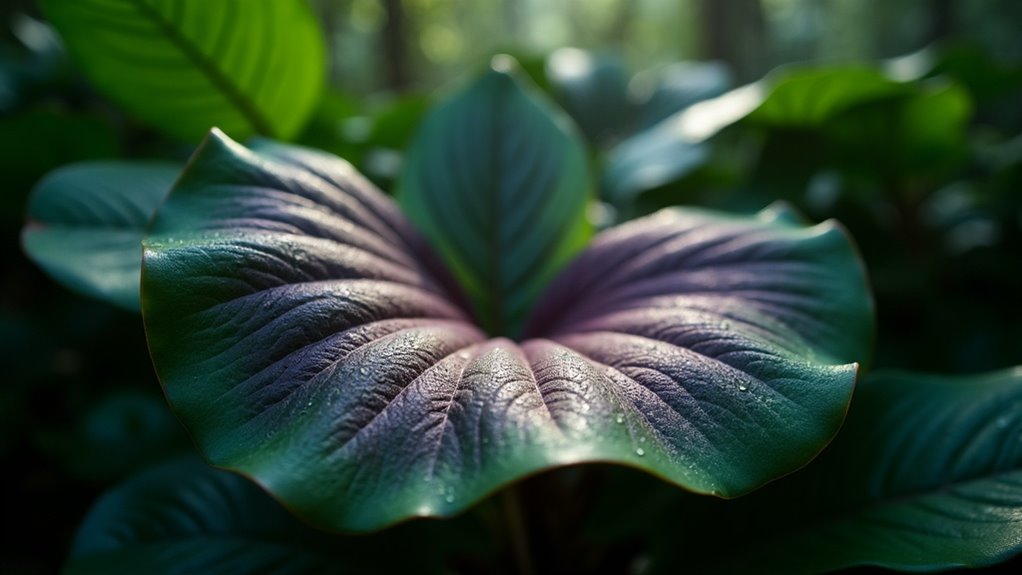
If you want plants that thrive in high humidity, consider varieties like Calatheas, which flourish in moisture levels above 50%. Other great options include Monstera Deliciosa and Anthuriums, both of which enjoy similar conditions. Aluminum Plants and Birds Nest Ferns are also humidity-loving, perfect for creating a lush indoor environment. Proper humidity not only prevents leaf curling and browning tips but also promotes vibrant foliage. Discover more about creating ideal conditions for these plants and their care.
Key Takeaways
- Calatheas thrive in humidity levels above 50%, making them ideal for bathrooms and kitchens.
- Monstera Deliciosa prefers over 60% humidity and bright indirect light for optimal growth.
- Anthuriums showcase beautiful foliage and thrive in higher humidity environments.
- Aluminum Plant and Birds Nest Ferns flourish in humidity levels between 50-70%.
- Maintaining humidity is crucial to prevent issues like leaf curling and browning tips.
Understanding Humidity-Loving Plants
Humidity-loving plants, which include species like Calatheas and Monstera Deliciosa, require specific moisture levels to thrive, making understanding their needs crucial for successful cultivation.
These tropical plants flourish in environments with humidity levels of 50% or higher, ideally up to 70%. Low humidity can cause issues such as leaf curling and browning tips, stressing the plant.
Humidity levels above 50% are essential for tropical plants to prevent stress and maintain vibrant foliage.
High humidity helps reduce water loss through transpiration, maintaining hydration. To create ideal conditions, consider using humidifiers, pebble trays, or regular misting.
Make sure they receive indirect light to complement their humidity requirements, preventing root rot and encouraging lush growth.
Top High Humidity Plants for Your Home
If you’re looking to enhance your indoor environment with lush greenery, incorporating high humidity plants can markedly elevate the aesthetic and air quality of your home.
Calatheas thrive in humidity levels above 50%, making them perfect bathroom plants. Monstera Deliciosa and Anthuriums also flourish in over 60% humidity, showcasing their beautiful green leaves in bright indirect light.
The Aluminum Plant, safe for pets, prefers 50-70% humidity, while Birds Nest Ferns thrive under similar conditions.
Use a well-draining potting mix to support these tropical rainforests’ needs and enjoy vibrant foliage that transforms your space into a lush oasis.
Calathea Varieties: Unique Features and Care
While Calathea plants are renowned for their striking foliage, each variety possesses unique features and specific care requirements that make them stand out. Here’s a quick overview of some popular types:
| Calathea Variety | Unique Features |
|---|---|
| Calathea Medallion | Large, round leaves with dark magenta undersides |
| Calathea Rattlesnake | Long, wavy leaves with deep green brushstrokes |
| Rabbit’s Foot | Softer, lighter green leaves with dark green splotches |
| Calathea Musaica | Unique pixelated leaf patterns |
| Calathea Orbifolia | Large medium green leaves with silver stripes |
These jungle plants require high humidity levels and indirect light, ensuring you maintain consistent moisture to prevent leaves from curling.
Creating the Ideal Environment for Humidity-Loving Plants
To create the ideal environment for plants that thrive in high humidity, you must first guarantee that the humidity levels in their surroundings consistently exceed 50%.
Place your Calatheas in warm, tropical areas like bathrooms or kitchens to enhance their growth. Consider using a humidifier to maintain humidity, especially in drier indoor spaces.
Regular misting of the leaves can supplement humidity but make certain the soil stays moist, not soggy, to prevent root rot.
Additionally, grouping your humidity-loving plants together creates a microclimate, boosting humidity through transpiration and fostering a healthier environment for their growth.
Troubleshooting Common Issues With Humidity-Dependent Plants
When humidity levels drop below 50%, your humidity-dependent plants can exhibit various stress symptoms, signaling the need for immediate intervention.
For Calatheas, you’ll notice leaves turning yellow or brown, especially at the edges, which often indicates low humidity or poor water quality. Switch to distilled water to improve this common issue.
Regular misting, a pebble tray, or a humidifier can boost humidity levels effectively. Make sure your plants receive indirect sunlight and allow the top inch of soil to dry between waterings.
This balance prevents overwatering while supporting ideal growth and moisture retention for your humidity-loving plants.





