
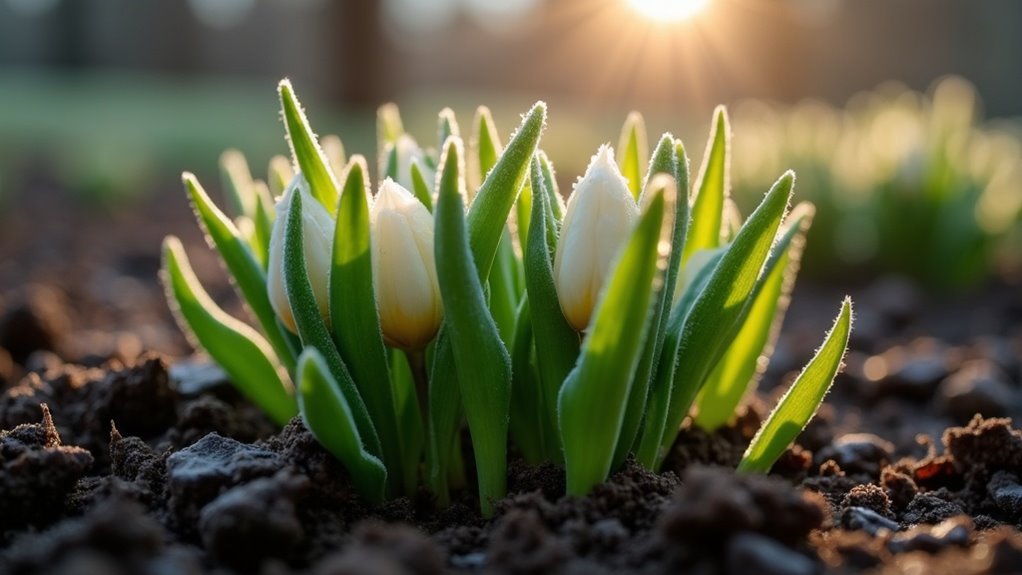
Many plants require vernalization to flower successfully. Fruit trees like apples and cherries depend on specific chilling hours. Biennial species such as carrots and hollyhocks also need cold exposure to bloom in their second growth cycle. Spring-flowering bulbs, including tulips and daffodils, rely on low temperatures for flowering. Without adequate vernalization, these plants suffer poor flowering and fruit production. Discover more about the effects of inadequate chilling and methods to induce vernalization for healthy growth.
Key Takeaways
- Fruit trees like apples and cherries require chilling hours for successful flowering and fruit development.
- Biennial plants such as carrots and hollyhocks depend on vernalization for flowering in their second growth cycle.
- Spring-flowering bulbs, including tulips and daffodils, need cold exposure to trigger blooming.
- Some herbaceous perennials also require vernalization to ensure proper flowering.
- Plants adapted to temperate climates typically need vernalization for successful reproductive cycles.
Understanding Vernalization in Plants
When you explore the world of plant biology, you’ll find that vernalization is a critical process for many species, requiring specific cold temperatures to trigger flowering and seed production.
Plants with obligate vernalization, like winter wheat and certain fruit trees, depend entirely on cold exposure to meet their chilling requirements and bloom successfully.
Obligate vernalization is essential for winter wheat and select fruit trees, relying on cold exposure for successful blooming.
Conversely, flowering perennials and some biennial crops, such as carrots, may not require vernalization but benefit from it.
Only temperatures near or slightly above freezing contribute effectively to chilling hours, emphasizing the importance of precise conditions for ideal flowering and ensuring successful plant reproductive cycles.
Types of Plants That Require Vernalization
Many plants necessitate vernalization to thrive, particularly those that have adapted to temperate climates where seasonal temperature fluctuations are pronounced.
Here are three types of plants that require this vernalization process:
- Fruit Trees: Species like apples and cherries need specific chilling hours for proper flowering.
- Biennial Plants: Carrots and hollyhocks depend on vernalization to shift to flowering in their second growth cycle.
- Spring-Flowering Bulbs: Tulips and daffodils require cold exposure; without it, they may struggle to bloom.
While some herbaceous perennials can flower without chilling, others distinctly need for vernalization to guarantee successful flowering.
The Importance of Vernalization for Flowering
Understanding the importance of vernalization is essential for successful flowering in various plants.
For instance, many fruit trees like apples and cherries require specific chilling hours to set fruit, while biennial plants such as hollyhocks rely on cold periods to shift to flowering.
Additionally, spring-flowering bulbs need vernalization to initiate blooming, emphasizing the significant role chilling plays in their reproductive cycles.
Essential for Fruit Trees
Vernalization plays an essential role in the flowering of fruit trees, as it guarantees they receive the necessary chilling hours to bloom effectively.
Many fruit trees, like apples, peaches, and cherries, require vernalization for proper fruit development.
Here are key factors to take into account:
- Chilling Requirement: Apples need about 1,000 chill hours at 32°F to 45°F for successful flowering.
- Impact of Insufficient Chilling: Warmer winters can lead to poor fruit production and tree health.
- Species Sensitivity: Certain fruit trees are more vulnerable to inadequate chilling, affecting their spring flowering.
Understanding these needs guarantees better selection for varying climates.
Effects on Bulbs
When spring-flowering bulbs like tulips, hyacinths, and daffodils don’t receive the necessary cold exposure, their ability to bloom effectively is compromised.
These plants need vernalization, a process requiring chilling temperatures around 40°F for a specific duration, often measured in “chill hours.” Insufficient cold weather can lead to poor flowering or even bulb failure, as hormonal changes necessary for flower bud development aren’t triggered.
Furthermore, vernalization helps bulbs store energy during dormancy, ensuring robust growth for the following season.
Understanding these needs is essential for gardeners to select appropriate varieties and time their planting for best spring displays.
Biennial Plant Requirements
For biennial plants like carrots, onions, and parsley, experiencing a cold exposure period is crucial to trigger flowering and seed production in the second growing season.
Without adequate vernalization, these plants focus on vegetative growth instead. To optimize flowering, consider these requirements:
- Cold Exposure Duration: Guarantee plants receive the right amount of chilling hours for effective vernalization.
- Soil Conditions: Leave biennials in the soil during winter to naturally experience cold temperatures.
- Hormonal Changes: Understand that cold conditions promote internal hormonal adjustments necessary for blooming.
Examples of Plants With Vernalization Needs
Many plants depend on vernalization to successfully shift from dormancy to flowering, ensuring they can produce fruit or seeds effectively.
For instance, fruit trees like apples and cherries require specific chilling hours to trigger their flowering. Spring-flowering bulbs, including tulips and daffodils, also need cold exposure for successful blooming.
Biennial plants such as carrots and onions require a cold period for vernalization to flower in their second year. Additionally, winter grains like rye and barley depend on vernalization, while certain herbaceous perennials, like Coreopsis grandiflora, require cold to enhance their flowering potential.
Understanding these requirements is essential for successful cultivation.
Effects of Insufficient Vernalization on Plant Growth
Insufficient vernalization can severely impact the growth and productivity of various plants, particularly those that rely on specific chilling hours to initiate flowering.
Without adequate cold exposure, you might observe:
- Poor flowering and reduced fruit production in trees like apples and cherries.
- Biennial vegetables such as carrots failing to flower, leading to missed harvests.
- Declines in health or death of fruit trees, unable to complete their dormancy process.
Methods for Inducing Vernalization in the Garden
To effectively induce vernalization in your garden, you can utilize refrigeration techniques for bulbs that require cold exposure.
For biennial plants, timing is essential; leaving them in the soil over winter guarantees they meet their chilling requirements.
Understanding these methods will help you optimize flowering potential for various plant species.
Refrigeration Techniques for Bulbs
Refrigeration techniques for bulbs play an essential role in inducing vernalization, a necessary process for successful flowering in many species.
To effectively store bulbs, follow these steps:
- Maintain a temperature around 40°F to mimic winter conditions, vital for vernalization.
- Use materials like newspaper or vermiculite to keep bulbs dark and manage moisture, preventing premature sprouting.
- Check monthly for watering needs, as over-watering or drying out can compromise viability.
Timing for Biennials
When cultivating biennials like carrots and hollyhocks, understanding the timing for vernalization is vital for successful flowering. These plants need a cold exposure period, as insufficient chilling often results in failure to flower. To induce vernalization, you can either leave them in the soil over winter or refrigerate them for a few weeks. Timing is critical; you must guarantee they’re exposed to the required cold before their second growing season to flower early.
| Method | Description | Timing |
|---|---|---|
| Natural Chilling | Allow to remain in soil | Winter |
| Forced Vernalization | Refrigerate for several weeks | Late fall to winter |
| Garlic Planting | Plant in fall for cold treatment | Early fall |
| Soil Exposure | Mulch to retain cold conditions | Winter |
| Monitoring | Check for sprouting | Early spring |





