
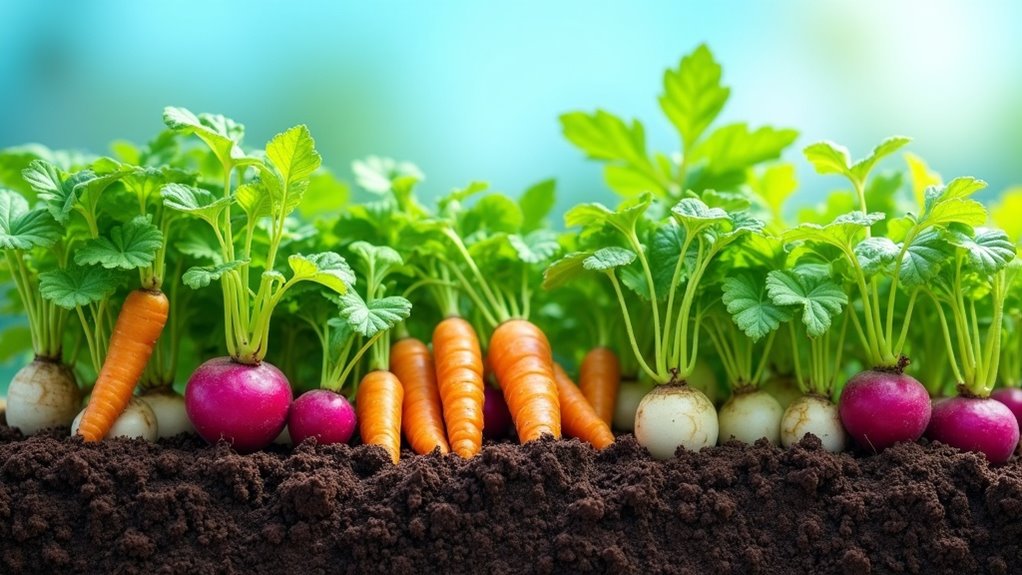
If you want to grow edible roots in your home garden, consider planting carrots, beets, radishes, sweet potatoes, and turnips. Carrots and beets thrive in well-drained soil and need full sun, while radishes grow quickly, ready in just 3-5 weeks. Sweet potatoes love warm weather, and turnips adapt well to poor soil. Make sure to follow proper growing and harvesting techniques to enjoy the best yields. There’s much more to discover about root vegetables and tips for success!
Key Takeaways
- Common edible root vegetables for home gardens include carrots, beets, radishes, sweet potatoes, and turnips.
- Carrots and beets thrive in well-drained soil and require full sun for optimal growth.
- Radishes are fast-growing, ready to harvest in just 3-5 weeks, making them ideal for quick yields.
- Sweet potatoes flourish in warm weather and need about 90-120 days before harvest.
- Turnips and radishes are adaptable, growing well even in poor soil conditions.
Popular Root Vegetables for Home Gardens
When you decide to grow root vegetables in your home garden, you’ll find a variety of options that cater to different tastes and growing conditions.
Carrots are popular vegetables that thrive in full sun and well-drained soil, maturing in about 70-80 days.
Carrots flourish in full sun and well-drained soil, taking 70-80 days to reach maturity.
Beets, which prefer cooler weather, can be harvested within 50-70 days, providing both edible roots and greens.
If you want quick results, radishes grow from seed and can be ready in just 3-5 weeks.
Sweet potatoes flourish in warm weather, while turnips adapt well to poor soil, offering harvests in 30-60 days.
Start planting in early spring for best results!
Nutritional Benefits of Edible Roots
Growing root vegetables not only adds flavor and variety to your meals but also provides a wealth of nutritional benefits. Edible roots like carrots, beets, and sweet potatoes are packed with vitamins, minerals, and antioxidants.
Sweet potatoes, rich in beta-carotene, support improved vision and skin health. Beets contain nitrates that lower blood pressure and enhance exercise performance. Garlic offers potent health benefits through allicin, known for its anti-inflammatory properties.
Additionally, turnips and radishes deliver vitamin C, fiber, and phytochemicals that may reduce chronic disease risk. Incorporating these roots into your diet can greatly boost your overall health.
Growing Conditions for Root Vegetables
To successfully cultivate root vegetables, you’ll need to create the right growing conditions that promote healthy development and robust yields.
Here are four key factors to take into account:
- Soil: Use well-drained, loose soil with a pH of 6.0-7.0 for ideal growth.
- Sun Exposure: Make sure your plants get 6-8 hours of sun daily, as this helps develop flavors in common vegetables like carrots and beets.
- Watering: Keep the soil consistently moist, but avoid waterlogging to prevent rot.
- Spacing: Plant seeds 2-4 inches apart to allow sufficient room for root expansion in your edible plants.
Harvesting Techniques for Edible Roots
Harvesting root vegetables requires careful attention to verify you maximize yield and maintain quality.
Start by checking the soil pH; it should be suitable for your plants. For carrots and beets, gently loosen the soil with a fork to prevent damage.
Wait until potato foliage turns yellow before digging to guarantee the best flavor. Sweet potatoes need about 90 to 120 days after planting, ideally before frost.
Radishes should be pulled when they reach 3 to 5 weeks old to avoid bitterness.
Always leave part of the root for regrowth in perennial varieties like horseradish, encouraging continuous production of edible roots.
Tips for Storing and Using Root Vegetables
Storing root vegetables properly can greatly extend their freshness and flavor. Follow these tips to keep your edible roots in prime condition:
- Store root vegetables like carrots and potatoes in a cool, dark, and humid environment (32°F to 40°F).
- Use breathable bags or containers to prevent moisture accumulation, avoiding rot.
- Remove green tops before storage to stop them from drawing moisture and nutrients.
- Use root vegetables within a few weeks of harvest for peak flavor; many varieties last months if stored correctly.
For cooking methods, try roasting or steaming to enhance their natural sweetness.





