
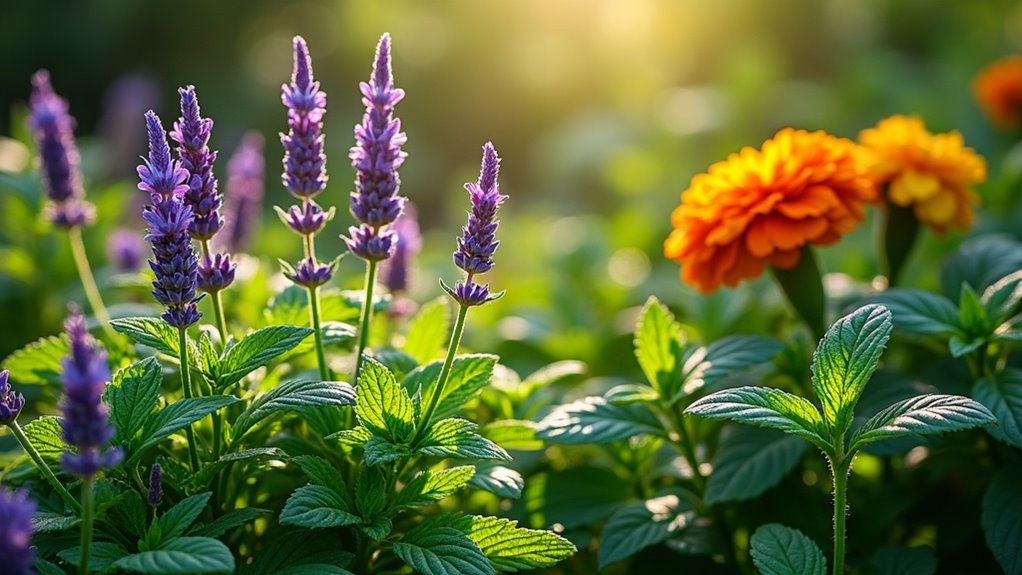
If you’re looking to repel mosquitoes, consider planting lavender, marigold, citronella grass, catmint, rosemary, basil, and citronella geranium. These plants release natural oils or fragrances that effectively deter these pests. Lavender and marigold bloom continuously, while citronella grass provides a potent lemony scent. Catmint is extremely effective, outpacing traditional repellents. Rosemary and basil not only repel mosquitoes but also enhance your cooking. Explore how to harness these plants for the best mosquito deterrent results.
Key Takeaways
- Lavender’s essential oils disrupt mosquitoes’ sense of smell and attract beneficial pollinators, making it a dual-purpose plant.
- Marigolds bloom continuously and their distinctive scent naturally repels mosquitoes while combating other garden pests.
- Citronella grass and scented geraniums release potent lemon-scented oils that deter mosquitoes when leaves are crushed.
- Catmint is extremely effective against mosquitoes, outperforming DEET, and both it and basil attract beneficial insects.
- Rosemary’s woody scent acts as a natural repellent; it thrives in sunny, dry conditions with minimal maintenance.
Lavender
Lavender is a powerful ally in the fight against mosquitoes, thanks to its essential oils that effectively repel these pests. The lavender plant’s pleasant fragrance disrupts mosquitoes’ sense of smell, making it a natural deterrent in outdoor spaces.
Thriving in full sun and well-drained soil, this hardy perennial grows well in USDA zones 5-11 once established. As an insect-repelling plant, lavender not only keeps mosquitoes at bay but also attracts beneficial pollinators like bees, enhancing garden biodiversity.
Additionally, you can use lavender for cooking and crafting calming herbal remedies, further showcasing its versatility as a pest repellent.
Marigold
Marigolds stand out as effective allies in mosquito control, thanks to their distinctive scent that naturally repels these annoying pests.
Marigolds are powerful allies in mosquito control, repelling pests with their unique scent.
These easy-to-grow annuals bloom from late spring until frost, providing vibrant color and continuous protection throughout the growing season. You can plant marigolds in pots near patios or entrances, making them perfect for high-traffic outdoor areas.
Beyond repelling mosquitoes, they combat garden pests like aphids and thrips, enhancing their value in your vegetable and flower gardens.
Thriving in sunny locations, marigolds are low-maintenance, requiring minimal care once established, ensuring you enjoy a pest-free environment effortlessly.
Citronella Grass (Lemon Grass)
Citronella grass, or lemon grass, thrives in sunny environments and requires minimal care, making it an ideal choice for your garden.
When you crush its leaves, the plant releases oils that effectively repel mosquitoes, providing a natural barrier against these pests.
Beyond its insect-repelling properties, citronella grass also enhances your culinary creations with its vibrant citrus flavor.
Growth Requirements and Care
When cultivating citronella grass, it’s vital to provide it with sunny conditions and well-draining soil to guarantee ideal growth.
This low-maintenance plant thrives in full sun and good drainage, making it suitable for various gardening spaces, including large planters.
In colder climates, treat it as an annual, as it can’t withstand frost.
Regular watering is essential to keep the soil damp, but avoid overwatering to prevent root rot.
Pruning the grass periodically encourages bushier growth and enhances its mosquito-repelling scent, especially when the leaves are crushed or brushed against, maximizing its effectiveness in deterring mosquitoes.
Mosquito Repelling Properties
The powerful mosquito-repelling properties of citronella grass, or lemon grass, stem from its ability to emit a strong lemon fragrance that disrupts the sensory navigation of these pests.
This mosquito-repelling plant thrives in warm, sunny environments and prefers well-draining soil, making it ideal for garden beds or large pots.
It’s important to emphasize that citronella grass can’t withstand frost, so you’ll typically grow it as an annual in colder climates.
Crushing the leaves enhances its aroma, making it particularly effective near outdoor seating areas, providing a natural mosquito repellant to help keep your space enjoyable.
Culinary Uses and Benefits
Lemon grass, a versatile herb, offers a unique blend of culinary and aromatic benefits that elevate both flavor and dining experiences. This citronella grass is a culinary herb that’s making great waves in Asian cuisine, thanks to its invigorating citrus flavor. You can use its leaves fresh or dried in teas, soups, and stir-fries. Additionally, it doubles as a mosquito repellent, enhancing outdoor meals with its pleasant scent. You can also create a homemade insect repellent using citronella grass-infused oils.
| Use | Benefits | Culinary Applications |
|---|---|---|
| Mosquito Repellent | Natural pest deterrent | Soups and stir-fries |
| Flavorful Herb | Adds invigorating taste | Teas and marinades |
| Aromatic Quality | Enhances outdoor dining | Infused oils |
Catmint
Although many plants offer some level of pest deterrence, catmint stands out as a remarkable natural solution for repelling mosquitoes. This perennial plant is ten times more effective than DEET, making it an excellent choice for natural pest control.
Catmint thrives in USDA hardiness zones 3-8, blooming from early summer to fall with its attractive purple flowers. When you crush its leaves, the fragrant oils released effectively deter mosquitoes, perfect for outdoor seating areas.
Additionally, catmint attracts beneficial insects like bees and butterflies, enhancing your garden’s biodiversity while keeping pesky pests at bay.
Rosemary
Rosemary thrives in hot, dry climates and grows well in USDA hardiness zones 7-10, making it an easy addition to your garden or patio.
Not only does this herb enhance your culinary dishes, but it also boasts mosquito-repelling properties thanks to its woody scent.
With the added benefit of attracting beneficial insects like butterflies, rosemary serves multiple purposes in your outdoor space.
Growing Conditions for Rosemary
To guarantee successful growth of rosemary, you need to provide the right conditions that mimic its native hot, dry climate.
Focus on these key factors:
- Full Sun: Make sure your rosemary gets at least 6-8 hours of direct sunlight daily.
- Well-Drained Soil: Use sandy or loamy soil to prevent root rot; good drainage is essential.
- Drought-Resistant: Once established, rosemary requires minimal watering, making it ideal for dry spells.
You can grow rosemary in containers for easier management.
Regular pruning enhances its aromatic qualities and encourages bushier foliage, maximizing your herb garden’s potential.
Culinary Uses and Benefits
With the right growing conditions established for rosemary, you can explore its culinary uses and benefits that make it a standout herb in the kitchen.
This versatile culinary herb enhances the flavor of roasted meats, vegetables, and salads with its fragrant aroma. You can use rosemary fresh or dried, with the latter providing robust seasoning for soups and stews.
It beautifully complements Mediterranean dishes paired with garlic, lemon, and olive oil.
Beyond flavor, rosemary boasts antioxidant properties, contributing to your overall health and wellness when incorporated into a balanced diet, making it an essential ingredient in any culinary repertoire.
Mosquito Repellent Properties
The woody scent of rosemary acts as a natural barrier against mosquitoes and other pests, making it an excellent addition to gardens and outdoor spaces.
This herb’s repelling properties stem from its aromatic oils, which are released when leaves are crushed.
Here are three key benefits of rosemary in repelling mosquitoes:
- Natural Insect Repellent: Its strong smell effectively deters mosquitoes.
- Versatile Growth: Thrives in hot, dry climates, suitable for containers or garden beds.
- Culinary Use: Adds flavor to dishes while serving as a mosquito repellent.
Incorporating rosemary into your garden can help keep these pests at bay.
Basil
Although you may primarily think of basil as a culinary herb, its strong aroma plays a significant role in repelling mosquitoes and flies. The pungent smell of basil effectively masks human scents, making it an excellent natural repellent.
Thriving in sunny locations with well-drained soil, basil can be grown in garden beds and containers. Varieties like lemon and cinnamon basil are particularly effective at repelling these pests due to their strong scents.
Besides keeping mosquitoes away, basil enhances culinary dishes, serving a dual purpose in your garden. Easy to grow, it blooms from summer until frost, making it a valuable addition.
Citronella / Scented Geranium
When you’re looking for a natural way to keep mosquitoes at bay, citronella and scented geraniums stand out due to their potent lemon-scented aroma.
These plants not only enhance your garden’s aesthetics but also serve as effective natural insect deterrence.
Here are three key benefits:
- Repel Mosquitoes: The strong lemon scent effectively drives away mosquitoes and other biting insects.
- Warm Climates: They thrive in sunny, dry environments, perfect for outdoor spaces.
- Containers: Citronella geraniums can be grown in containers, allowing you to bring them indoors during colder months for continued protection.





