
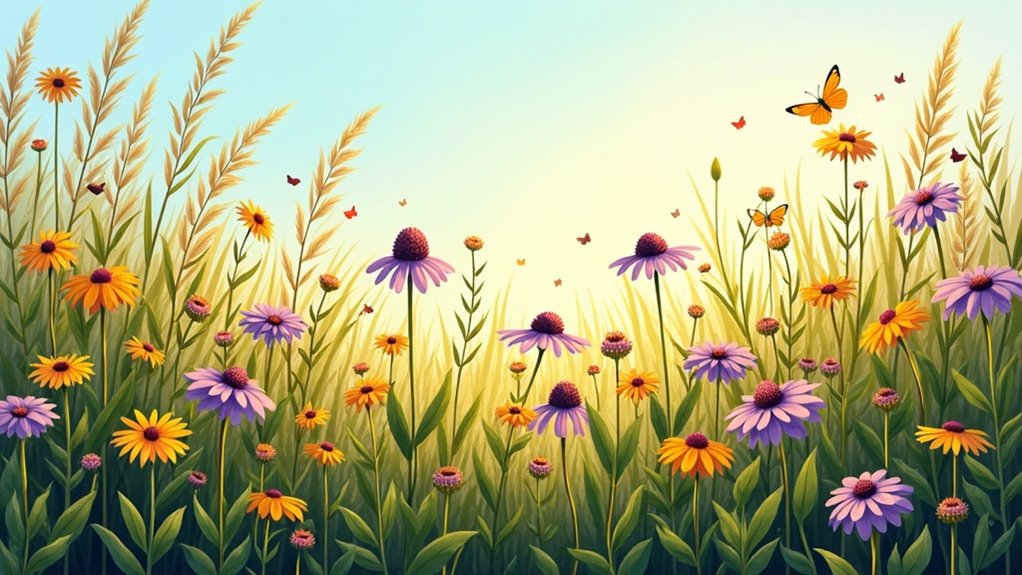
To create a successful prairie garden, choose native plants like Blue Grama and Switch Grass for their drought tolerance and unique aesthetics. Incorporate vibrant blooms such as Purple Coneflower and Gloriosa Daisy to attract pollinators. Add prairie wildflowers like Butterfly Weed and Yarrow to support biodiversity. Guarantee proper spacing and layering for healthy growth and wildlife refuge. With these selections, your garden can thrive while enhancing local ecosystems. There’s more to discover about crafting your prairie landscape.
Key Takeaways
- Choose native grasses like Blue Grama and Switch Grass for drought tolerance and structural support in prairie gardens.
- Incorporate wildflowers such as Purple Coneflower and Butterfly Weed to attract pollinators like bees and hummingbirds.
- Utilize plants like False Indigo and Yarrow for their soil health benefits and long-lasting blooms that support wildlife.
- Position taller species at the back and shorter perennials in front to create visually appealing layers in the garden design.
- Ensure diverse plant arrangements to enhance habitat for various bird species and promote overall ecological health.
The Importance of Prairie Gardens
As you explore the importance of prairie gardens, you’ll find they play an essential role in restoring the ecosystems of North America’s original prairies, which have largely vanished.
These gardens enhance biodiversity by providing crucial habitat, food, and refuge for various pollinators and wildlife.
Utilizing native plants not only supports local ecosystems but also promotes sustainable landscaping practices, as they’re drought-tolerant and require less water, fertilizer, and maintenance compared to traditional lawns.
Getting Started With Prairie Plantings
To get started with your prairie plantings, focus on selecting native plant varieties that thrive in your region.
Whether you’re designing a large-scale prairie garden or a micro prairie in your yard, consider the planting techniques that best suit your space.
Implementing proper spacing and monitoring growth will guarantee a healthy, vibrant ecosystem that supports local wildlife.
Choosing Native Plant Varieties
How do you choose the right native plant varieties for your prairie garden? Focus on species well-adapted to your local climate and soil type. Combine grasses and wildflowers like Little Bluestem and Purple Coneflower to foster a diverse ecosystem. Aim for drifts of 5-15 plants for visual impact and pollinator attraction. Also, consider drought-tolerant varieties that thrive in well-drained soils. Monitor growth to prevent overcrowding, ensuring a cohesive design.
| Plant Type | Soil Preference | Benefits |
|---|---|---|
| Native Prairie Plants | Well-drained soils | Attracts pollinators |
| Wildflower | Well-drained soils | Supports biodiversity |
| Grass | Varied soil types | Erosion control |
| Drought Tolerant | Sandy soils | Low maintenance |
Designing Micro Prairie Spaces
When you commence designing micro prairie spaces, consider that even small urban areas can support vibrant ecosystems.
Incorporate a diverse mix of native species and cultivars to attract pollinators and create visual interest. Carefully select native flower varieties that exhibit tidy growth habits, avoiding aggressive spreaders to maintain an intentional appearance.
Planting in groups or drifts of 5-15 of the same species encourages a natural look and enhances habitat for wildlife. Regularly monitor plant growth habits to prevent overcrowding and guarantee your design remains cohesive, aligning with local bylaws and environmental considerations for successful micro prairies.
Planting Techniques and Tips
As you commence your prairie planting journey, understanding the crucial techniques and tips can considerably enhance your success.
Start by selecting a mix of native grasses and wildflowers, which creates a balanced ecosystem that attracts pollinators while thriving under drought conditions.
Plant in drifts of 5-15 to encourage pollinator activity and achieve a natural appearance. For larger gardens, aim for a few acres, while micro prairies work well in urban settings.
Always monitor moisture needs to maintain plant health and prevent competition.
Document growth and flowering patterns to refine your planting techniques and boost your garden’s overall vibrancy.
Native Prairie Grasses
Native prairie grasses play an essential role in the ecology of prairie gardens, offering both beauty and functionality. Incorporating these grasses not only enhances aesthetics but also supports local wildlife, including native bees, by providing vital food sources.
Native prairie grasses enrich gardens with beauty and vital support for local wildlife, including essential food sources for native bees.
Consider these four key native prairie grasses for your garden:
- Blue Grama: Compact and drought-tolerant with unique eyebrow flowers.
- Switch Grass: Features upright columns and wispy flowers, adding vertical interest.
- Prairie Dropseed: Forms delicate clumps with stunning fall foliage.
- Little Bluestem: Thrives in dry soils, offering seeds for songbirds and vibrant autumn colors.
These grasses create a balanced ecosystem.
Notable Native Prairie Plants
In exploring notable native prairie plants, you’ll find species that not only showcase unique characteristics but also support crucial wildlife habitats.
For instance, Little Bluestem thrives in poor soils, providing essential seeds for songbirds, while Purple Coneflower draws in numerous pollinators with its vibrant blooms.
Understanding these plants’ benefits helps you create a thriving, eco-friendly prairie garden.
Key Characteristics of Species
Prairie gardens thrive with a variety of notable native plants, each offering unique characteristics that enhance both biodiversity and aesthetic appeal.
Consider these key species:
- Little Bluestem: A cold-hardy grass supporting songbirds with its seeds and vibrant fall foliage.
- Purple Coneflower: Resilient and easy to grow, it attracts butterflies with striking flowers.
- Gloriosa Daisy: Self-seeding and disease-resistant, it serves as a host plant for butterfly larvae.
- False Indigo: Known for its deep taproot and stunning blue spikes, including the ‘American Goldfinch’ variety.
These plants not only beautify but also support local wildlife.
Benefits for Wildlife Habitats
While creating a vibrant prairie garden, you’ll discover how fundamental native plants are for supporting wildlife habitats.
Purple Coneflower and Black-Eyed Susan attract bees and butterflies, enhancing local biodiversity.
Little Bluestem grass provides seeds for songbirds and structural habitats, promoting avian diversity.
The deep taproot of False Indigo improves soil health, fostering an environment rich in wildlife.
Late-blooming Aromatic Aster serves as an essential food source for native bees and butterflies in autumn, while Butterfly Weed is crucial for monarch butterflies, offering nectar and host plants for their caterpillars.
Together, these native prairie plants create a flourishing ecosystem.
Additional Prairie Wildflowers
Exploring additional prairie wildflowers enhances the biodiversity and visual appeal of your garden.
Consider incorporating the following species:
- Aromatic Aster – Blooms in late autumn, attracting native bees and butterflies.
- Butterfly Weed – Essential for monarchs, featuring bright orange flowers that attract hummingbirds.
- False Sunflower – Tolerates various soils, attracting pollinators; ‘Tuscan Sun’ is a resilient cultivar.
- Yarrow – Deer-resistant, thrives in well-drained soil, and blooms for months, attracting numerous pollinators.
Combine these with prairie dropseed and purple coneflower for a vibrant, full sun prairie garden showcasing biodiversity and beauty.
Planting Considerations
When selecting native flower varieties for your prairie garden, it’s important to contemplate their growth habits to maintain an intentional and tidy landscape. Opt for non-invasive varieties that won’t spread rapidly, especially in small spaces. Planting in drifts of 5-15 enhances visual appeal and supports pollinators and wildlife. Remember to monitor moisture needs to prevent an unkempt appearance and promote healthy growth. A cohesive design connects with local ecosystems, so consider the mature sizes of plants when planning their arrangement.
| Plant Type | Growth Habit |
|---|---|
| Non-invasive | Compact, clumping |
| Native Perennials | Tall, spreading |
| Annuals | Quick blooming |
Wildlife Support in Prairie Gardens
Creating a prairie garden not only enhances your landscape but also plays an important role in supporting local wildlife.
By incorporating native plants, you’ll boost biodiversity and create a habitat for various species. Here are key benefits:
- Food Sources: Native plants like Purple Coneflower and Black-eyed Susan attract pollinators and provide nourishment for birds.
- Nesting Sites: Native grasses offer cover for birds such as savannah sparrows.
- Pollinator Support: Plants like Butterfly Weed and Milkweed are vital for monarch caterpillars.
- Continuous Blooms: A diverse selection guarantees wildlife has food throughout the growing season.
Designing Your Prairie Garden
Designing a prairie garden involves thoughtful planning to achieve both aesthetic appeal and ecological benefits.
Arrange taller native species at the back and shorter flowering perennials like Purple Coneflower and Black-Eyed Susan in front for a layered effect. Plant in drifts of 5-15 to mimic natural patterns, enhancing pollinator movement.
Incorporate native grasses such as Switch Grass and Prairie Dropseed for structure and habitat. Always consider mature plant sizes and spacing to guarantee good air circulation and prevent overcrowding, which can lead to maintenance challenges.
This strategic approach will create a thriving, beautiful prairie garden that supports biodiversity.





